
250 Years of Adam Smith’s Wealth of Nations and US Independence
In March 1776, Adam Smith’s The Wealth of Nations was published. Four months later, 13 North American colonies declared their independence from Great Britain. Both events were in the air.
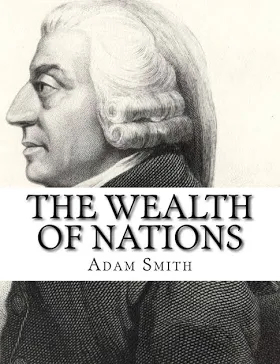
Economists before Smith had already pondered how to explain the then-observable increase in manufacturing and global trade, and what its consequences would be. Smith could not have foreseen that his Wealth of Nations would become, not long after his death, a kind of manifesto for the rising industrial bourgeoisie. First in England, soon after in Europe, the United States, and finally in all parts of the world where capitalists were striving for class rule based on industrial production.
The plantation owners, traders, freight forwarders, and shipowners of the North American colonies had long believed that the British Crown, British bankers, and merchants were taking an undue share of the profits from transatlantic business. The Boston Tea Party of 1773 gave spectacular expression to this resentment over economic exploitation and political domination. That the United States would one day replace Great Britain as the leading global power was not foreseeable at its founding.
Smith: Not a Prophet of Unfettered Markets
To justify this power, ideologues of the American bourgeoisie repeatedly invoked Smith. While presenting Smith as the herald of a doctrine of unfettered markets and themselves as the embodiment of this doctrine, they consistently deviated from it in the pursuit of their business interests.
In the tradition of the Scottish Enlightenment, Smith established a theoretical system of natural liberty. He contrasted this with mercantilist practice, which promoted the export of finished goods from the imperial centers and restricted corresponding imports to stimulate manufacturing production within those centers. Tariffs levied for this purpose, along with taxes imposed on the colonies, filled the coffers of absolutist rule. Slavery and debt bondage on the sugar, coffee, tea, and tobacco plantations supplied the wealthy and powerful in the centers with luxury goods. Under pressure from overcapacity and thus declining profits on the one hand, and an abolitionist movement – inspired in no small part by the Enlightenment – on the other, the British Crown considered abolishing slavery. Overcapacity or not, slave labour was indispensable to the plantation owners. They saw freedom from British colonial rule as a guarantee for the continuation of slavery.
Slavery and the Cotton Empire
Among other works, Smith’s Theory of Moral Sentiments also provided abolitionists with arguments against slavery. Addressing soberly calculating businessmen, he explained in the Prosperity of the Nation that slave labour was less productive and profitable than wage labour. The American plantation owners refuted his argument. The shift from producing luxury goods for the wealthy to cotton, which, machine-processed in England, clothed the masses in all parts of the world, was enormously profitable – for the American plantation owners as well as for the English industrialists.
The market seemed limitless. This was largely because the combination of English mass production and forced market liberalization devastated textile production in India. Textile manufacturers in the United States managed to escape the fate of ‘de-industrialization’ – if one wants to apply this term to the manufacturing prevalent in India – by imposing tariffs on their own Indian colonies to promote domestic manufacturing. Smith had introduced free trade as an alternative to mercantilism. While the latter, with its promotion of exports and restrictions on imports, benefited manufacturers and absolutist rulers, it did not benefit the nation.
Free trade became the guiding principle of British policy after the Industrial Revolution granted the country’s manufacturers a global monopoly. In the United States, the plantation owners of the South championed free trade. They rejected the tariffs demanded by the burgeoning industrialists of the American Northwest to secure their share of the global textile market against superior British competition. The plantation owners feared British retaliatory tariffs that would increase the cost of their cotton shipments to the Northwest’s industries, thereby reducing sales and profits. This issue led to the Civil War. The victory of the Northern states paved the way for the United States’ rise to industrial power.

Tariffs protected American industry from foreign competition, and the end of slavery opened up a new source of cheap labour. Racial segregation, introduced under the Jim Crow laws, ensured that Black workers were paid significantly less than white workers. This provided a source of continuous extra profits for American industry and a kind of economic compensation for the Southern plantation owners who had lost part of their business assets with their slaves. This was not how Smith had envisioned the prosperity of nations. He considered profit, ground rent, and wages to be distinct sources of income for manufacturers, landowners, and wage labourers. The fact that some enriched themselves at the expense of others contradicted his worldview. Therefore, he also criticized laws that prohibited workers from forming unions, while entrepreneurs seized every opportunity to collude to increase prices and profits. He also believed that the nation’s prosperity was measured by the increases in the lowest incomes. In his view, free trade would lead to larger markets and a progressive division of labour. This would increase productivity and incomes. In all income brackets.
American Industrial Power and a Multinational Proletariat
This was far from the case in the United States, even after the end of slavery and the industrial boom. Westward expansion, coupled with another genocide of the indigenous population, supplied the industries of the Northwest with raw materials. The Second Industrial Revolution gave rise to new industries. These were linked to the emergence of large corporations and an enormous concentration of wealth. In contrast, there was the poverty not only of Black workers but also of workers who had recently immigrated from Southern and Eastern Europe. Between this poorly paid, multinational proletariat and the industrial magnates on the other side, the old and new middle classes – farmers, artisans, and shopkeepers or managers – as well as a labour aristocracy recruited from the descendants of Northwest European immigrants, tried to assert themselves.
The promise that everyone, perhaps even every woman, could rise from dishwasher to millionaire created an ideological consensus against which countless appeals to workers’ solidarity bounced off. This ‘where there’s a will, there’s a way’ consensus stems, not least, from the ‘free-trade-individualistic’ interpretation of Smith, which ideologues and propagandists of the American bourgeoisie disseminated among the people in ever-new variations.
It took the First World War and the Great Depression to shake this consensus. The United States emerged from the war as the true victor. France and Great Britain had bought their victory with indebtedness to their American ally. Its political elite entered the world stage under the banner of democracy, national self-determination, and capitalism. The ideological alternative to communism, which had become a real power in Russia after the war and revolution, initially proved discredited by reality. It could not halt the rise of anti-democratic nationalism, particularly in Italy and Germany. The Roaring Twenties proved to be a prelude to the Great Depression, which led to a surge in trade union organizing and struggles that overcame nationalist and racist divisions within the working class. This, in turn, became a challenge to capitalist domination, paving the way for a policy of Keynesian class compromise.

Anti-Communism, Free Trade, and Social Reform
This path was only taken, however, after the politically violent nationalism and racism of Europe triggered a second world war, in the aftermath of which communist rule spread as far as East Berlin, Beijing, and Pyongyang, and eventually, Havana and Hanoi. Washington finally got serious about free trade, aiming to create sales and investment opportunities throughout the non-communist world. This applied not only to American companies but also to companies from countries that had united under American leadership to form an anti-communist bloc. This bloc was secured internally through social reforms usually associated with Keynes, but which would certainly fit into Smith’s worldview, provided it is not distorted into a stateless market utopia.
The combination of containing communist enemies and free trade among friends didn’t last long, because capitalists came to see social reforms within the anti-communist free trade bloc as another road to serfdom. The fight against this ‘Keynesian road to serfdom’, begun under Ronald Reagan and Margaret Thatcher, ended with a global victory of free market ideology after the Soviet Union collapsed and the Chinese communists accepted the rules of world trade written in Washington.
When the prosperity promised under the name of globalization failed to materialize, crises and ever-deepening inequality arose, and previously existing social safety nets disappeared, the specters of American history joined the Adam Smith reforms, now reduced to unregulated markets: the racism of the slavery era, the nationalism of the mass immigration from Southern and Eastern Europe, and the anti-communism of the Cold War against the Soviet Union. The Tea Party movement marked the beginning of the shift from a confident globalism to a fearful liberalism that invoked national and racial superiority; with Donald Trump, it entered the White House.
Smith is neither a suitable witness for globalism, nor for the Tea Party or Trump. Leftists who don’t misunderstand Smith as an apostle of unfettered markets might find points of connection with his work. This might be a way to engage in conversation with people who fear the Marxist spectre of communism, consider themselves followers of Smith, but are disillusioned by the policies pursued in Smith’s name. •