
Generation Z in Iran: A Contemporary Perspective
More than 15,000 teenagers answered a call from Nima Tekido, an entertainment producer and YouTube personality, to attend an event at Iran Mall in Tehran in July 2026. Although only 4,000 tickets had been sold, thousands more arrived hoping to participate, overwhelming the venue. The event quickly became a social phenomenon surprising not only Iranian sociologists and psychologists but also political observers from across the ideological spectrum inside and outside of Iran.
What made this gathering so remarkable was not merely its size but what it revealed about Iran’s youngest generation. After 47 years of strict ideological and authoritarian social control, the rulers of the Islamic Republic appeared unable to comprehend the extent to which Generation Z had become detached from (and in many respects, resistant to) the values and norms the regime had sought to instill. Yet the surprise was not limited to the ruling establishment. Reformists, republicans, left-wing activists, and other opposition groups were also astonished. The event exposed a profound gap between Iran’s political elites and its youth, raising uncomfortable but essential questions: What do we know and understand about the aspirations, culture, and identity of the generation that will shape Iran’s future? How can we understand the apparent paradox of Generation Z simultaneously engaging in anti-regime demonstrations and embracing seemingly apolitical forms of popular entertainment and leisure? Does this coexistence indicate political apathy or instead a transformed mode of political engagement?
Contemporary descriptions of Generation Z are dominated by two contrasting narratives. One celebrates the generation as politically conscious, digitally adept, and globally interconnected. The other dismisses it as fragmented, impulsive, and apolitical. Both narratives essentialize Generation Z by presenting its characteristics as fixed and inherent, rather than recognizing them as products of historical developments and broader social, cultural, and political conditions.
In this essay, I examine the characteristics of Iranian Generation Z through the intersecting lenses of digital socialization, neoliberalism, and mental health, thereby developing a more contemporary understanding of the social and political conditions, identities, and experiences that characterize this generation.
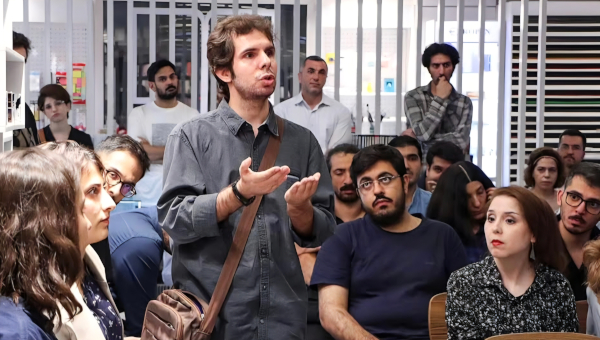
Defining Generation Z in the Iranian Context
The term Generation Z (Gen Z) is commonly used to refer to the generation born approximately between the mid-1990s and the early 2000s and represents approximately 30% of the global population.1 However, the precise boundaries of this generation vary across academic and popular sources. This variation becomes particularly relevant in the Iranian context where generational categories are often defined according to different demographic, social, and cultural criteria.
There is no single universally accepted definition of Iranian Generation Z. The latest demographic data indicate that approximately 24% of Iran’s population consists of children and adolescents under the age of 15. Additionally, 25% are young individuals aged 15 to 29, while 44% are middle-aged, and the remaining population comprises elderly individuals over 65.2 Although this age range may not correspond precisely to conventional definitions of Generation Z, it provides useful demographic context for understanding the size and social significance of Iran’s younger population. It should be acknowledged that this generation encompasses individuals from diverse class and ethnic backgrounds, as well as a range of gender identities. Therefore, it should not be understood as a homogeneous group. This diversity is particularly significant in the context of Iran, a country characterized by substantial class, social, ethnic, and regional heterogeneity.
In this essay, the term Generation Z is, therefore, used as a broad analytical category while recognizing that its exact boundaries may differ across Iranian demographic and sociological sources.
Generation Z and Digital Socialization
Generation Z is defined as the first generation to grow up with digital connectivity and the internet from early childhood. As the first generation to grow up with digital connectivity, they have developed distinctive modes of communication, learning, working, political engagement, and social interaction. They are used to rapid circulation of information, global cultural influences, and new forms of networked participation. Taken together, these conditions provide an important analytical framework for understanding Generation Z’s political attitudes, identities, and forms of collective action in contemporary societies. Digital connectivity constitutes central dimensions of the generation’s social experience, shaping how young people access information, construct identities, perceive inequalities, and engage in political actions. At the same time, digital connectivity may function not only as a mechanism of social integration but even as a channel through which experiences of inequality become more visible, collectively interpreted, and potentially translated into political discontent and social unrest.
Iran’s Digital Landscape
Iran’s digital landscape has been constantly evolving over the years. At the beginning of 2023, about 79% of Iran’s population were internet users.3 This demonstrates the remarkable growth of the internet in Iran where it continues to play an increasingly vital role in the lives of the Iranian Generation Z. The ITU reports that about 87% of individuals in Iran owned a mobile cellular telephone in 2024. Importantly, ITU defines this as an individual who owns a mobile phone with at least one active SIM for personal use. Instagram appears to be the most popular social media platform in Iran.4
Generation Z’s Use of Social Media and the Internet
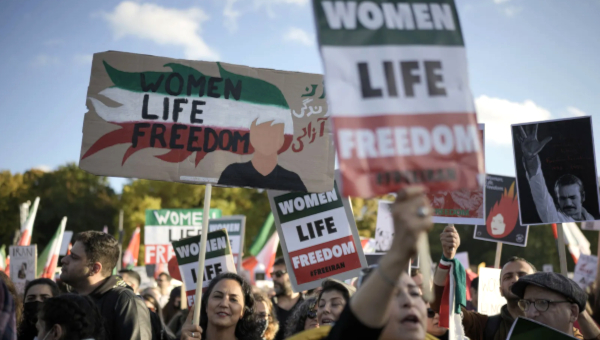
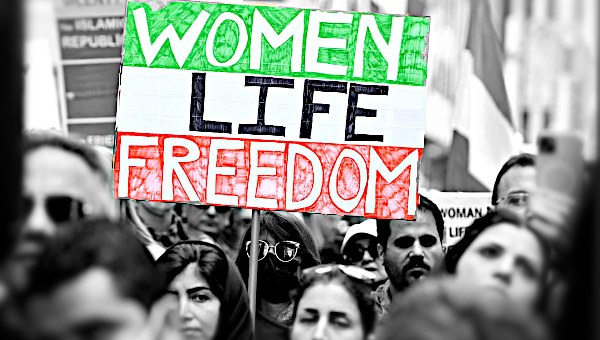
Iranian Generation Z increasingly challenge established social norms and participate in shaping alternative forms of social reality, particularly through digitally mediated platforms such as social media. Gen Z has not only challenged the norms and forms of life imposed by governmental institutions and familial norms but also actively resisted sociopolitical norms, including compulsory dress codes, traditional family expectations, state monitoring, and censorship. Gen Z helps to lay the groundwork for future political and social change in Iran. During the Women Life Freedom movement, they pursued this path with determination. Despite the government’s efforts to shut down the internet and suppress protests, they bypassed restrictions using VPNs and proxy servers and asked for transnational support. Hashtags such as #MahsaAmini, #WomanLifeFreedom, and #NoToCompulsoryVeil circulated widely, attracting more than 600 million views across the globe.5
The demand to reclaim life6 and the aspiration to live a ‘normal life’ have remained central to recent resistance movements in Iran. Applying this lens helps explain how Gen Z not only operates within online environments to challenge societal norms but also translates these digital actions into offline collective and political activities. Digital and public spaces serve as crucial sites for the articulation, visibility, and mobilization of young women’s resistance, enabling both individual acts of defiance and collective forms of political expression (For instance, Parastou Ahmadi’s concert, broadcast on YouTube in 2024, met with state reprisals, including fines and court-ordered flogging).
Digital connectivity can contribute to Generation Z constructing hybrid and multilayered identities that transcend national boundaries and adapt global cultural products. This phenomenon is particularly pronounced among students in urban areas and private schools, who have greater access to global resources, educational opportunities, and transnational networks.7 One example is consumption of Korean popular culture.8
Generation Z and Neoliberalism
Generation Z is called the “neoliberal generation” by some researchers.9 Neoliberalism as a system-stabilizing ideology is rooted in economic and political principles. Central to this worldview are the ideals of a free market economy, individual responsibility, and meritocracy. This belief system implies that everyone has equal opportunities to succeed through hard work. As a result, neoliberal ideology will lead to the legitimization of social and economic inequality by representing the system as fundamentally just.10
Iran’s Neoliberal and Anfal Islamic Economical System
Iran operates as a hybrid neoliberal system11 because the state has systematically pursued market reforms, privatization, and deregulation since 1989. Successive administrations have rolled back social welfare, commercialized public services like higher education, and integrated elite paramilitary networks into corporate capital accumulation. It also operates under anfal Islamic economy, which means a mechanism through which natural resources, confiscated assets, and abandoned property are placed under a supra-state clerical authority.12 Iranian Generation Z has grown up in a social context characterized by the coexistence of neoliberal values and significant Islamic influences. The consequences is an increased level of poverty. More than half of the population lives below the poverty line, and millions of children are deprived of education and nutrition.13 Inflation reached 50% in April 2026, according to Iran’s Central Bank. Youth unemployment stands at 32% (three times the national average), and that figure excludes students and those who have stopped searching for work altogether.14 According to recently published figures by Iran’s Statistics Center, approximately 77% of Iranians between the ages of 15 to 24 are neither working, being trained, nor studying.15 Neoliberalism, as the dominant logic of social organization over the past several decades, has even profoundly reshaped the Iranian universities. It seeks to subordinate an ever-growing range of human activities to the principles of the market, competition, and profitability.
Within this framework, education is no longer regarded as a social right or a public good. Instead, it is treated as an individual investment expected to generate future economic returns. Nowadays, more than half of the students enrolled in Iran’s leading public universities come from the top two income deciles. Generation Z find the prevailing social conditions as discriminatory (particularly against women) and regard the distribution of wealth and access to positions and offices as unjust. In their view, the absence of meritocracy in appointments and rewards, alongside the entrenchment of discriminatory laws and norms, constitute key roots of the status quo. Generation Z adopts a critical stance toward social justice a stance that influences their value orientations as well as their individual and collective actions.16
The Mental Health of Generation Z
Adolescents who frequently access social media are at higher risk of experiencing poor sleep quality, which may lead to increased anxiety and depression. There is growing documentation and concern that internalizing mental health symptoms in Generation Z are increasing especially in neoliberal capitalist countries.17 Research shows that neoliberalism can also have a negative effect on mental health of Generation Z. Neoliberal capitalism promotes self-interest and interpersonal styles rooted in competition. It promotes a strong desire for financial success, high levels of consumption, and belief in the necessity of economic growth. It has been associated with the rise of extrinsic values such as individualism, materialism, and status-seeking. When young people place greater emphasis on external, status-oriented values than on personally meaningful and self-directed values, they may face a higher risk of mental health difficulties, including anxiety and depression, as well as lower overall well-being.18
Iranian Generation Z, like many individuals worldwide, faces significant mental health challenges. Adolescents, particularly girls from low socioeconomic backgrounds, ethnic minorities, and Afghan immigrants are at higher risk of anxiety, depression, and suicidal behavior.19 The major risk factors identified for poor mental health among Iranian Generation Z are economic hardship, academic stress, cultural pressures, and digital exposure.20 A significant proportion of Iranian children and adolescents suffer from mental and behavioral health issues, with estimates ranging from about 17% to 36%.21
Generation Z Girls and Young Women
Since the emergence of the Woman, Life, Freedom movement, compliance with Iran’s compulsory veiling regulations has declined markedly. Visual evidence from contemporary Iran, particularly in major urban centers, suggests that the practice of compulsory veiling has become increasingly contested and in many public spaces appears to have significantly diminished. Practices that challenge restrictions on women’s mobility, appearance, and participation in public space represent not only individual acts of defiance but also challenges to the gendered organization of social and political life. Through Generation Z young women’s and girls’ collective mobilization, such everyday practices contribute to a gradual transformation of social norms and expand the boundaries of what is considered politically and socially possible.
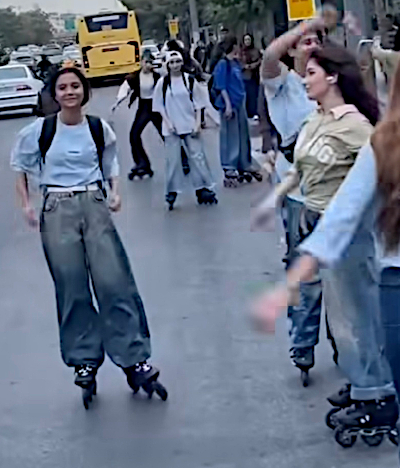
The quest for authenticity is a central aspect of the psychological and social development of female Generation Z in Tehran.22 Despite numerous challenges, young women and girls employ various strategies to maintain their authenticity, which significantly enhances their well-being. Understanding the factors that influence authenticity and supporting authentic self-expression can help foster resilience and personal growth among Generation Z girls. The pursuit of authenticity among young women is further manifested in their changing attitudes toward marriage and childbearing, particularly in their increasing willingness to challenge traditional social expectations shaping these life choices. Iran recorded its lowest annual number of births in seven decades in last year. The data indicates that the number of marriages has declined by around 30 percent compared to 2022-2023. Analysts say that while childbearing was traditionally viewed primarily as a cultural and family decision, it has increasingly become a long-term financial consideration for many couples.
From a feminist perspective, the sharp decline in marriage and childbirth in Iran reflects a conscious rejection of compulsory traditional roles, systemic gender inequality, and state-mandated pro-natalist policies. Educated Generation Z Iranian women are increasingly prioritizing personal autonomy, higher education, and career development over early marriage and motherhood.
Generation Z force for democracy and social equality or for right-Wing populist mobilization
Taken together, this generation’s digital connectivity, dissatisfaction with neoliberal politics and the Islamic regime, openness to global cultural influences, economic deprivation, and psychological distress point to a growing sense of frustration. These conditions may also reflect an increasing demand for meaningful political and social change in Iran.
Iran’s Generation Z can be conceptualized not simply as a demographic cohort but as an emerging political actor shaped by the intersection of authoritarian governance, socioeconomic inequality, gendered restrictions, and intensified global connectivity. Their demands for democratic participation, social justice, and a more equitable distribution of opportunities reflect a fundamental challenge to the political and social structures that shape everyday life in Iran. Notably, these political demands are increasingly articulated through transnational networks of communication, enabling young Iranians to situate domestic struggles within wider global discourses on democracy, equality, gender rights, and social change. This transnational orientation may contribute to the development of political identities that extend beyond the boundaries of the Iranian nation-state.
Following the last decade, scientific and political articles, literature, films, and everyday documentaries about Generation Z in Iran indicate they are not apolitical. What distinguishes this generation is not a lack of politics but the collapse of faith in the institutions and rules that once gave politics, work, and adulthood a recognizable structure.
Iranian Generation Z exhibits a markedly low willingness to accommodate or reconcile with the Islamic Republic. Rather than advocating incremental reform, many express a clear preference for fundamental political transformation. They display limited confidence in reformist actors, both within and outside the existing political system, whom they often perceive as ineffective or lacking credibility. Their opposition to the regime is not confined to overt political activism but is also manifested through everyday forms of cultural and social resistance. Participation in activities that the state seeks to regulate or prohibit (including forms of entertainment often dismissed as "shallow", such as Nima Tekido’s event) can therefore be understood as acts of symbolic defiance that challenge the regime’s moral and ideological authority.
This development presents both opportunities and challenges. On the one hand, Iranian Generation Z demonstrate a progressive outlook, considerable courage, and a strong determination to pursue the complete removal of the current regime. On the other hand, the lack of presence of organized democratic forces may pose a significant challenge to the establishment of an effective political alternative. In this context, where Generation Z remains largely unorganized and where a unified democratic opposition is absent, conditions may become conducive to the emergence of authoritarian or charismatic leaders who portray themselves as providers of stability and decisive political action.
This dynamic was evident during the past year, when a segment of this generation that had participated in the Woman, Life, Freedom (WLF) movement placed its hopes for regime change in Reza Pahlavi, the son of Iran’s former Shah, as well as in the prospect of US military intervention. However, this populist enthusiasm has steadily waned, especially in the aftermath of the bombing of Iranian infrastructure and the girls’ school in Minab. These events have led many to question the viability and political consequences of relying on external intervention as a catalyst for domestic political change. Despite this growing political awareness, concerns remain that the interaction of profound resentment toward the Islamic Republic, declining trust in political institutions, and the absence of organized democratic alternatives may continue to generate political opportunities for right-wing populist and authoritarian movements by rendering segments of this generation more receptive to their appeals.
The key challenge lies in strengthening the relationship between the Iranian socialist movement and Generation Z. Within Iran, socialist politics has largely remained confined to academic and intellectual circles, limiting its engagement with the broader youth population. Bridging the gap between socialist intellectuals and the majority of Generation Z is therefore a critical task. Achieving this requires moving beyond outdated ideological clichés and sectarian discourse in favor of a more accessible political language that resonates with the lived experiences and concrete demands of young people. For Iranian socialists, both within Iran and across the diaspora, meaningful political engagement with Generation Z requires addressing its central political and social aspirations, particularly its demands for democracy, social justice, and individual freedoms. This, in turn, calls for forms of political communication and organizational practice that are responsive to the generation’s values, modes of expression, and evolving patterns of political participation. This requires adapting both the language and practices of socialist politics to the social and cultural realities of Generation Z rather than remaining anchored in inherited ideological frameworks and established organizational practices.
There are emerging indications that segments of Iran’s Generation Z are engaging with socialist ideas, particularly in relation to broader aspirations for democracy and social justice. For instance, a recent LinkedIn post by a young university student in southwestern Iran characterized socialism as a potential pathway toward a democratic Iran. While such an example cannot be taken as representative of the generation as a whole, it illustrates how socialist ideas may be entering the political vocabulary through which some young Iranians articulate their aspirations for alternative social and political arrangements.
Iran’s Generation Z may, therefore, constitute a significant arena of political engagement and potential transformation, within which new forms of political consciousness and collective agency are taking shape. These emerging forms of agency may enable young Iranians to challenge established structures of authority, inequality, and social control, while creating new possibilities for political participation and broader processes of social and political change. •
Endnotes
- OECD 2021, Health and Healthcare Systems Chart: How Gen Z employment levels compare in OECD countries. Mar 26, 2021.
- Kashani L, Akhondzadeh S. The Future of Iran’s Population: Balancing Aging Trends and Fertility Rates. Avicenna J Med Biotechnol. 2025 Apr-Jun;17(2):82. doi: 10.18502/ajmb.v17i2.18558.
- Social Media and the Youth Activism: The Case of Generation Z in Iran – Journal for Iranian Studies Year 7, Issue 17, June 2023.
- Social Media Stats Islamic Republic of Iran. Statcounter Global Stats,” StatCounter Global Stats, January 1, 2022, accessed January 1, 2023
- Statista Research Department 2022. Number of Tweets and Retweets with the Hashtag #MahsaAmini Worldwide from September 16 to October 16, 2022. Sigurdardottir, H., Imani, M., Edalati Z. 2024. “Asking for Solidarity: Embodied Feminist Practices in Digital Space.” Gender & Development 32 (1–2): 523–545. DOI: 10.1080/13552074.2024.2365058.
- Bayat, A. 2013. Life as Politics: How Ordinary People Change the Middle East. Stanford: Stanford University Press.
- Ghaderi,S and Shamshiri Niri,M . 2026. “Futures Study of National Identity in Generations Z and Alpha in Ardabil: An Analysis of Continuity, Interaction, and Transformation Scenarios.” Social Problems of Iran, 17(1), 167-202. doi: 10.61882/jspi.17.1.167.
- Yeon Koo, G. 2020. “Riding the Korean Wave in Iran: Cyberfeminism and Pop Culture among Young Iranian Women Available to Purchase.” Journal of Middle East Women’s Studies, 16 (2): 144–164.
- Narin, K., Higgins, J., Sligo, J. Children of Rogernomics: A neoliberal generation leaves school. 2012. Otago: Otago University Press.
- Bettache, K., Chiu, C., Beattie, P. 2020. The merciless mind in a dog-eat-dog society: neoliberalism and the indifference to social inequality. Curr. Opin. Behav. Sci. 34, 217–222. doi: 10.1016/j.cobeha.2020.06.002 Boer, D. (2014).
- Valadbaygi, K. 2021. “Hybrid Neoliberalism: Capitalist Development in Contemporary Iran,” New Political Economy, Taylor & Francis Journals, vol. 26(3), pages 313-327, May.
- Mehrdad Vahabi, 2023. “Anfal and Islamic Economics,” Springer Books, in: Destructive Coordination, Anfal and Islamic Political Capitalism, chapter 5, pages 145-193, Springer.
- Poverty and the Collapse of Human Dignity in Iran – Iran HRM
- Iran’s Gen Z Faces 32% Unemployment, Record Internet Blackout – Iran Open Data (IOD).
- Iran’s rising Generation Z at the forefront of protests – Middle East Institute.
- Zare Shahabadi, A., Asgari,A. 2026. “Narrative of Generation Z’s beliefs and actions towards inequality (Case of study: Citizens of Khomeyni Shahr, Isfahan).” Social Problems of Iran, 16(2), 185-226. doi: 10.61882/jspi.16.2.185.
- Melanie S. et.al. 2022. “Structure and Trends of Externalizing and Internalizing Psychiatric Symptoms and Gender Differences among Adolescents in the US from 1991 to 2018,” Social Psychiatry and Psychiatric Epidemiology 57, 737–8.
- Van Den Broeck, A., et.al. 2019. “I Want to Be a Billionaire: How Do Extrinsic and Intrinsic Values Influence Youngsters’ Well-Being?.” The ANNALS of the American Academy of Political and Social Science 682, 1: 204–19.
- Zandi S, Oghani-Esfahani F, Ahmadi F, Sabbaghi-Dehkalani R, Akhavan S. 2025. “Mental Health and Mental Health Care in Iran: Addressing Social Inequalities.” Healthcare (Basel), Dec 1;13(23):3131. doi: 10.3390/healthcare13233131. PMID: 41373348; PMCID: PMC12692221.
- Kamyabi Azar, S., Naeim, M., Arjmand, H. 2025. “Socio-cultural erosion and the mental health crisis in Iranian youth: Root causes, challenges, and culturally aligned interventions,” Asian Journal of Psychiatry, Volume 103, 104350, ISSN 1876-2018.
- Hashemi, M.S.; Yarian, E.; Bahadoran, P.; Jandaghi, J.; Khani, M.M. 2012. “Prevalence of Mental Health Problems in Children and Its Associated Socio-Familial Factors in Urban Population of Semnan, Iran.” Iran. J. Pediatr. 2015, 25, e175.
- Derakhsh, A., Seifsadat, T., & Alizadeh Damie, T., Barzgar, S. 2024. “Generation Z Girls and the Quest for Authenticity A Psychological Perspective.” Psychology of Woman Journal, 5(1), 101 108.