
Contesting the Iran War: From the Left to Iran's Social Movements
Seventeen years ago, in the wake of the Green Movement’s uprising and its suppression – when Iran had once again drawn the attention of right- and left-wing analysts worldwide – I wrote an article titled “The Tragedy of Left Discourse on Iran,” in which I critiqued the mistaken views of several prominent left theorists, including James Petras, Azmi Bishara, Slavoj Žižek, and contributors to MRZine, the Monthly Review-affiliated website, all of whom had, in various ways, sided with the Islamic Republic.
I noted there that “the voices we hear today from parts of the left are tragically reactionary. Siding with religious fundamentalists on the wrong assumptions that they are anti-imperialist and anti-capitalist is aligning with the most reactionary forces in history. This is a reactionary left, different from the progressive left, which has always been on the side of the forces of progress.”
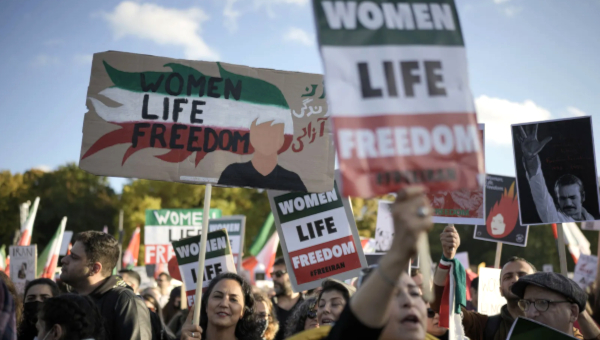
“Which Side Are You On?”
Now, seventeen years later – following the December/January massacre of tens of thousands of demonstrators across Iranian cities by the Islamic regime, and the joint US/Israeli military attack on Iran – we are witnessing the same responses. I will not address the “leftist axis of resistance” within Iran here – those who, oblivious to their own historical errors and those of the former socialist camp, continue to repeat lines from nearly half a century ago that dealt the greatest blow to the credibility of the Iranian left. The position of right-wing and non-left analysts who openly defend the US and Israeli stance and blame all problems on the Islamic regime is equally clear. For instance, Jack Cunningham, writing in an article titled “Is War with Iran ‘Legal’? And How Much Does It Matter?” in Open Canada, argues that “Iran has been effectively waging aggressive war with both the US and Israel at least since the mid-1980s, and their actions, including the current attacks on Iranian targets, are best understood as acts of self-defense, not aggression.”
In an earlier article on the same site, he had declared that “Iran has been the greatest threat to Israel and the most disruptive regional actor in the Middle East.” Regardless of how familiar such analysts are with Middle Eastern and Iranian affairs – or whether they know but conceal it – this reflects the binary worldview prevailing in the West: that America and Israel are champions of peace and democracy fighting warmongering elements in the region. Right-wing currents among the Iranian diaspora, especially the monarchist circles around Reza Pahlavi – with their extensive media networks built with foreign support and their skillful exploitation of Iran’s cultural, political, economic, and environmental disarray under clerical rule – advance exactly these positions.
We witness a similar one-sided view in the camp of critics of US policy: it is solely American imperialism and global Zionism that are responsible, and the Islamic Republic is being attacked without cause. Here we have, on one hand, staunch supporters of the Islamic Republic’s positions, figures like Trita Parsi. The internet is also full of interviews and analyses by prominent figures such as John Mearsheimer, who – despite his extensive knowledge and rightly addressing imperialist aggression – makes not the slightest mention of the Islamic Republic’s destructive policies. The same is true of numerous talks by Ben Norton, Jeffrey Sachs, and others.
The focus here is on the socialist left, which also addresses only one side of the conflict – American imperialism. Gary Wilson, in the article “Iran Today, China Tomorrow: The Strategy Behind the War” in Monthly Review Online, correctly describes the war with Iran as “…the outcome of global class war – the drive of monopoly capital to maintain control over the world’s resources, markets, and labour at any cost,” and addresses various issues including the killing of schoolgirls in Minab, the confrontation between low-tech resistance and high-tech military force, and the role of finance capital in the closure of the Strait of Hormuz. Yet he makes not the slightest mention of the Islamic Republic’s role and destructive policies. Part of the article addresses the damage this war has inflicted on the working class across different continents. Still, there is no mention of the misery of Iranian workers – including the majority of oil and petrochemical workers who, due to Islamic Republic policies, worked without any security in contractor companies and, with the outbreak of war, lost even those precarious, unstable jobs. Around a hundred thousand workers at various tiers of oil contracting companies – companies created and sold to the cronies of the regime, subject to no oversight – have been left without protection. The National Iranian Oil Company has outsourced most of its operations to these companies to avoid responsibility for workers’ conditions. The regime even invented the term “third-pillar workers” to make clear it bears no responsibility for these workers’ conditions.
Wilson concludes his article: “The war was planned. The suffering was predictable. Which side are you on?” The real question, however, is this: if we rightly condemn American imperialism (and, of course, the Israeli right-wing coalition’s aggression), must we therefore stand on the side of the obscurantist fundamentalists ruling Iran?
An example of more direct left support for the Islamic Republic is Radhika Desai of Geopolitical Economy’s interview with Dimitri Lascaris, a journalist with the Reason2Resist channel. Returning from a ten-day trip to Iran, Lascaris claims that of approximately a hundred people he interviewed in various Iranian cities, he “…didn’t find a single person criticizing the government,” and that he was deeply impressed by the “near unanimity” of anti-war sentiment and support for the regime. Regarding war damage, he says that, contrary to Western propaganda claiming the war caused widespread destruction, he saw very little ruin. In a situation where not only independent foreign journalists but even non-regime-affiliated domestic journalists cannot report freely from Iran – and where many young people have been arrested, tortured, and in some cases, executed merely for forwarding a photograph on social media – Lascaris may have not realized he was conducting his reporting on a regime-guided tour. He needed only to have glanced at Iranian news and asked himself: why, just before the war, did the regime gun down tens of thousands of Iranians in the streets of various cities? Why are there so many political prisoners, including prominent women such as Narges Mohammadi, Nobel Peace Prize laureate, and Nasrin Sotoudeh, and many others, still behind bars? Why, according to the UN Human Rights Office, has the Islamic regime already executed 21 people and arrested more than four thousand during this very war?
As for not seeing much destruction, did his guides take him to Mobarakeh Steel in Isfahan, the largest steel plant in the Middle East, where around 20,000 workers are directly employed and around 100,000 indirectly through supply and value chains, which Israel forced into shutdown through repeated attacks? Did he visit the massive chemical and petrochemical plants bombed by Israel? Did he see the results of the bombardment of the Pasteur Institute, one of the oldest and globally recognized pharmaceutical research institutions? Instead of confronting these realities, he concludes that the war produced results for Iran that were the opposite of what the US and Israel expected, and actually elevated Iran’s standing in the world. Desai also conducts an interview with Mohammad Marandi, a staunch pro-regime academic and effectively a regime spokesperson, on “Iran’s Historical Role in the Decline of Imperialism,” which requires no further comment.
Most important of all, however, is Yanis Varoufakis – the prominent theorist and founder of Greece’s radical socialist party SYRIZA and the European Realistic Disobedience Front, and author of the influential book Techno-feudalism: What Killed Capitalism – who announced on his X account that he and another leader of the party had visited the Iranian embassy in Greece. This news came as a great surprise to Iranian leftists who respect Varoufakis and whose works have been widely translated into Persian. In this post, Varoufakis states, among other things, that “We are here because of the 180 girls whom the United States and Israel killed in Minab. We are here because the US president has declared a cultural war against one of the oldest civilizations of humanity.” By doing so, Varoufakis – regardless of his stated opposition to a theocratic system – has, unfortunately, taken the side of the Islamic Republic. Expressing solidarity with the crime of killing innocent girls by imperialist and Zionist forces is certainly a worthy act. But when the government that this ambassador represents gunned down protesters in the streets of Iranian cities, did Varoufakis protest at the Iranian embassy?
It is also true that Trump made those absurd remarks about Iranian civilization – but is the Islamic Republic really the representative of “one of humanity’s oldest civilizations”? The truth is that through its reactionary and destructive policies, this regime has been one of the greatest enemies of that very civilization. I am aware of the polemical nature of the title I have chosen for this piece, and perhaps it is unfair to Yanis Varoufakis, for whom I have genuine respect. But what he did was also unfair to the left and to Iran’s progressive forces.
Background to the Three-Sided War
In contrast to these one-sided approaches and the tendency to take sides in this terrible war – which has set back and continues to set back Iran, the region, and the world – one must attend to its roots and to the role of each of the main actors. This war has three interrelated dimensions, and without entering into historical detail, a brief overview is in order.
With the Iranian Revolution of February 1979, the US and Israel lost their most important regional ally: Iran. Although the Shah of Iran lacked the nerve to maintain a formal ambassadorial relationship with Israel, Israel’s unofficial “embassy without a nameplate” in Iran was highly active; the Mossad and CIA were the primary supporters of the regime’s apparatus of repression, and Iran was the largest purchaser of military equipment from both countries. Even when the Shah tried to create some distance in this dependent relationship – as when he attacked the Israeli lobby in America in a 1976 interview with Mike Wallace – he had no choice but to submit to those who had restored him to power through the 1953 CIA coup against Mossadegh’s democratically elected government.
Washington’s primary focus in the Middle East during the Cold War was directed against the Soviet Union and left-wing movements, and toward strengthening Islamist currents and creating a “Green Belt.” SAVAK, the Shah’s brutal security apparatus, with help from the Mossad and CIA, was mainly focused on leftist and nationalist progressive movements and paid little attention to the growth of Islamism. The 1979 Revolution and the subsequent hostage-taking at the US Embassy occurred in this anti-American/Israeli atmosphere. Khomeini, in line with his reactionary beliefs and the hope of bringing the Palestinian movement under control, raised the slogan of Israel’s destruction from the very beginning.
Then, during the Iran-Iraq War, the United States – especially after Ronald Reagan came to power – provided extensive financial, technical, intelligence, and military support to Saddam’s regime. Israel, however, which at that time feared the Arabs more, secretly provided Iran with arms and intelligence in various ways during this war. American sources have estimated Israel’s arms sales to Iran during the 1980s at close to two billion dollars per year, part of which was paid through the delivery of Iranian oil to Israel.
Then, in 1982, when Israel had occupied southern Lebanon, the Iranian regime established Hezbollah in Lebanon with the help of part of the Shia population there. In 1983, Iranian regime agents in Lebanon bombed the US Marines headquarters in retaliation for American support of Iraq, killing more than 240 Americans and wounding over a hundred. During the Lebanese civil war, especially after 1982, the Islamic Republic, through its agents, carried out numerous hostage-takings – primarily of Americans – which led to arms-for-hostages exchanges and the notorious Iran-Contra affair.
Over the years, Iran was subjected to the most severe economic sanctions. The Islamic Republic, in pursuit of its ideological and expansionist goals and the dream of leading the Shia and Islamic world, adopted a three-pronged strategy: building proxy forces in the region, developing missile capability, and pursuing nuclear capacity. It simultaneously continued its anti-Israeli and anti-American rhetoric and its financial and military support to its proxies.
Saddam’s folly in invading Kuwait in 1991, and more importantly, the US invasion of Iraq in 2003, strengthened the Islamic Republic’s regional position. Later, the JCPOA agreement in 2015, while severely limiting Iranian nuclear program, placed vast financial resources at the regime’s disposal, and the Islamic Republic continued its adventurist regional policies.
Israel, throughout this process, greatly benefited from the Islamic Republic’s adventurism. The Israeli right, to advance Zionist policies – which can be summarized in two main objectives: territorial expansion and population displacement – has always claimed to be faced with existential danger. After neutralizing neighboring Arab states – Egypt, Jordan, Syria, and Lebanon – the Islamic Republic of Iran and its affiliated proxies provided the best pretext for advancing Israel’s right-wing policies while simultaneously striking at the Palestinian movement.
A very important turning point was Hamas’s brutal attack on Israel on October 7, 2023. Although it was a blind radical reaction to 75 years of displacement, 56 years of occupation, and 17 years of complete land and sea blockade, it provided the greatest opportunity to Israel’s extreme right, which proceeded recklessly and with American backing to launch broad regional offensives. After the destruction of Gaza and the genocide of Gaza’s Palestinians, and increased assault on the West Bank, Israel dealt its greatest blows to Lebanon’s Hezbollah.
With the proxies weakened, Israel moved directly against the Islamic Republic itself. To provoke the Iranian regime, Israel attacked Iran’s consulate in Damascus in April 2024 (exactly two years ago) and killed several senior IRGC commanders. In response, the Islamic Republic launched a barrage of missiles and drones against Israel. This was what Israel was looking for, preparing for the war against Iran. There was also a bitter irony: Iran had built its proxies to protect itself, and now it was the regime itself trying to protect them in return. The fall of Assad’s regime in Syria deprived the Iranian regime of its last serious support base.
With the proxies lost or severely weakened, Israel found itself in a position – coinciding with the rise to power of one of America’s most reactionary presidents – to conclude that it could eliminate the Iranian regime. Netanyahu and his religious right-wing coterie’s first hope was regime change in Iran; together with their Iranian monarchist allies, they hoped that within days the people would take to the streets and topple the regime. When they realized this was not achievable, they decided to turn Iran’s regime into a failed state, dreaming of reducing it to the fate of Somalia, Yemen, and Ethiopia, which I have discussed elsewhere. The attacks on infrastructure, and especially on intermediate industries such as steel and petrochemicals, on research institutions and the scientific departments of major Iranian universities, were carried out for exactly this reason. Had it not been for pressure and threats from the Trump administration – in hopes of imposing some sort of agreement with the Islamic regime – Israel would have destroyed the main electricity grid, water networks and refineries as well, and even now it awaits the resumption of war to advance this savage policy.
Unlike Netanyahu, Trump, who has dispensed with the customary niceties of international relations and is openly advancing an imperialist domination agenda in the region and the world, harbored the illusion that he could pursue a “leader change” similar to Venezuela, rather than a “regime change” policy in Iran, which I have discussed elsewhere. But he and his advisors failed to account for two factors: first, Iran’s ability to regionalize and globalize the conflict by closing the Strait of Hormuz; second, the regime’s resilience, which itself has several dimensions. One is its ideological/religious structure, which, despite losing several tiers of its most important leaders, did not collapse. A second factor in this resilience is its prioritization of self-preservation at any cost – even at the expense of Iran and its people. Like Hamas in Gaza, the regime is less concerned with whatever damage the country sustains in this war. A related factor is that in the event of defeat, the clerical/military/economic oligarchy, with its vast webs of family and marital connections, has nowhere to flee, and thus has no choice but to fight on.
Meanwhile, the conflict increasingly took on religious and fundamentalist dimensions: American Christian Zionist evangelicals – seeking to hasten the return of the Christian messiah – joined with Jewish fundamentalists awaiting the coming of the Jewish messiah, in confrontation with Shia fundamentalists awaiting the Shia messiah, the Mahdi.
In summary, the 12-day and 39-day wars against Iran, and whatever further military confrontations may lie ahead, are the product of three interrelated historical currents, each bearing a degree of responsibility: American imperialism in its drive to maintain and extend global hegemony; Israel and global Zionism in its pursuit of a Greater Israel; and the clerical/military/economic oligarchy of the Islamic Republic in its drive to maintain and expand its own religious dominance.
This war has not been, in any respect, a just war. The aggression by the US and Israel is clear: they had no “right” to go to war, and they showed no “just conduct” in war – their war crimes require no elaboration. But though the US and Israel have not been fighting a just war, this doesn’t mean that Iran has justice on its side, for the regime bore its own responsibility for bringing it about, and its conduct – both toward the Iranian people and toward neighbouring countries – has not been righteous. More importantly, despite the nature of the imperialist aggression, the Iranian people do not see this as a patriotic or liberatory war; they see it as the war of a governing apparatus that does not belong to them. Some analysts of Iranian affairs in the West, and the overt or closeted supporters of the regime, have mistakenly attributed the absence of a large anti-regime movement during the war to patriotism and popular support for the regime. As was mentioned earlier, this is a government that gunned down its own people to terrorize them and prevent another mass uprising. Some have wrongly compared this war to the Vietnam War as a war of liberation. In the Vietnam War, American (and before them, French) soldiers were baffled by how ordinary Vietnamese people fought the invaders with great determination. In the war against Iran, a genuine portion of the population actually hoped for further blows to be dealt against the regime.
In contrast to the reactionary left – which, by solely condemning US/Israeli military aggression, took the side of the backward-looking and anti-popular Islamic Republic regime – Iran’s progressive left, along with many progressive lefts from different countries, have both condemned the Islamic Republic, not only for its adventurist and expansionist policies but also for its anti-popular policies and political and cultural repression, and at the same time, categorically condemned imperialist and Zionist aggression. One example is an open letter signed by more than one hundred prominent left-wing figures, from around the world, following a letter signed by over three hundred Iranian academics, lawyers, journalists, and artists.
The Islamic Regime vs. the Iranian People
Setting aside those segments of the population that support the regime for religious reasons or financial dependency upon it, and the confused so-called “leftist axis of resistance” who defend it; and setting aside the monarchists who dream of an Israeli/American victory in this war to bring Reza Pahlavi to power – the majority of the people of Iran see this war as a devastating blow to their own authentic movement, and are searching for a path to overthrow this regime and transition beyond it.
One of the most critical issues facing the regime is the ever-widening gap between civil society and the political society, where neither has the slightest trust in the other. The situation within the power bloc is also uncertain: will the more hardline fundamentalists maintain the upper hand, or the oligarchs who have discovered paradise on earth? In any case, one can predict that in the first instance that civil society and social movements will not consciously enter the arena because the wounded regime will not hesitate to intensify repression. One can see the regime’s fear and terror in the fact that during the war, it filled the streets with armed Basiji and Hezbollahi thugs, and at night, they continue their religious gatherings in different neighbourhoods to prevent any anti-regime demonstration. Simultaneously, it continues its mass arrests and executions, and despite the catastrophic economic cost, continues its devastating internet blackout out of fear of the people.
Economic problems will be among the regime’s greatest challenges: inflation, unemployment, the costs of rebuilding damaged infrastructure and industries, shortfalls in foreign currency and export revenues, and so on. If sanctions continue, the ability to circumvent them – which had primarily been done through various shell companies in the UAE, especially in Dubai – will be vastly more difficult, due to the souring of that relationship after drone and missile strikes on UAE installations. Rebuilding infrastructure, industries, and residential units in cities will require billions of dollars that the regime does not have. Moreover, since the regime will certainly prioritize the restoration of its military capacity, it will allocate even fewer resources to improving citizens’ living conditions, resulting in even greater anger and discontent.
As noted earlier, one of the greatest economic damages of the war has been to industry. Contrary to various theories that either deny that Iran’s economic system is capitalist or qualify it with various adjectives, or characterize it solely by plunder and destruction, Iran is a relatively advanced industrial capitalist country. No one disputes the corruption, theft, and oligarchic control of these industries, but whatever they are, they are capitalist industries based on the exploitation of labour, combining neoliberalism with state intervention. The industrial sector accounts for roughly 35% of GDP, and 33% of the labour force works in industry. Iran’s top 100 companies (of which roughly 10% are banks) account for 11% of GDP and 91% of non-oil exports. Iran’s non-oil exports in 2025 were approximately $32-billion, while oil exports for that year were projected at around $43-billion.
Rising unemployment will be a major burden for the regime. Tens of thousands of insured workers have become unemployed. The Social Security Organization, which was already facing serious problems before the war, will have lower revenues with more workers unemployed while simultaneously facing higher expenses, including unemployment insurance. Approximately 14 million households are covered by this organization, and it has had and will continue to have difficulty. The government also has large unpaid debts to the organization. And these are only the workers covered by social security. All employees of workplaces with fewer than ten workers – which account for more than 80% of industrial units – are excluded from this coverage. The fifty-plus-day internet blackout has bankrupted tens of thousands of small businesses. The Deputy Minister of Labour has referred to the loss of more than one million jobs, though precise figures are not yet available. Added to this, we also have the drastic situation of the so-called “third-pillar workers,” mentioned earlier.
The war has dealt a severe blow to Iran’s working class and impoverished. In addition to unemployment and rising prices, the work environment during and immediately after the war has become far more securitized, making it much harder to advance even trade union demands, let alone political ones. Organizing in the workplace – always among the most difficult tasks – has become vastly more difficult. However, one must hope that organizing at the neighborhood level in working-class areas can proceed with the necessary precautions.
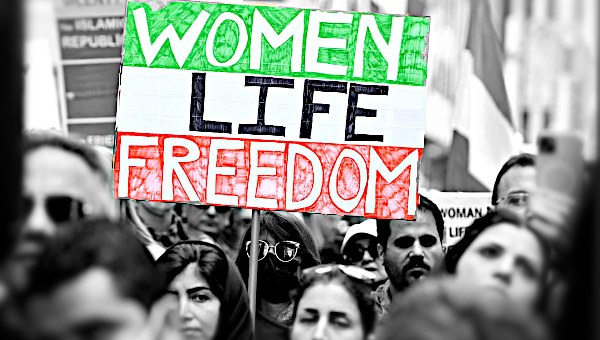
The most important blow has fallen on popular movements. Without doubt, had the war not occurred – and had the neo-fascist monarchist intervention, with the open support of Israel and Mossad, not driven the regime into a panic and provided it the pretext for savage repression and mass killing – the continuation of the Woman, Life, Freedom movement in 2023 and the December 2025 and January 2026 movements would have been certain. Under current conditions, it is entirely understandable that the movements have retreated sharply. Yet there is no doubt that if Iran is not destroyed, the Islamic Republic and the problems and crises that lie ahead of it will face further major movements from civil society. It is true that the Iranian people and the toiling classes are the greatest losers of this war. But the Islamic Republic will no longer be the same, and civil society will be able, by linking together the quadripartite arenas of social movement – the street, the workplace, the place of education, and the marketplace – to ultimately bring down the regime. No regime devoid of legitimacy can long endure. •
Petition: Stop the War Immediately!
This statement, endorsed by over one hundred academics, cultural figures, and human rights and political activists from various countries, (the Farsi version was signed by over 350 Iranian academics, journalists, lawyers, and human rights activists) opposes the ongoing war between Israel/the United States and the Islamic Republic of Iran, and calls for its immediate end.
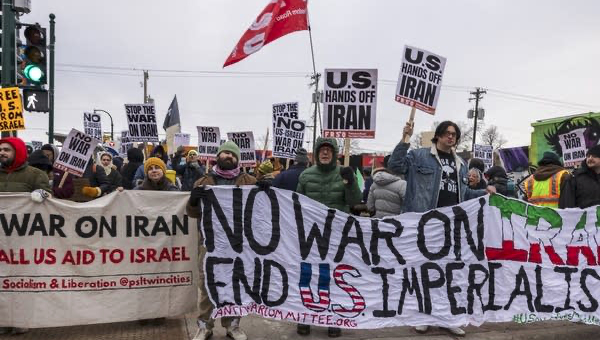
Stop the War Immediately!
Under the long-standing and mutual tensions between the Islamic Republic of Iran, the United States, and Israel, Iran once again became the target of the heaviest military strikes by Israel and the United States amidst negotiations. These strikes, violating established principles of international law, are claimed to aim at weakening, coercing, or overthrowing the government. However, their fallout has been extensive destruction, damage to the country’s vital infrastructure, and an increase in civilian casualties.
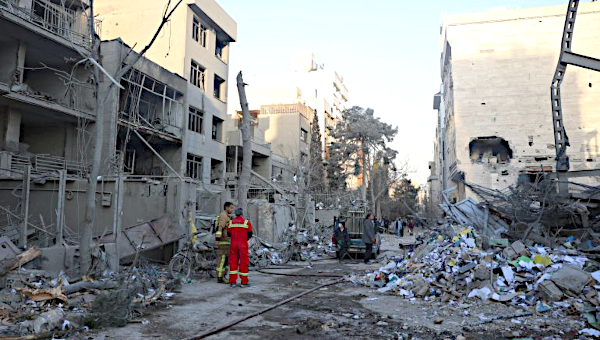
From our perspective of “No to war and no to the Islamic Republic,” this conflict is an absolute evil. It neither brings democracy nor security and well-being for the people. It has been launched in accordance with the interests of the United States and Israel. Humanity lies buried beneath the rubble of bombings, and the lives of millions of innocent people – who were already suffering under the repression and violence of the Islamic Republic – are now subjected to even greater destruction. The killing of children in a school in Minab and attacks on hospitals, medical centres, refineries, and other civilian sites show that the claim of “precision targeting” and purely military objectives is just a lie; it largely results in the deaths of those who have no role in these conflicts.
Alongside these aggressions, the policies of the Islamic Republic – from the very beginning until now – through the suppression of citizens’ rights, the killing of protesters, anti-Western rhetoric, slogans calling for the elimination of Israel, regional adventurism, and support for proxy forces that have no connection to the national interests of Iranians, have become one of the main sources of instability in the region. A government that, even in the midst of war and after the horrific killings in January, continues to threaten its own people cannot claim to defend them or pursue a just and lasting peace.
The clash of these two conflicting policies has ultimately resulted in a conflict that has expanded through attacks by the Islamic Republic on neighbouring countries, spreading across the region and threatening the security of both the people of Iran and the wider area. However, we should not forget that the primary responsibility for starting this war lies with the United States and Israel.
We, the signatories of this statement advocating for a democratic transition in Iran, firmly reject war as a means of resolving international disputes. We highlight the Iranian people’s right to shape their own future and achieve political change within Iran, rather than through foreign intervention. We urge everyone to become independent voices for peace and democracy. This voice does not support aggression, occupation, repression, or authoritarianism, but instead stands with the people suffering under the rubble of war and destructive government policies.
We call on the global community, international peace and human rights organizations, media outlets, governments, and progressive political groups, not to stay silent, and to condemn any form of providing direct or indirect support for war. Instead, they should back peace initiatives and utilize all political and diplomatic tools to promptly halt the war, prevent its spread, and stop military assaults. Protecting human lives – especially those of children and vulnerable groups – must come before any political or military interests. Hospitals, schools, and homes must become safe sanctuaries. It is also vital to ramp up international pressure for the release of political prisoners whose lives are at risk and who may be the first to fall victim to government retaliation.
Only through the immediate cessation of war from both sides, adherence to international rules, a return to diplomacy and political solutions, and the adoption of humane approaches can the current deadly cycle be overcome. Such a solution would make possible a future in which security, peace, freedom, and human dignity are not sacrificed to power rivalries. In this regard, the formation of the broadest possible global will against war is an urgent necessity. •
Signatories:
- Angela Y. Davis, scholar and activist, USA
- Ervand Abrahamian, Professor Emeritus, Baruch College, CUNY, USA
- Gilbert Achcar, Professor of Development Studies and International Relations SOAS, University of London, UK
- Stephen R. Shalom, Professor Emeritus of Political Science, William Paterson University, USA
- Robin D.G. Kelley, Distinguished Professor of History, UCLA, USA
- Greg Albo, Associate Professor of Political Science, York University, Canada
- Sam Gindin, Professor Emeritus of Political Science, York University, Canada
- Kevin Anderson, Distinguished Professor of Sociology, University of California, Santa Barbara, USA
- for a complete list, see here.