
The Struggle at Mama Earth and Lessons for the Labour Movement
Last month over 100 members of UFCW Local 1006A working at Mama Earth Organics in Toronto received termination notices. The company announced it would close its East York facility on May 12 and reopen in Mississauga – just outside the City of Toronto. Only non-union employees would be offered roles at the new site.
The workers who received notices had spent years organizing for better conditions. In 2018 they began a union drive, motivated by low pay, health and safety concerns, and vehicle maintenance issues. In January 2020, the workers voted to join the UFCW. By November 2020 they had ratified a three-year contract securing wage increases, expanded family benefits, three paid sick days, limits on temporary workers, and job-security provisions against contracting out. A second contract runs from October 29, 2023 to October 28, 2026 – less than six months from the termination date.
The second contract was negotiated under the ownership of Fresh City Farms Inc., which acquired Mama Earth in February, 2022. Fresh City had been on an acquisition spree, buying Mabel’s Bakery in 2019 and The Healthy Butcher shortly thereafter. At the time of the purchase, Fresh City CEO Ran Goel said the merged entity would be the largest organic retailer in Ontario, accounting for nearly 80% of online revenue in the space. The company’s stated mission was to “compete with the grocery giants” while promoting “a kinder and more sustainable food system.”
But Fresh City’s consolidation efforts soon faltered. The company’s brick-and-mortar store on Ossington Avenue closed in February 2023, citing difficulties caused by COVID-19 lockdowns and inflation. Over the subsequent years, the company’s other holdings have been sold off or shuttered, leaving Mama Earth e-grocery operations as the company’s main business line. Mama Earth workers were, and remain, Fresh City’s only unionized employees.
The Legal Loophole
The successorship clause in the union’s collective agreement permits union recognition to transfer if the facility moves, but only within the City of Toronto. The company’s new Mississauga site sits just outside that boundary – a few minutes drive from the municipal border. Under labour law, a successor employer is generally bound by existing union certification when it acquires a business and continues similar operations. However, when the language of a collective agreement explicitly defines geographic scope, employers can exploit that restriction.
A press release by Mama Earth workers describes the situation starkly: “While the Collective Bargaining Agreement does allow for the workers and union recognition to move if the current facility is closed, this applies only to the City of Toronto, which Mississauga sits just outside of.” The company has stated that terminated employees may apply for jobs at the new Mississauga facility – but without union representation or the protections of their collective agreement.
The Problems of Capital Mobility and Management Rights
Behind the legal loophole lies a more fundamental issue that collective bargaining rarely touches. In our capitalist economic system, entrepreneurs and owners hold unilateral control over investment decisions: where to open a warehouse, when to shut it down, whether to move operations to a different city, or whether to automate jobs out of existence. Unions can negotiate wages, benefits, and working conditions. They can even win successorship clauses. But they cannot stop an owner from deciding that the company will close a facility and reopen elsewhere (or not).
This power flows from the legal rights of property owners. Shareholders and corporate directors have a fiduciary duty to maximize returns, not to preserve jobs or serve communities. If moving a few kilometres saves labour costs by breaking a union, the law not only permits it but, in some interpretations, encourages it. For their part, Mama Earth workers followed the prescribed labour playbook. They successfully organized a union and won a decent contract. Critically, they continuously mobilized in the workplace to maintain pressure on management. But the law gives owners the final say. The owner closed the workplace, which legally busted the union, and alone will decide which workers, if any, will be offered jobs at the new facility.
This is not a failure of that particular union or those particular workers. It is a structural feature of an economy where investment decisions are private, unaccountable, and driven by profit margins rather than human needs. The same dynamic plays out when a factory moves overseas, when a call centre is automated with AI, or when a warehouse replaces human pickers with robots. Collective bargaining can raise wages and improve conditions, but in deference to “management rights,” unions cannot stop an owner from moving, closing, or automating. With few exceptions, unions have shown little interest in challenging that power.
The workers at Mama Earth are not alone in facing this threat. The company is following what is becoming a well-worn path in Toronto and elsewhere. In 2020, Foodora shut down its entire Canadian operation weeks after couriers won union certification – a move widely condemned as union-busting. In 2023, the “progressive” logistics company GoBolt terminated all 23 unionized delivery drivers at its Markham, Ontario facility as they prepared to bargain their first contract.
Gigification: Replacing Drivers with “Partners”
While the warehouse closure is in the headlines, the company is also changing how delivery is done. Mama Earth historically employed in-house drivers who were part of the unionized workforce. Now, the company intends to replace those drivers with gig-company “partners” hired through Trexity, a gig platform. These drivers will be independent contractors with no guaranteed wage, no benefits, and no job security. The new Mississauga facility is seemingly designed around this model.
Gigification is a deliberate strategy to fragment the workforce and evade labour law. When drivers are classified as independent contractors, they cannot formally collectively bargain and lack basic employment protections. Indeed, they are even denied the identity of “workers.” By outsourcing delivery to gig platforms, companies like Fresh City can claim they are not the drivers’ employer, they are simply a business contracting services to other partner “businesses.”
Labour must resist the transformation of stable, union-eligible employment into precarious, non-union gig work. Otherwise, the race to the bottom will only accelerate unless labour draws a line in the sand.
The Logistics Sector: A Strategic Front for Labour
As such, the Mama Earth conflict is a small battle in a much larger war. Logistics, including warehousing, trucking, and last-mile delivery, has become one of the fastest-growing sectors of the economy. E-commerce and grocery delivery would not be possible without it. That growing dependence gives logistics workers enormous strategic power, but only if they can organize key choke-points, ideally across company lines. That leverage is why the sector is a strategic frontline for labour and why owners are determined to keep unions out.
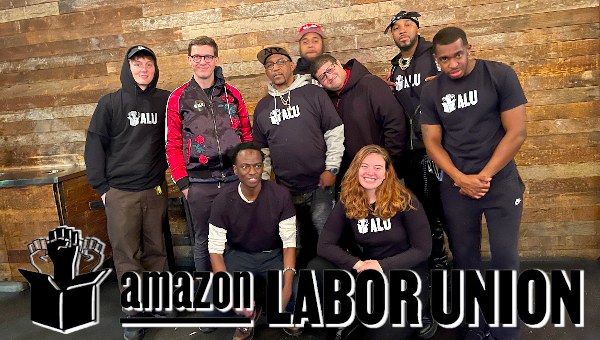
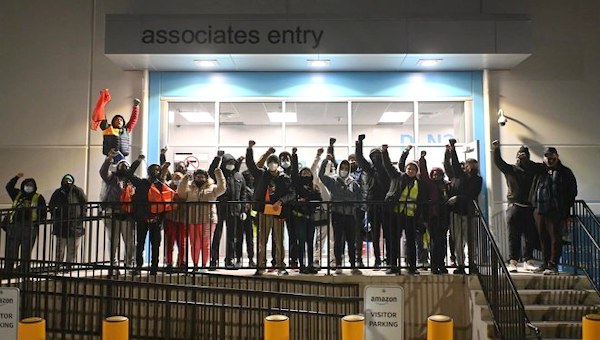
Amazon, the sector’s 800-pound gorilla, has fought unionization at every turn, from Alabama to Quebec – where, in 2025, the company contracted out its operations rather than bargain with workers who won union certification. The need for labour to collaborate across the logistics sector has never been more urgent. The Mama Earth case is another example why.
Beyond Collective Bargaining: Building Class Power Across the Supply Chain
To truly defend against owner-driven relocation, the labour movement needs new forms of power that cross employer lines and reach into communities. Mama Earth is the right place to start: the workers are already in the fight, the tactics being used against them are becoming all too common, and the struggle invites creative, collaborative campaigning. Winning sectoral bargaining–which would set standards for an entire industry and make relocation for union avoidance impossible – is an obvious long-term goal. But such a reform requires that power be forged first. This means embedding workplace organization within broader efforts to build working-class power across supply chains, neighbourhoods, and sectors.
Supply-chain organizing campaigns. A warehouse does not operate in isolation. It depends on inbound trucking, outbound delivery, and third-party logistics providers, and many other workers. Organizing across the supply chain means building relationships between workers and the unions that represent different parts of the same flow of goods. The truckers who bring produce to Mama Earth may be members of Teamsters or Unifor. Food processing workers and retail workers – some already unionized, others not – are also links in the chain. Organizing the unorganized, and linking across existing bargaining units, is a strategic priority. A supply-chain campaign requires different bargaining units and unions to work together to support organizing efforts and maintain basic standards. With such a network, workers can apply pressure at multiple points in the supply chain to defend any group under attack – turning any individual employer’s attack on workers into a sector-wide fight.
Cross-union coordination in logistics. The Mama Earth case shows the vulnerabilities of isolated or fractured bargaining units and the urgent need for cross-union cooperation. A permanent logistics council – bringing together unions in the logistics sector and geographically-based workers’ assemblies (local, cross-workplace bodies that include both union and non-union workers) – could share research, coordinate bargaining timelines, issue joint demands, and plan solidarity actions. If one employer threatens to move, others in the council could refuse to handle its goods.
Community mobilization and class power. Workplace power is necessary but not sufficient. Class power means mobilizing beyond the workplace and making community rallies, neighbourhood canvassing, social media campaigns, and strategic boycotts, all part of the normal repertoire of union action. The cancellation of subscriptions by Mama Earth customers shows the vulnerability of “ethical” brands to public pressure. A campaign that links workers’ demands to consumer and community values – such as “fair” wages and local jobs – can isolate an employer and raise the political cost of union-busting. Solidarity actions, such as refusal by other unions to cross picket lines or deliver to the new facility, can turn isolated fights into a shared struggle.
The Workers’ Demands and the Ongoing Struggle
In addition to right of first refusal for positions at the new location, Mama Earth workers have put forward four demands:
- Full recognition of the union and collective agreement at the new Mississauga facility.
- A one-time cost-of-living adjustment.
- Continuation of health benefits after closure.
- Fair severance for workers who do not end up taking positions in the new facility.
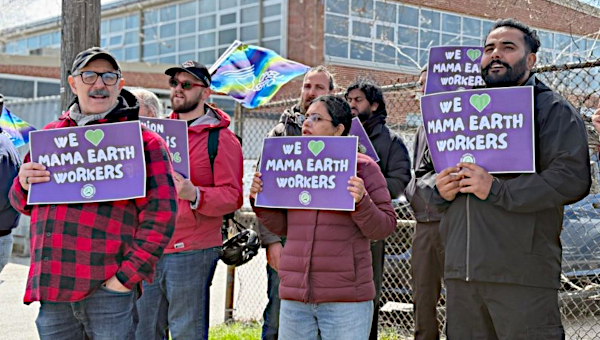
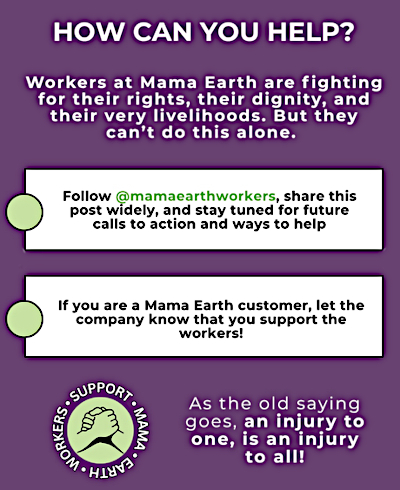
Winning these demands will require the workers’ continued efforts – but, as the workers themselves recognize – also the backing of the broader labour movement. To this end Mama Earth workers and their allies held a public demonstration outside of the East York warehouse on April 21 and launched a social media campaign. In response some customers have cancelled subscriptions, citing the company’s betrayal of its “people and planet” branding.
The current facility is scheduled to close on May 12. Whether Fresh City will budge – on union recognition, severance, or any other demand – remains unclear. What is clear is that the workers are actively organizing and building alliances. If Fresh City succeeds, the message will be grim: moving a few kilometres and switching to gig workers is an effective way to bust a union. That is exactly why the workers’ ongoing campaign matters.
If the labour movement earnestly backs Mama Earth workers the outcome could set a much needed precedent. A defeat would tell every employer that the playbook works. The workers need the broader movement to treat their fight as a test case for new forms of power: cross-union coordination, supply-chain and gig worker organizing, and direct action that stops moves before they happen.
The labour movement cannot afford to let this struggle go unsupported. Backing the Mama Earth workers is an important demonstration that an attack on any worker is an attack on all. No employer in Ontario – or anywhere else – should be able to bust a union by moving across a municipal boundary. Any who try such maneuvers must face the full force of a united, fighting labour movement. •