
Breaking the Gaza Blockade
In the night of 29-30 April, as was foreseen by Ramiro Giganti, Israeli forces illegally detained some twenty boats of the flotilla and arrested nearly 200 activists – trade-unionists, health workers, solidarity activists, elected representatives. They rendered the boats unusable.
Demonstrations in many countries on the evening of 30 April called for the liberation of all these activists and for the flotilla to continue its mission of bringing even symbolic material aid to Gaza and breaking the blockade.
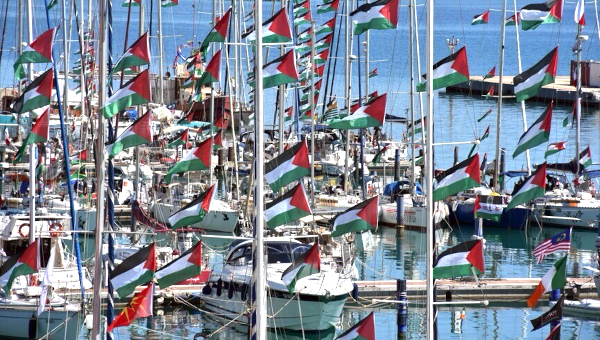
Radionauta, a community, alternative, and grassroots radio station in La Plata, broadcast the testimony of Ramiro Giganti, an Agencia de Noticias RedAcción (ANRed) correspondent who was part of the Argentine delegation that set sail for Gaza last Sunday as part of Global Sumud. The flotilla, composed of 75 boats – a civilian initiative, the largest in history to date – aims to deliver humanitarian aid including food, water, personal hygiene items, medical supplies, school bags, toys, nappies, and infant formula, among other items, to bolster hospital capacity and support Palestinian communities facing an acute humanitarian crisis resulting from the genocide and illegal blockade perpetrated by the State of Israel.
“I am where I need to be,” he declares from the Mediterranean Sea, emphasizing, “The genocide in Gaza continues, and it is crucial to make it visible.” (ANRed)
Break the Silence
From the Eilabun vessel, as part of the Global Sumud, Ramiro Giganti, an ANRed correspondent and member of the Argentine delegation of the flotilla of 75 boats, spoke to the community, alternative, and popular radio station Radionauta about his experience en route to Gaza and explained his reasons for joining the international mission. “I believe that any human being with even a modicum of sensitivity cannot remain indifferent,” he stated, referring to the images coming out of Palestine in recent years. “It was very distressing. Often without anyone to talk to about it,” he added, speaking of the personal impact of the war and the silence that, he denounced, prevailed for long periods.
Ramiro indicates that one of the central motivations was to break this silence. “We must not stop talking about Palestine, denouncing the ongoing genocide in Gaza.” In this sense, he criticizes both the mainstream media and certain alternative spaces for having relegated the subject at various times. “These were demonstrations of 50, 100 people, and always the same people covering them,” he recalls, while acknowledging that visibility has increased recently.
“I am where I need to be. The genocide in Gaza continues, and it is crucial to make it visible.”
The flotilla, which is carrying humanitarian aid, also has the political objective of breaking the blockade. “The first thing is to make it visible, to try to break this encirclement,” he explains. The boats are carrying food, medical supplies, and reconstruction materials, in a context he describes as critical. “The blockade continues, and humanitarian aid has dropped to less than 10 per cent of what it used to be.” Added to this is the very real possibility of being intercepted by Israeli forces, as has happened during previous missions.
The journalist and activist also linked his decision to the situation in Argentina. “Gaza is not far from our home,” he stated, criticizing the foreign policy of Javier Milei’s government. “We have a government that boasts of being the most Zionist in the world.” In this context, he highlighted the presence of an Argentine delegation in the flotilla as well as the recent demonstrations under the slogan “Not in our name.”
Regarding the mission, Ramiro reports that they received training in geopolitics, security, and communication. “What matters most isn’t us sailing. What matters most is that the genocide continues,” he emphasizes. He also highlights the collective nature of the experience. “I’m surrounded by people from all over the world, with differences, but united by this cause, which, for me, is the one that divides the waters.”
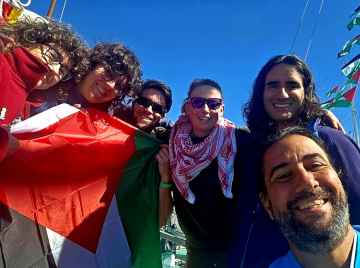
Finally, he emphasized the need to maintain global mobilization. “Visibility is fundamental. We must reactivate it.” And he concluded with a statement that summed up his decision: “I could have made this trip for some other reason, but I couldn’t. I am where I need to be.”
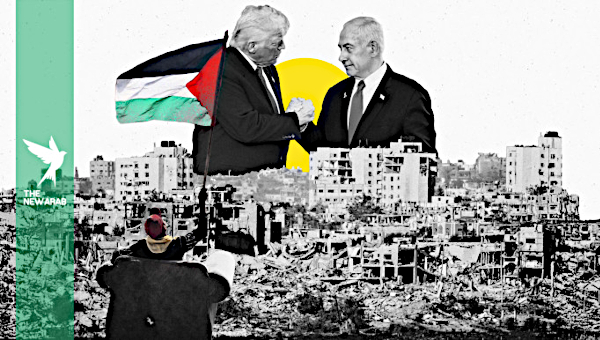
The flotilla’s mission takes place within a geopolitical context of rising tensions in the Middle East, with the conflict being extended by Benjamin Netanyahu (Israel) and Donald Trump (United States) beyond Gaza into Lebanon, Iran, and other territories, in what various analysts describe as a regional strategy of imperialist expansion and reconfiguration of the balance of power. Within this framework, the denunciation of the blockade, the genocide, and the role of Western powers places the struggle for territorial control, resources, and hegemony in the region back at the centre of the debate.
At the same time, the flotilla experience highlights the existence of an international solidarity network seeking to confront this scenario from the ground up, through direct action and global visibility. Faced with militarization, media blackouts, and the criminalization of critical voices, these initiatives reaffirm that the issue is not only territorial, but also political and communicative: who is telling the story, and from what perspective? •
This article first published on the International Viewpoint website.