
‘And They Call it Democracy’
The reflection on democracy that follows was originally written by Bryan Palmer to structure his remarks at an October 2, 2026, workshop titled “The Reset: Citizens and Other Marginalized People in the Asset Economy.” Organized by Daniel Drache and Peer Zumbansen, “The Reset” was intended to address the building of a “sovereign Canada,” with emphasis on the need to “take a hard look in the mirror to take stock of where we are.” Having been invited to contribute to a closing panel on “Goals and Priorities: An Inclusive, Egalitarian, and Robust Democracy,” Palmer drafted a short 1200-word statement (required of all participants in the October gathering). It did not include much that is presented below, including the quotes from Cockburn and Marx.
Commentary on social democracy and the current state of the labour movement and its leadership was not as detailed. Before this short draft was sent to the organizers, an exchange of communications between Palmer and Drache/Zumbansen ensued. Although the organizers of “The Reset” never saw Palmer’s short statement, it was apparent that while some of what he could be expected to say would be welcomed, other positions he might espouse were not wanted. It was agreed that Palmer’s name would be withdrawn from “The Reset” program. This longer statement resulted from this sequence of events.
Padded with power here they come
International loan sharks backed by the guns
Of market hungry military profiteers
Whose word is a swamp and whose brow is smeared
With the blood of the poor …
North south east west
Kill the best and buy the rest
It’s just spend a buck to make a buck
You don’t really give a flying fuck
About the people in misery
… And they call it democracy — Bruce Cockburn (1986)
In 1894 Sam Gompers, a conservative craft unionist and head of the American Federation of Labor, stated bluntly, “There never yet existed coincident with one another autocracy in the shop and democracy in political life.” Gompers is not someone I usually quote with favor. In this instance, however, he was undoubtedly right. For the working-class, ostensible democracy in the political arena has always been compromised by the transparent lack of democracy in productive everyday life, where the interests of capital prevail. Those interests are sustained, legitimized, and periodically revived and deepened by the capitalist state that proclaims itself operating in the interests of all citizens at the same time as it relentlessly serves the needs and wants of the powerful.
Democracy, under capitalism, is anything but inclusive, egalitarian, and robust. It is exclusionary, inegalitarian, and patently partial, an ideological obfuscation that masks the profoundly skewed political economy in which the vast majority of citizens live.
When colonialism is factored into the assessment, as it must be in contemporary societies such as Canada, the structured and historic dispossession of Indigenous Peoples simply reinforces this appreciation of democracy as a political practice whose promise is destined to remain unfulfilled.
Democracy’s Claims
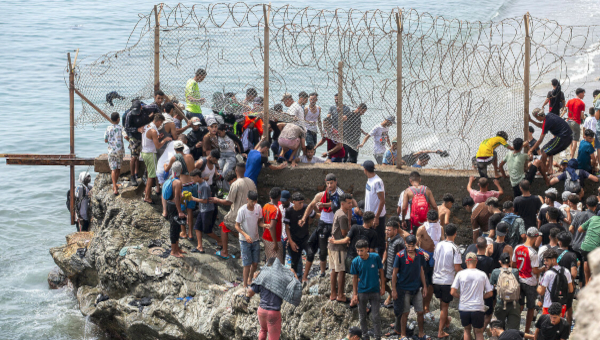
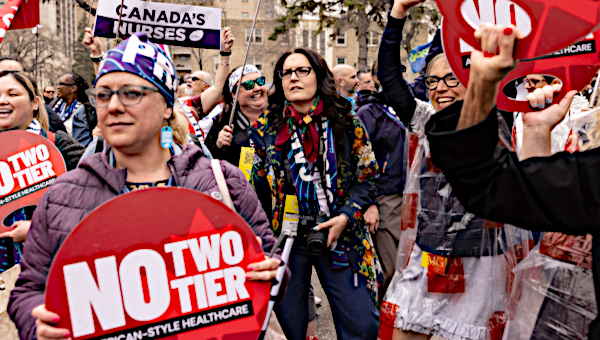
Marginalized constituencies – the poor, racialized minorities, and others – are particular evidence of this failure to deliver on democracy’s claims of inclusion. Those Canadians eking out an impoverished existence in which “democracy” registers weakly, if at all, in their daily lives are increasingly numerous, their numbers expanding daily. As a percentage of the population such destitute people are on the rise. Their lives worsen as capitalism seems beset by proliferating malaise and a growing callousness on the part of the rich and powerful. Those in governing circles tasked with the responsibility of insuring the basic human rights and welfare of all Canadians shed the odd crocodile tears for what is happening, but their unimpeded vision is clearly on shoring up the already considerable fortunes of the well-to-do.
The vast majority of Canadian workers and Indigenous Peoples, the poor and the racialized, now confront increasing precarity in the job market. Economic life is orchestrated by gig work, threatened by Artificial Intelligence displacement. Deindustrialization erodes the unionized job sector. Unemployment climbs as the cost of living soars. An arbitrary rewriting of the script of material life for the vast majority of Canadians has become normalized as “just how it is” in what is now a 50-year-old war waged against ordinary people by capital and the state.
Under capitalism, within which colonialism is now reciprocally embedded, crises are endemic, their calendar accelerating and character intensifying. As stated in The Communist Manifesto: “Constant revolutionizing of production, uninterrupted disturbance of all social conditions, everlasting uncertainty and agitation distinguish the bourgeois epoch from all others. … All that is solid melts into air, all that is holy is profaned.” Throw a narcissistic and capricious grifter like Trump into the mix, heading up the largest and most influential nation-state political economy in the world, and the result, a bellicose Bonapartism, is a recipe for chaos that exacerbates capitalism’s inherent tendency to descend into seemingly incomprehensible quagmires.
Here is Marx addressing The Eighteenth Brumaire of Louis Bonaparte in his writings on France and civil war in 1848:
“Driven by the contradictory demands of his situation, and being at the same time, like a conjurer, under the necessity of keeping the public gaze fixed on himself … by springing constant surprise, that is to say, under the necessity of executing a coup d’etat in miniature every day … throws the entire bourgeois economy into confusion, violates everything that seemed inviolable … makes some tolerant of revolution, and produces actual anarchy in the name of order, while at the same time stripping its halo from the entire state machine, profanes it and makes it at once loathsome and ridiculous.”
Sound familiar? The first time as tragedy, the second as farce certainly comes to mind. Yet the farcical is now no laughing matter. Its twenty-first century reincarnation is producing even more damage and destruction than earlier manifestations of reactionary populist reconstructions of the state.
The destabilizing trajectory of late capitalism registers negatively for masses of people, but for the rich it is yet another source of accumulation: portfolios fatten; conspicuous consumption revs up its engines of crass, ostentatious display. Capital industrializes for profit and deindustrializes for the same; it clamours for free trade in one decade, and opts for protectionism in the next. Colonialism continues apace amidst the whirlwind of instability. In Canada, chatter for reconciliation with Indigenous Peoples proliferates until it is no longer convenient to adhere to the substance that might anchor the cheap talk.
As powerful structures of determination, capitalism, and colonialism have charted a particularly heartless course in the post-1975 years of routinized economic downturns and fiscal crises of the state, neoliberalism has institutionalized austerity, deregulation, and the dismantling of the post-war settlement that enshrined collective bargaining rights for workers. It has elevated ideologically the freedoms of the marketplace above the rights of all to the fruits of their labour and the entitlements to sustenance, bargaining away ecological preservation in the interests of profit. In Canada’s case, the need to recognize the historic dispossession of First Nations, Métis, and Inuit peoples and redress the abrogation of treaties has taken a detour, routed into rhetoric rather than realized in substantive change.
Neoliberalism, for all the conventional wisdom, is less about market freedoms (which are constantly subject to the interventions of the state) and far more about eliminating an effective opposition to capital, centred in the working class and its defensive institution, the trade union. Free trade and tariffs, for instance, are both (in different periods and contexts) methods of achieving a regime of accumulation excised of a class opposition. The ways in which class war, waged from above, can assail working class power, whatever the dynamics of international trade, depends on the complex interplay of capitalist relations, the state’s willingness to utilize carrots or sticks (and combinations of these seemingly distinct tactics), and the economic terms of trade within which capital and labour clash. For half a century, those terms of trade have favoured capital and the state; they have been in the driver’s seat of a concerted mobilization of interests antagonistic to workers, the poor, and all marginalized peoples. The result has been a labour movement confronted by immense challenges, forced to swallow repeated defeats and setbacks, constantly on the defensive and routinely in retreat. As trade union power has faded, this ensures that oppositions of other marginalized groups will also be effectively disciplined and displaced.
As Marx and Engels summed up debates over free trade and protectionism in the mid-19th century: “Free trade: for the benefit of the working class. Protective duties: for the benefit of the working class. … [T]he bourgeois is a bourgeois – for the benefit of the working class.”
When Canadian capital is threatened by global instabilities, such as the United States tearing up trade agreements and imposing tariffs, the servile state is quick to declare the need to protect Canadian workers and employers. But it is the latter who receive the bulk of material support. A language of reconciliation and a fig leaf of legalistic “duty to consult” Indigenous Peoples, quickly faces legislative attack that stipulates “the national interest” overrides such considerations. Federal and provincial states declare unilaterally that they can act precipitously to preserve capital’s well-being. Yet the language of concern for Indigenous heritage is quickly called upon when, for instance, Trump, with a sweep of his sharpie pen, renames Lake Ontario.
What is to be done? There are those who will see a revived social democratic opposition as the answer, heralding a return to the ostensible fairness of the Golden Age of 1945-1970. However, those supposedly halcyon days were not without inequalities and democratic deficits; they spawned the very neoliberal retrenchment we live with today. For Indigenous Peoples, this period was certainly not about ‘good times’. These years were, instead, about the continuity of historic oppression, nothing less than the last gasp of a state-proclaimed coercive assimilation doing its best to escape responsibility for colonialism’s ongoing trauma.
Social democracy, heralded as an answer by many, has a lot to atone for. Virtually everywhere it has capitulated to neoliberalism and failed to sustain its pre-World War I promise to challenge capitalism decisively. In Canada, the New Democratic Party has squandered much with its alliance with liberalism, reduced to a rump in the parliamentary arena.
Will a new leader such as Avi Lewis make a difference? Probably not in the current climate. Trump’s extremism has managed to overdetermine politics in a way that makes it seem to most Canadians that there is no option but to align with Carney, a central banker dedicated to neoliberal premises and practices. Current polls suggest that when Canadians consider who of the three leaders of the established parliamentary parties they place their faith in, Carney outdistances all candidates and Lewis is very much a distant third, trailing even the much-vilified and fading yesteryear Conservative attack dog Pierre Poilievre. The decided lack of a forceful, critical Left, insistent on alternatives, is part of this sorry collapse of critical politics into the reconstituted and rightward moving Liberal Party government. Carney panders to capital, opts to militarize the economy, and follows a conventional economic program that merely attempts to partially bypass a trading dependency gone rogue by forging other exchange relations with more palatable, less mercurial, partners. An economic restructuring that addresses inequality, rethinks sustainability in an era of constant threat, and is ordered by the need to provide access to the material necessities Canadians require if democracy is truly to mean something is given nary a nod of consideration.
Cheerleading recent 2026 NDP victories in provincial bye-elections is heart-warming, to be sure. But a sober look at those successes suggests that a celebration of social democratic triumph might simply lead us back into the lair of liberalism, where ‘democracy proclaimed’ is so often ‘democracy constrained’.
After all, the New Democrats Ontario victory in Scarborough Southwest, a stronghold of the NDP, came to pass when the former NDP MPP resigned to run for the federal Liberals. A more striking NDP electoral achievement was the flipping of a conservative bastion in Calgary-Shaw. But that victory was layered in complexity. The NDP’s Calgary win occurred in a province where the New Democrats are the official opposition and the Liberal Party all but ex-communicated from the parliamentary church. The winning of this long-time conservative seat could simply be a recognition that voters, even those traditionally Tory, might be fed up with some of the extremism voiced in provincial circles. The Alberta NDP, headed by someone with transparently weak social democratic credentials, functions almost as surrogate Liberals, its policy commitments at odds with comrades in the federal party. The New Democratic Party’s Calgary victory benefitted from urban opposition in Alberta to separatist currents and an unease with at least some of Trump’s slaps in the face of Canadian sovereignty. The old description of Canadian social democracy as “Liberals in a Hurry” looks nowhere more prescient than in present-day Alberta. And however much hurrying up liberalism might promise democracy, its historical delivery has always been less than fulfilling.
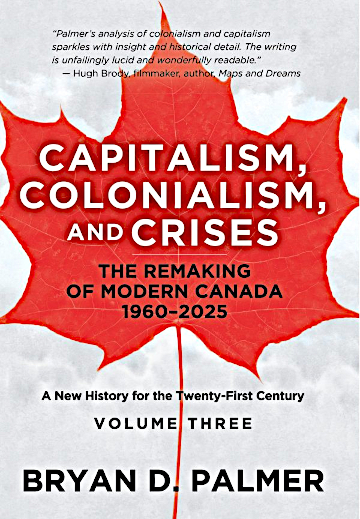
What of the labour movement? It, too, has suffered a decline over the course of the last 50 years, easily measured in deteriorating union densities, dropping strike counts, and a labour officialdom that seems incapable of reaching out for more when that is exactly what is required. Compare, for instance, the ways in which the trade unions of the 1980s mobilized to fight free trade. Decades ago, the labour movement lost that fight, but it at least built an independent campaign to resist.
What of the current stance of trade union leaders? When the Canadian Labour Congress mounted an April 2025 protest against Trump’s tariffs and job loss in the auto sector, CLC Vice-President Siobhán Vipod declared, “We’ve done our part. Now its time for the government – and corporate Canada – to do theirs.” Eighteen months on, there is little evidence of a class-based movement of opposition. Canada’s trade union tops are speaking somewhat more critically, to be sure, but it all seems too little, too late. Mostly, a beleaguered labour officialdom seems to have relinquished the current necessity of a fight-back to Carney’s leadership. Labour’s independent presence in the current anti-Trump mobilization has essentially been submerged in the rising tide of nationalist opposition.
That nationalist, “Canada Strong” stand, loudly proclaimed by Carney, is illusory. A much-heralded “Team Canada” is itself balkanized in the regional differentiation of a Canada where one Tory, Ontario’s premier Doug Ford, mounts the anti-Trump soapbox to demand a fight on all fronts and a retaliatory blockade against the American economy that withholds no resources, including oil and electricity. But Ford knows full well he himself will not have to stand and deliver. Another Conservative provincial head, Alberta’s Danielle Smith, cautions “No” to such grandstanding bombast and hob-nobs with the alt right hanging out at Mar-a-Logo. Carney revels in the fallout, the “responsible” voice of the Liberal centre, and waits for capital and the American electorate to bail him out as he basks in the limelight of international acclaim, cozies up to global capital and its investment potential, and links arms with the likes of Stephen Harper.
Meanwhile, the flag of independent class politics waves all too weakly. Opposition to Carney’s agenda becomes more pronounced given the Liberal Party’s transparent movement to the right, but voices of radical, anti-capitalist, democratic alternative remain weak. Resistance to Carney is pronounced in certain Indigenous circles, especially among their more militant spokespersons. Yet there is no denying that in the current crisis, First Nations, Métis, and Inuit groups are increasingly divided and isolated, in part because they are too often left to struggle alone, without adequate support from constituencies that should be aligned with them. Some recognized First Nations have bought into the project of capitalist development as an answer to their people’s problems, and the state is more than happy to encourage this.
Buttressing this is the dismal condition of an extra-parliamentary, revolutionary Left. It just does not exist in the same way that it did in the 1930s or even the 1960s and 1970s, when left organizations were present and played a role in pushing ensconced labour bureaucracies and mainstream politicians to confront realities with reforms. Nothing like the 1930s Communist Party exists in present-day Canada, and the new communist movements that arose out of the ferment of ’68 have largely vanished, their disappearance a consequence of the state’s “dirty tricks” and campaigns of repression, as well as internal frictions and implosions.
Red power militants of this 1960s and 1970s era (who learned from far-Left organizations and often worked with them and their young New Left proponents) closed the door on coercive assimilation, writing finis to the state’s last stand against Indigeneity. The 1969 Trudeau-Chretien push to declare an end to the Indian Act (and the Treaty entitlements it preserved) was decisively refused by First Nations opponents, certainly no advocates of colonial legislation. But Indigenous radicals understood that making First Nations peoples “citizens like all others” was a dead-end for their ongoing struggles, however much this process would be cloaked in the abstractions of Pierre Trudeau’s idealized, ostensibly democratic order. Similar political understandings animate Indigenous radicals in the current moment, where stands are being taken against both Trump and Carney.
If meaningful democracy is to be revived, it thus demands the rebuilding of an independent Left class struggle, a revival of trade union militancy and politicization, and a recognition that capitalism is actually the enemy of democracy, not its defender. This is a protracted process and will not overnight transform a political economy of exclusion, inequality, and the parliamentary charades that currently mask the lack of meaningful people’s participation in the process of governance. But it might well offer alternatives, recreate the possibility of trade unions being nurseries of potential militancy and political education, push recalcitrant figures in the economic and parliamentary arenas to adopt ameliorative (if partial and inadequate) policies simply to keep their heads above water, and build the truly oppositional institutions needed to create a more democratic order. Such movement will address the myriad dispossessions capitalism and colonialism have fostered throughout Canadian history and hopefully create the possibilities of a working-class/Indigenous alliance. This kind of coalition of all peoples whose interests are unambiguously opposed to both capitalism and colonialism would inscribe on its banners the need to realize, not frustrate and stifle, democracy.
As Marx appreciated so long ago, “no kind of bondage can be broken without breaking every kind of bondage.” It is the deep structures of determination of capitalism and colonialism so central to the making of Canada as well as a global political economy that ensure the continuity of bondages of all kinds. These bondages thwart democracy’s promise, turning it all-too-often into a cruel obfuscation. And it is these twinned structures that must be challenged with a revived Left attuned to the necessity of organizing a fighting resistance. Then, perhaps, the possibility of democracy as more than “idolatry of ideology” might well be on the agenda of realization.
Sinister cynical instrument
Who makes the gun into a sacrament –
The only response to the deification
Of tyranny by so-called ‘developed’ nations
Idolatry of ideology
…
You see the loaded eyes of the children too
Trying to make the best of it the way kids do
One day you’re gonna rise from your habitual feast
To find yourself staring down the throat of the beast
They call the revolution
… And they call it democracy •