
Diminishing Returns: A Review of Anton Jäger’s Hyperpolitics
In his Prison Notebooks, Antonio Gramsci, repurposing military terminology, formulated the distinction between “wars of maneuver” and “wars of position” in the ongoing class struggle between capital and labour that marks capitalist societies. A war of maneuver denotes actions akin to a rapid assault or open battle on the field of hegemonic struggle. Traditionally defined, revolutionary uprisings, coups d’état, industrial strikes, and direct actions each represent their own war of maneuver. The war of position, on the other hand, is a metaphor for the all-important institutional and cultural backdrop against which more visible maneuvers for power are launched. Like the slow buildup of military forces and armaments, the war of position between capital and the working class represents the accumulation of institutional and cultural resources by hegemonic combatants used to legitimate and execute subsequent wars of maneuver. Wars of position occur not directly on the political battlefield but unfold slowly over the terrain of the state and civil society. Gramsci maintained that in the advanced capitalist West, where entrenched state structures are fortified by the legitimations emanating from dense civil societies, the working class and its political representatives needed first to win the long war of position that upheld the rule of capital before capturing power in the name of socialism.

It is the relationship between these two poles of hegemonic struggle that animates Anton Jäger’s recent book, Hyperpolitics. Our modern era, according to Jäger, is characterized by a preponderance of wars of maneuver, with very little alteration in the defining war of position. Since 2008 we have seen various protest movements rise up in response to social and economic injustice on the Left: Occupy Wall Street, the Toronto G8 protests, Antifa, the record-breaking BLM protests, and a variety of anti-austerity movements have taken to the streets, set up camp in financial districts, and engaged in guerrilla tactics in the name of social justice and a better world. Meanwhile, forces of reaction have gathered on the Right: the rise of various Far Right movements in the US, the gilets jaunes protests in France (which admittedly contained both Left and Right elements), and the ‘Freedom Convoy’ in Canada have, in many instances, emerged as a national-chauvinistic reaction to the forward march of neoliberal globalization. At a more granular level, the online world has become a veritable minefield of fleeting political microtransactions and maneuver politics. Like-chasing political ‘hot takes’ of the moment proliferate on digital platforms in search of the next micro-hit of dopamine, as shifting political identities are formed and expressed through the algorithms of the social media simulacrum.
Despite their ubiquity, these social and cultural convulsions, big and small, real and virtual, have not fundamentally shifted the balance of power between capitalist social forces. Capital continues to consolidate, scale up, and engage in cut-throat competitive accumulation. Meanwhile, working-class movements remain anemic in organizational terms, lacking any real political influence, and confronting record levels of material inequality and workplace disempowerment. Nevertheless, shaken out of apathy by the experience of overlapping political, economic, and ecological crises, the modern working class has gained a new political consciousness, according to Jäger, but this newfound consciousness lacks the institutional and organizational vehicles for effective and sustained political articulation. In other words, the era of ‘hyperpolitics’ is defined by a high degree of politicization paired with low levels of institutionalization. As a result, working class politics is unable to make any ground in capitalism’s underlying war of position.
Shifting Terrain
This Gramscian image of stasis does not mean that nothing has changed on the terrain of class politics, far from it. Hyperpolitics aims to capture the shifting political topography of advanced capitalist societies since the postwar period that has occurred despite the ongoing structural empowerment of capital. Jäger divides this history into four distinct ‘political forms’ that marked this roughly 80-year trajectory: the postwar era of mass politics, turn-of-the-century post-politics, the post-financial crisis transitional period of anti-politics, and the current, eponymous stage of hyperpolitics.
The postwar era of mass politics paired high levels of politicization with high institutionalization. Political literacy was widespread, as was membership in organized mass parties, which, with one foot firmly in active civil societies and another in the state apparatus, served as effective tools for political mobilization and expression. The golden age of mass politics came to an end with the fall of the Berlin Wall and the collapse of the Soviet Union. The 1990s ushered in a period of ‘post-politics’ that inverted the political equation: low levels of politicization were combined with low levels of institutionalization. Jäger was certainly not the first to coin the term ‘post-politics’ nor to characterize this period roughly lasting until the ‘08 Global Financial Crisis (GFC) in this manner. Writing in the late 1990s, Slavoj Žižek characterized his contemporary period as a post-modern affliction that effectively foreclosed the conflict of competing ideological visions and repressed any real political competition, using the term ‘post-politics’ himself to describe the era. Political economist Colin Crouch characterized the same turn-of-the-century period as one of ‘post-democracy’, while political scientist Peter Mair spoke of the “hollowing of Western Democracy.”
Common to these and similar ‘depoliticization’ arguments was the proposition that Western democracies during this period experienced a double exit of political elites and popular masses from the political sphere. Elites retreated into the state and the world of PR-massaged officialdom. The political competition between competing social blocs was replaced by half-hearted competition among political elites who were just as likely to golf with one another as to engage in parliamentary debate. Meanwhile, faced with a narrowing spectrum of political and economic possibilities, the popular classes became increasingly apathetic and disorganized, politics relegated to a footnote, if it registered at all.
Jäger highlights two important, related trends that emerged in the post-political period and subsequently had a significant influence on the two political forms that followed. The first was the growing consensus in elite circles that policy needed to be separated from open political contestation. Policy was framed in functional terms as the administration of solutions to social problems and market failures. Emphasis was placed on ‘evidence-based,’ pragmatic policymaking; on ‘what works.’ Of course, ‘what works’ was largely determined a priori by naturalized postulates of neoclassical economic theory and assumed liberal political values that informed the elite common sense of the period. The contradictory political expression of this tendency was the Third Way movement, best represented by Blair’s New Labour in the UK and Clinton’s New Democrats in the US, but which had several manifestations across the West.
‘Neither Left nor Right’ and ‘the radical centre’ were the battle-cries of this largely elite-dominated political movement, the mostly passive social bloc comprised of a highly credentialed professional-managerial class and shifting industrial and financial factions of the bourgeoisie that increasingly saw no principled policy difference whatsoever in the traditional parties of the ‘centre-left’ and ‘centre-right.’ Initially, centrist and centre-left elites openly identified as Third Way to distinguish themselves ideologically from the New Right movement of the late 1970s and early 1980s. By the beginning of the 20th century, however, the self-proclaimed ambition of centrist elites to go beyond ideology altogether made the cognitive dissonance associated with an explicit ideological project – the Third Way – difficult to sustain. It did not help, of course, that following the initial successes of many self-identified ‘Third Way’ politicians, this faction oversaw the rapid electoral decline of social democracy in the first two decades of the current century. What remained in the movement’s place was a mostly performative identification with ‘progressive values’ and a policy agenda combining weak supply-side interventionism, a commitment to fiscal austerity, and a naïve but enduring faith in public-private ‘partnerships’.
The second trend Jäger underscores during the period of post-politics was the disintegration of civil society and the traditional institutions of working-class politics. In making this claim, Jäger recognizes his debt to American political scientist Robert Putnam, whose well-known work Bowling Alone made the argument that civic participation was in decline in the advanced capitalist core at the end of the century, measured in terms of membership in a variety of social organizations and voluntary associations: churches, trade unions, Rotary Clubs and, of course, bowling leagues. While the trendline Putnam highlighted was clear, his explanation for this civic decline was less so, as he pointed to several factors: the entry of women into the workplace, expanding workdays, increased television/media consumption, and changing social behavioural patterns across generations. Putnam’s multicausal explanation, however, left considerable room for question-begging. In its place, Hyperpolitics proposes a more materialist explanation for the decline in civic life rooted in the breakdown of the mass party and trade union as organizational forms. This decline can be gauged not only in falling rates of party membership and collective bargaining coverage, but also by the displacement of these social forms from the centre of working-class life as nodal points that organized everything from sporting leagues and lecture series, good and welfare committees and social insurance schemes, to credit unions, bars and clubs. From this perspective, parties and unions not only sought to improve the material conditions of the working-class through pro-labour policy and industrial actions, but also disseminated ideological worldviews and served as vital vehicles of political articulation.
In making this argument about the parallel decline of working class parties and trade unions at the end of the 20th century, Jäger joins an established line of critical social scientists who have highlighted this trajectory toward ‘partisan dealignment,’ particularly on the Left, as former working-class constituencies of left-wing parties, including many trade union members, have slowly drifted to other parts of the political spectrum or disengaged from the democratic process altogether. Jäger expands on the dealignment thesis, however, by arguing that this institutional trajectory laid the groundwork for the two most recent political forms: the period of ‘anti-politics’ that spanned roughly from the 2008 financial crisis to the mid-point of the ‘long 2010s,’ and the current era of hyperpolitics. The post-GFC period of anti-politics, according to Jäger, initiated the process of re-politicization of Western societies. The unravelling of the American subprime mortgage market and the domino effects this unleashed on the global financial system disrupted the neoliberal common sense on the economics of unchecked market forces. The growing disillusionment with neoliberal policy prescriptions was compounded by deepening levels of inequality and the retrenchment of postwar welfare states.
The result was an explosion of mass protest and social movement activity in the first half of the 2010s: Occupy Wall Street, the Tea Party, the Indignados, etc. Without drawing a moral equivalence between these movements, Jäger argues that these highly visible but fast-burning wars of maneuver represented a form of anti politics in that they were aimed directly at the established party systems and political actors that had retreated into the state during the period of post-politics. Out of this social dislocation emerged what in an earlier work Jäger and co-author Arthur Borriello characterized as the ‘populist moment’ in Western party systems, as anti-system electoral movements emerged on both the left and the right side of the political spectrum (Syriza, Podemos, Corbyn, Trump, Brexit, AfD, etc.). Like the social currents that these political manifestations grew out of, these new electoral challengers evinced a highly charged anti-system, populist orientation. On both the left and right, the ideological appeals of these movements were framed not in terms of class struggle but in a populist register that situated the ‘people’ against a corrupt political and economic elite.
Return of the Repressed
The transition from antipolitics to the current era of hyperpolitics occurred when the process of repoliticization, initially confined to marginalized subsections of the population, spread across the polity. Jäger does not provide an exact date for when this threshold was reached, but suggests that by the end of ‘the long 2010s’ Western cultures reached a point of political saturation that signalled the arrival of hyperpolitics. The repoliticization of Western culture, however, has occurred on the institutional landscape inherited from the post-political period. As a result, while the political appears everywhere, nothing seems to change. This is because the era of hyperpolitics lacks the associational lifeworld capable of organizing the wide diversity of political sentiment operating within the culture into coherent ideological worldviews. The result has been a profound sense of ideological disorientation within the hyperpolity.
Hyperpolitics has fundamentally altered the party’s organizational form. Many mainstream parties of the centre right and centre left remain the organizational relics of the post-political era, alienated from their traditional social constituencies and closely tied to the state apparatus through a regime of subsidies and professional networks. The new breed of populist parties, however, have caught up to speed with the hyperpolitical era. They have typically assumed a more fluid, horizontal organizational form; one that maintains a porous distinction between card-carrying party members and outside sympathizers by rendering entry and exit from party structures and activities a relatively frictionless affair with low opportunity costs. At the head of these parties is usually a charismatic, influencer-style leader who maintains a tight, informal cadre of advisors and political allies who centrally steer the amorphous party organization and its grassroots operations. While Jäger maintains that this party form has achieved some success on the Left, it has proved ultimately fleeting. Many of the Left populist electoral movements, whether inside or outside traditional party structures, have either failed to breach the crucial threshold of forming a government (for example: Bernie Sanders (US), Jeremy Corbyn (UK), and Jean-Luc Mélenchon (France)) or, like Syriza in Greece, have been assimilated into the cartel party system through a process of ‘social democratization.’ Lacking the ambition and/or the ability to overcome the decomposition of core associational forms of working-class politics, these top-heavy hyperpolitical parties have been unable to form an effective counterweight to the structural power of the capitalist class. In other words, they have not impacted the war of position between capital and labour in any meaningful sense.
The Right has proven more adept at adapting to hyperpolitics, epitomized by the electoral successes of Donald Trump, whom in a recent article for the New Left Review Jäger described as the “model hyperpolitician.” How are Trump and Trumpism ideally suited to the current political terrain? It is not because, as is sometimes proclaimed, Western social formations and the US in particular are undergoing a historical revival of classical fascism. Rather, echoing the argument of US sociologist Dylan Riley, Jäger argues that the social conditions of the present are fundamentally different from those of the interwar period in which this conception of fascism emerged. The likes of Mussolini and Hitler rose in developed and active civil societies characteristic of the period of mass politics. Traditional fascism exploited this dense web of interwar associational life to socialize political activists and party members into an active and disciplined ideological and social bloc. The cadres of the classical fascist movements were typically unemployed veterans of the First World War with extensive military training and regimented political discipline. Their objective was not only to gain state power but to combat the credible threat of socialism coming from Soviet Russia and the radicalization of mass working-class politics in their own countries.
The current period, of course, not only lacks this socialist threat but, according to both Riley and Jäger, the associational life and political institutions of the interwar period. While several new ‘Alt-Right’ and (now) ‘Far-Right’ organizations and movements sprang up over the course of the 2010s, they do not maintain the same level of social penetration or ideological cohesion as their interwar counterparts, and they are more loosely connected to major right-wing political parties. The social base of Trumpism is not these mostly online reactionary movements and organizations, but rather an atomized and alienated body politic disillusioned with the realities of neoliberal globalization. Accordingly, Jäger and Riley claim the more apt comparison for Trump is the 19th-century French Bonapartism described by Marx in The Eighteenth Brumaire of Louis Bonaparte. There Marx described the failure of different factions of the French bourgeoisie to establish a hegemonic order over the course of the short-lived Second Republic (1848-1852), the vacuum of dysfunctional state power this left in its wake, and the political rise of the charismatic mid-century Bonaparte as a centralizing and stabilizing force amidst the legitimation crisis of the French state. Bonaparte achieved this by marshalling the extra-parliamentary support of a conservative free-holding peasantry and an urban petty bourgeoisie primarily concerned with the maintenance of their own myopic material interests as property/small-business owners.
Marx argued that these social forces lacked any real collective identity, but rather existed as “homologous magnitudes, much as potatoes in a sack form of potatoes.” Lacking autonomous collective agency,
“They are consequently incapable of enforcing their class interest in their own name, whether through parliament or through a convention. They cannot represent themselves, they must be represented. Their representative must at the same time appear as their master, as an authority over them, as an unlimited governmental power that protects them against other classes and sends them rain and sunshine from above. The political influence of the small-holding peasants, therefore, finds its final expression in the executive power subordinating society to itself.”
While this reading of 19th-century Bonapartist society seems unnecessarily harsh on the French peasantry, the parallels with Trump are striking. Trump’s policy agenda has been enacted in large part through a flurry of executive orders – much of which is on shaky constitutional footing – that bypass the legislative branch and bombard the judiciary and its traditional oversight role. Ideologically, the MAGA doctrine presents a highly idealized (and patently inaccurate) image of the American past that functions more to represent Trump’s base and its supposed values in the media and on the campaign trail than it does as a genuine expression of the disaffected Trump voter, even though they may nevertheless gravitate toward its conservative nostalgia and barely concealed xenophobic subtext.
Trump’s highly charged and desultory political style also complements the manic rhythms of hyperpolitics. Compared to his post-political predecessors in the Republican Party – Romney, McCain, and the Bushes – Trump makes no overtures to the political centre and the ‘median voter’. Rather, despite this history of supporting Democratic candidates, Trump rose to power as an unapologetic spokesman of the nascent Far Right movement in the United States; a movement that would subsequently cannibalize the Republican Party under the MAGA banner. From the start, Trumpism was constructed as a polarizing movement. The ideological struggle the movement waged on mainstream American culture proceeded not on the grounds of traditional debate – where political claims are met with counterclaims and further justifications are produced – but rather through a form of scaled-up online trolling, epitomized by the recent professional UFC fight held on the lawn of the White House.
At the same time, Trump and the MAGA movement display a profound level of ideological disorientation. An enduring faith in market forces, a holdover from the days of the New Right, is paired with support for a tariff regime restricting the operation of markets. Traditional conservative disdain for the state is combined with seemingly unlimited deference to executive power. Negative views on contemporary labour unions co-exist with visions of the postwar ‘Golden Age’ when the American labour movement’s influence was at its peak. These contradictions are secondary, however, in the turbulence of the hyperpolitical era, where the ambition of political communication appears first and foremost to maintain the attention of a perennially distracted electorate in an unceasing war of maneuver between ideological combatants.

Post-Hyperpolitics
Meanwhile, centrists and mainstream ‘progressives’ have attempted to juxtapose Trump’s hyperpolitics with their own brand of depoliticized, technocratic policymaking, as if the effective antidote to the ideologically driven governance of Trumpism is to bend the stick in the opposite direction entirely. Despite making vague overtures to the American labour movement and New Deal Politics, the Biden presidency ultimately resorted to a form of limited technocratic interventionism reminiscent of the Third Way era. More recently, Canadian Prime Minister Mark Carney represents the most coherent expression of this anti-Trumpian strategy. An Oxford-educated, two-time central banker, who was portrayed by the liberal media establishment in Britain as the prototypical ‘adult in the room’ during the tumult of the Brexit negotiations, Carney has cultivated an image as the technocratic, cosmopolitan antithesis to Trump’s vulgar parochialism. In Canada, Carney took office as part of a broader national reaction to the anxiety created by newly imposed American tariffs and Trump’s tongue-in-cheek threats to Canadian sovereignty. As a result, Canadian public opinion of Trump reached an all-time low, even among many of the MAGA faction’s erstwhile right-wing Canadian allies, leading to a sharp decline in the polling numbers of the right-wing, Trump-aligned Conservative Party. At the helm of the Liberal Party, Carney appeared before the Canadian electorate as a sophisticated economic manager capable of deftly outmaneuvering his lumbering American counterpart.
Thus far, however, the economic record of the Carney government since assuming office has been less than stellar. Unemployment remains around 7 percent, where it was when Carney took office, while it has been debated whether the country’s anemic growth rate constitutes a ‘technical’ recession. While economic damage was predictable given the overwhelming dependence of Canadian industry on American markets, it has nevertheless led to a nearly 10 percent decline in Carney’s approval rating since the beginning of the year. These recent setbacks for Carney mirror a deeper international trend that has witnessed centrist and centre-left parties hemorrhaging electoral support in the hyperpolitical era after failing to provide a coherent alternative to right populism.
In their recent book Beyond Social Democracy, veteran analysts of Western social democracy Silja Häusermann and Herbert Kitschelt have highlighted that the centre-left’s vote share has not primarily migrated to the Right – as much post-Trump, post-Brexit commentary has suggested – but rather further to the Left, to Green and ‘radical left’ parties offering an unapologetically materialist programme based on redistribution and social protection. In North America, Zohran Mamdani and the DSA’s success in the NYC mayoral elections can be seen as an example of this trend.
It would be naïve, however, to suggest that mainstream centrist and centre-left parties will simply adopt a more materialist agenda to revive their electoral fortunes, as liberal commentators like Ezra Klein, Matthew Yglesias, and Thomas Piketty have argued. The problem is not necessarily that a more materialist agenda won’t revive the fortunes of centre-left parties, but that this line of strategic thinking neglects the extent to which these parties do in fact represent a rigid ideological faction and class project with deep roots in postwar history. In other words, we should by no means take mainstream ‘progressives’ at their word when they suggest they have moved beyond ideology into a world of pure electoral and policy ‘solutions’. Rather, as critics of the centre-left have long pointed out, the current centrist faction that controls many of the former mass parties of the Left obtained power by actively dismantling the institutions of working-class politics, dampening the electoral appeals to labour, and accommodating policy to the (presumed) imperatives of neoliberal globalization. There was, in other words, an important class struggle occurring within these parties that mirrored the broader war of position between capital and labour, the coordinates of which have decidedly favoured capital since the neoliberal turn. Through this partisan struggle, left-wing activists and labour movement representatives were effectively purged from positions of influence within the post-war mass parties of the political left, replaced by an upper-middle-class cadre of professional politicians and elites with material interests at odds with the Left’s traditional working-class base. David Brooks, the éminence grise of the American centrist commentary, has recently confirmed this reading of American political history by saying the quiet part out loud in an article in The Atlantic, calling on the centre-left to renew its struggle against the rising influence of the Democratic Socialists and ‘Communists’ within the Democratic Party.
In view of this history, on the Left we must recognize that the centrist postpolitics of the 1990s and 2000s was a conscious political project, and one that was the effective outcome of a class struggle over the ideological nature, organizational structure, and social composition of the traditional mass parties of the Left. The failure to underline this political agency is one criticism that can be made of Hyperpolitics. While Jäger presents an accurate snapshot of the current political moment and effectively traces the history leading up to it, the book does not provide any systematic theory of causation of how exactly we have arrived in the era of hyperpolitics. In answering that question, an exploration of the internecine struggle of postwar Left mass politics is unavoidable. Today’s centrist and centre-left elites received their political socialization in this post-political era, as cadres of Third Way politics, even if they don’t like to admit it. Their biographical and social history means today’s centrist politicians are unlikely simply to adopt a redistributive policy agenda that goes against not only their material interests but also their deeply entrenched ideological orientation. Strategically, this means that for a genuine socialist project to take root in advanced capitalist societies, we can’t simply convince these political elites to adopt socialist policies, and there can be no policy shortcuts. While policy is undoubtedly an important mobilizing tool, those efforts must be combined with the patient work of rebuilding working-class institutions and political capacity. Here Jäger is in full agreement.
Hyperpolitics contains other oversights that might be overlooked considering its condensed format and the time at which it was first written in German, in 2023. As Jäger himself hints at points in the book, a meaningful distinction could be drawn between the pre-WWII and postwar period of ‘mass politics.’ The postwar period arguably underwent its own form of depoliticization as unprecedented levels of growth and material inequality pacified Western working-class politics well into the early 1970s, when the global stagflation crisis engendered a new wave of working-class militancy. A less rose-tinted view might see the roughly 30 years following WWII as one of high institutionalization but low politicization. Perhaps a more significant criticism could be levelled against the gulf between social movement politics and the formal political/electoral sphere in the current political moment that Hyperpolitics seemingly seeks to establish.
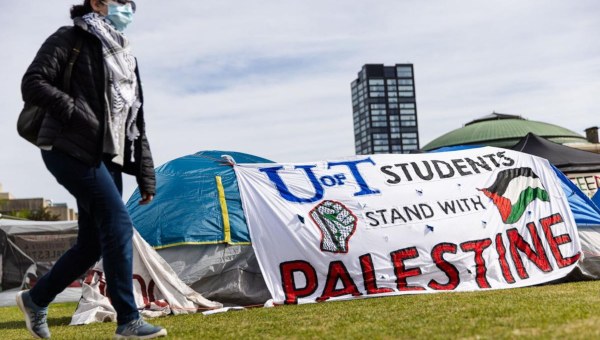
The Palestinian solidarity encampments and mass protests following Oct. 7th have demonstrated at least the potential that a sustained, energized, and motivated mass movement can leave an imprint on electoral politics and party systems. Several left-wing parties and politicians – including locally Avi Lewis and the NDP, Mamdani in NYC, and the PSOE-Sumar coalition in Spain – have now adopted an unapologetic pro-Palestinian message and platform in response to the growing tide of dissent toward the conventional head-in-the-sand liberal position on the conflict. What this demonstrates is that in the hyperpolitical era, the important connection between social movements and the political mainstream is not necessarily severed, and that voices of protest can still find important avenues of institutional expression. Only time will tell how fleeting these expressions might be, and whether or not they are capable of moving the dial in capitalism’s war of position. •