NATO and Potemkin Ankara
Attendees of the NATO summit in Ankara in early July were anxious. Prior to the gathering, Donald Trump threatened to withdraw the US from the 32-member alliance, primarily because the organization had refused to support his illegal war on Iran. Trump also claimed to be considering the removal of American troops from Europe in retaliation for the alliance’s opposition to his demand that Denmark, a fellow NATO member, surrender Greenland to the US.
Fortunately for attendees, Trump eventually came around. Though unable to cajole members into supporting his flailing Iran war, Trump did get NATO countries to continue increases in military spending first agreed to in 2025. New agreements include $50-billion in procurements and the adoption of cloud and AI warfare tools, contributing to the rearmament of Europe and the enrichment of military and tech oligarchs. In return, Trump affirmed the US’s “ironclad” commitment to the alliance’s collective defence, enshrined in Article 5 of the NATO treaty.
However, mainstream media largely failed to cover what was happening behind the scenes in Ankara. Prior to the summit – which cost around 11 billion Turkish lira, or $235-million (US) – protests were banned in the Turkish capital and hundreds were detained in so-called “preventative arrests.” Domestic media was muzzled, with broadcasters warned by the state’s media watchdog against negative coverage and independent Turkish journalists were denied accreditation for the event. While diplomats gladhanded in luxury hotels, the state cracked down on the people.
Beautification and Degeneration
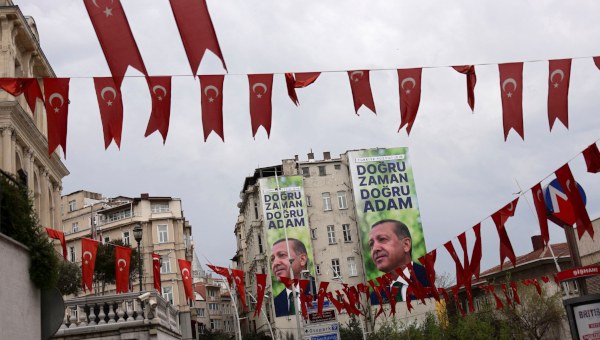
At the same time, sections of Ankara received a lavish makeover. Though enacted for the comfort of foreign guests and causing severe disruptions to daily life, inhabitants will benefit from repaired roads, urban landscaping, and the planting of flowers in front of deluxe hotels. (One doubts, however, whether local taxi drivers will offer ordinary Ankarans chilled water, Turkish delights, and cologne.)
The beautification of Ankara cannot compensate for the degeneration of political life in Turkey that was embodied in the NATO summit. A gradual erosion of democratic rights has accelerated in the past two years, as the country transitions from “competitive” to full-blown authoritarianism under President Tayyip Erdoğan. With his Justice and Development Party (AKP) unlikely to win fair elections after a drubbing in municipal polls in 2024, the ruling bloc has decided to simply eliminate any opposition, specifically that of the People’s Republican Party (CHP).
The Potemkin-like nature of the Ankara summit could not really be concealed, and only wilful blindness can explain Western leaders’ silence on Turkey’s democratic backsliding. While it is, of course, unsurprising that NATO states are unconcerned about the repression of a member country’s domestic population, the July farce will be rightly understood by Erdoğan as a Western green light for unbridled authoritarianism.
Making Potemkin Ankara
In early June, employees of the university where I work received an email from the administration. We were informed that during the week of July 6-10 new security and transportation measures would be implemented across Ankara, a capital city of six million. In line with regulations issued by the governorship, all summer courses would be conducted online and previously scheduled campus activities were to be cancelled or rescheduled. Staff were ordered to work remotely, and all non-international students were to vacate dormitories.
This inevitably created problems. In addition to disrupting normal work schedules, the existence of a hotel nearby where dignitaries were staying meant roads near the university were periodically closed, making travel difficult. Our campus, where thousands of students and faculty reside in normal times, felt like a ghost town, eerily evoking the pandemic of six years ago.
It might be supposed that such inconveniences are unavoidable consequences of hosting such an august gathering. Why, however, were students ordered to vacate campuses? Those staying in dorms for internship or employment purposes, many of whom are not from the area, received no alternative accommodations from the government. Students at Middle East Technical University refused to surrender their right to housing, noting that the closure of airports and roads made travel out of Ankara all but impossible.
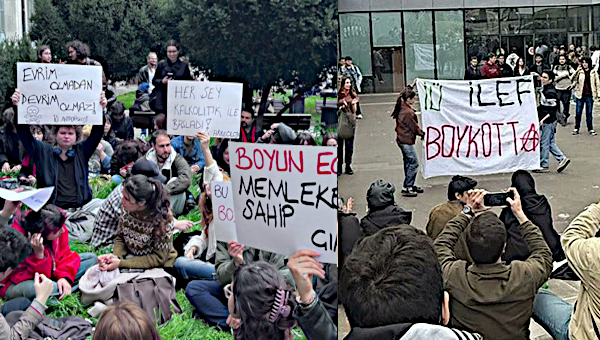
The order makes sense when one considers that students are a major source of opposition to the Erdoğan government. While universities have long been centers of resistance to the regime, student militancy was dramatically displayed in March of 2025, when young people led a wave of protests that swept the country after Istanbul mayor and presidential contender Ekrem Imamoğlu was stripped of his university degree, arrested, and removed from office.
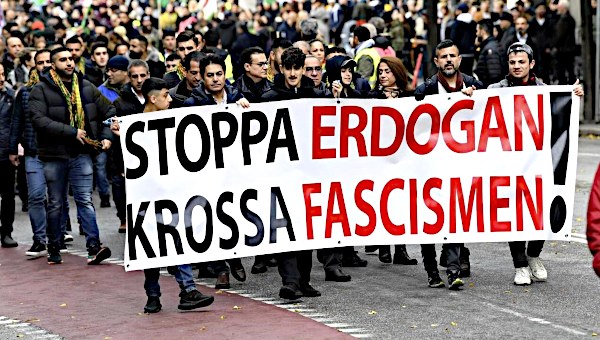
Prior to the summit, police detained more than two-hundred people in early morning raids on June 23. According to the Ankara Chief Public Prosecutor’s Office, the operation targeted members of dangerous armed groups. Yet lawyers and environmental, labour, and LGBT+ activists were also detained. The government’s real fear was indicated on the evening before the arrests, when the Ankara Governor’s Office banned all public assemblies and demonstrations until the summit was over. It was clear that expressions of dissent, not terrorism, were what the government feared.
Members of the press were also targeted. According to Reporters Without Borders, Turkey currently ranks 163 out of 180 countries in press freedom, with ninety percent of national media outlets controlled by the government. Yet independent outlets courageously persist, and eleven journalists were among those arrested prior to the NATO conference. Hostility to a free press was also demonstrated when Turkey’s media regulator, RTÜK, issued a directive to broadcasters to observe a “national security perspective” during programs discussing the summit.
Not even comedians were immune from the crackdown. On his arrival in Istanbul from abroad on July 2, the comic Deniz Göktaş was detained and charged with “insulting” Erdoğan and religious values. At the time of writing, the stand-up special for which Göktaş was arrested has well over fourteen million YouTube views, possibly making him the most viewed comedian on the platform. Justifications in defence of society notwithstanding, the refusal to tolerate political humour in a country with a rich tradition of satire is yet another sign of weakness.
And yes, in Turkey one can be prosecuted for insulting public figures. Göktaş, who remains in detention, is just one of thousands investigated every year for insulting Erdoğan.
Experiencing Potemkin Ankara
In contrast to its inhabitants, summit participants had a delightful time in Ankara. After arriving at Esenboğa Airport, attendees likely noted the NATO publicity panels on their drive downtown. These displays, in fact, served to hide impoverished homes and neighbourhoods, shielding diplomats from an unsightly reality of the city. In response, activists hung banners on the panels directed at the government stating: “You cannot cover up the poverty you have created!”
Similarly extensive preparations were undertaken at a number of the city’s hotels. The general manager of Sheraton Ankara, Kılıç Ali Kantar, boasted that planning for the summit had been underway for months, though, of course, much could not be shared with the public due to security concerns. More importantly, for the tourism industry a successful event would enhance Ankara’s “brand value,” encouraging future profitable gatherings in the city.
Kantar’s downtown Sheraton likely housed French president Emanuel Macron during his visit. Prior to the summit, rumours circulated that some of the city’s many parks would be closed to accommodate Macron’s morning runs. After the first day of the summit, video emerged of Macron jogging in Seğmenler Park near the Sheraton.
The normally pleasant park looked decidedly unpleasant, however, with roads cordoned off and the area entirely closed to the public. This did not sit well with inhabitants, and the opposition press noted that during a visit to India a few months earlier Macron’s jogging route remained open to the public. One viral joke involving the French president and Ankara’s gentrification stated: “If Macron could take public transport, maybe we’d finally have air conditioning on the buses!”
At the JW Marriot, not far from where I work, security was especially heavy for Donald Trump. The US president’s admiration for Erdoğan is well-known. Prior to the summit, Trump stated that he was only attending because Erdoğan had personally invited him. “I would not have gone for most people,” he claimed; “I’m going out of respect to President Erdogan.” Government-aligned media in Turkey predictably circulated the quote widely.
While Trump’s comments were clearly intended to needle European political leaders, his esteem for Turkey’s president is genuine. At a meeting between Trump, Erdoğan, and Benjamin Netanyahu in 2025, Trump urged Netanyahu – not Erdoğan – to be “reasonable” amidst rising tensions between Turkey and Israel. Trump then characterized the Turkish president as “a tough guy” who is “very smart,” allegedly masterminding the downfall of the Assad regime in Syria. This admiration was reiterated in Ankara in 2026, when Trump heaped still more praise on Erdoğan, his “dear friend.”
Potemkin NATO
Trump, of course, could not care less about the suppression of civil liberties, in Turkey or anywhere else – the US included. NATO, however, claims to support “freedom” and “democratic values” in addition to promoting peace, diplomacy, and collective defence. The Ankara summit belied any Western professions of concern for basic democratic norms.
Media also failed to question NATO officials over the host country’s democratic backsliding. One reporter, however, did ask Secretary General Mark Rutte, who had praised Turkey’s role in NATO before the summit, about the restrictions and crackdown on dissent in Ankara. Rutte feebly responded that democracy was about more than elections and that journalists had a right to ask questions. Job, evidently, done.
Rutte, of course, is a highly skilled sycophant. At the 2025 NATO summit, the secretary general famously called Donald Trump “daddy” after the US president compared the leaders of Israel and Iran to unruly children. “Daddy has to sometimes use strong language,” Rutte joked after Trump claimed neither country knows “what the fuck they’re doing.” The humiliated secretary general and former prime minister of the Netherlands later attributed the craven comment to a “language problem” – an excuse almost as laughable as the original statement.
Rutte’s propensity for obsequiousness was on display again in Ankara. When a reporter from the Danish News Agency asked the secretary general how he could maintain self-respect in the face of Trump’s belligerent demands for Greenland, Rutte cravenly responded with still more praise for Trump. The short answer for the Danish journalist, therefore, is that no, Mark Rutte does not have any self-respect.
Exposing politicians’ hypocrisy is, of course, not a particularly fruitful exercise. But what explains the West’s silence regarding Turkey’s suppression of the opposition, which has seen dozens of mayors arrested and removed from office? And which has included the nullification of a 2023 congress of the CHP in order to replace the successful party leader, Özgür Özel, with a government stooge who is famous for his political ineptitude? Where is NATO’s commitment to freedom and democratic values?
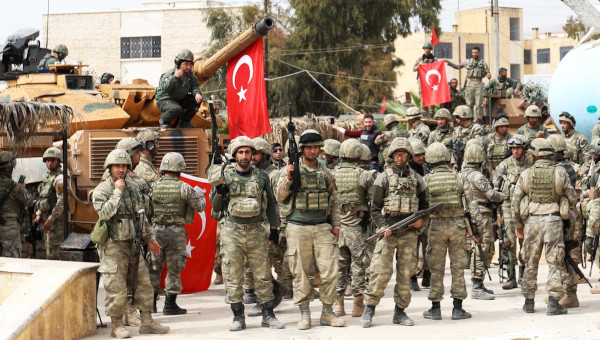
Turkey’s power in NATO relates to the size of its army (the alliance’s second-largest after the US) and geographical position. While since February 2022 Turkey has supplied Ukraine with drones, expanded military-defence cooperation with Kyiv, and limited Russia’s ability to reinforce its Black Sea fleet, it has also refused to join Western sanctions and maintains economic and diplomatic channels with Moscow. This gives it unique and unprecedented leverage at a time of war and rising geopolitical tensions in the region.
Turkey also exerts significant pressure on Europe by gatekeeping millions of potential refugees. In 2016, the EU-Turkey deal gave Turkey €6 billion in exchange for stopping “irregular” migration from Turkey to the Greek islands. This was, in effect, a bribe intended to stop refugees fleeing persecution, primarily in Syria, Iraq, and Afghanistan, from reaching Europe. With well over 3 million refugees currently residing in Turkey, the threat to open the floodgates of non-Western others to Europe is ever present.
Post-Potemkin Turkey
Donald Trump is right about few things. He is, however, correct in his assessment of Tayyip Erdoğan’s political acumen. Erdoğan is a leader who knows how to deploy power, both domestically and internationally. What he cannot do, however much he suppresses dissent, is manufacture genuine domestic support amidst a failing economy and declining living standards. (Whether Erdoğan’s current effort to marshal support from the Kurdish population will be successful remains to be seen.) The regime rules through fear, with apathy among the general population the most it can hope for.
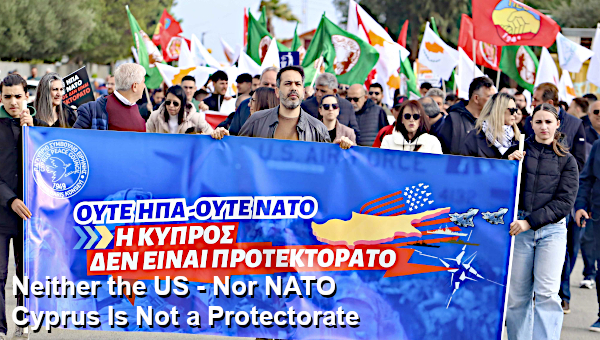
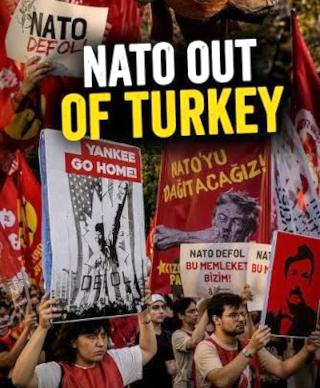
Apathy is unlikely, however. Prior to the summit, it was common to see stickers and posters on Ankara streets saying: “NATO Get Out!” (NATO Defol!). During the summit, Turkish social media was full of ridicule of the government and its gentrification of Ankara, evidence of a resilient and humorous spirit of opposition. People may be afraid, but they are not too cowed to heap scorn on the state and its Western enablers. Channelling this spirit into organized movements for economic and political democracy at a time of heightened repression remains the left’s primary challenge. •