
New Brunswick’s Energy Contradictions
On May 28, the New Brunswick Energy and Utilities Board approved construction of a new gas- and diesel-fired generating plant. It will be built in Centre Village, a small hamlet in the municipality of Tantramar in the southeast of the province. The move surprised no one, and that is both a shame and part of the problem. The decision illustrates a series of wider issues with New Brunswick energy policy, not least its isolation from even a measure of democratic control.
The new plant is part of the inaptly named Renewables Integration and Grid Security project (or RIGS). It will be developed, built, owned, and operated by ProEnergy, a US energy company headquartered in Sedalia, Missouri. According to NB Power, the provincial Crown corporation that plans, administers, generates, and oversees power in the province, RIGS aims “to meet New Brunswick’s growing electricity needs while keeping power reliable, affordable, and environmentally responsible.” This description disguises more than it reveals.
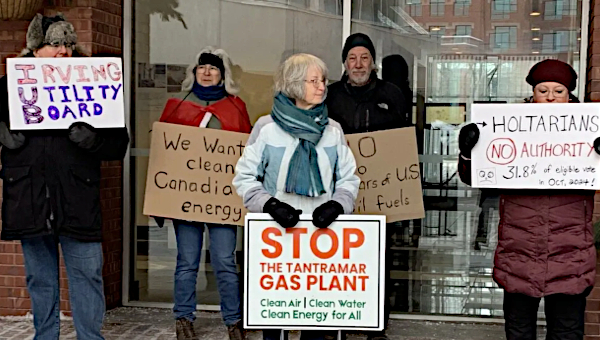
Opposition to the proposed plant was almost immediate. The first concern is its location. Centre Village sits on the Isthmus of Chignecto, which connects Nova Scotia to New Brunswick and the rest of Canada. The area is environmentally unique, home to the largest salt marshes in the country and their delicately balanced ecological systems. The isthmus itself is fragile. It is prone to flooding and has been a political hot potato as Nova Scotia and New Brunswick squabble with the federal government over the cost of protecting it from rising sea levels. In the view of local residents, contributing to the very problem that threatens this environment seems like a short-sighted initiative.
It Gets Worse
The problems with the Centre Village RIGS plant do not get much better after that. First, it is also opposed by Indigenous people. The North Shore Mi’kmaq Tribal Council, along with Elsipogtog, the largest Mi’kmaq community in the area, have made their concerns clear. What is interesting, however, is that Indigenous participation in the project was initially billed as one of its key strengths. Premier Susan Holt called Indigenous cooperation on the project its most exciting feature. First Nations involvement allowed the project to be presented as an Indigenous-led partnership rather than simply a plant built and owned by an American company. The problem was that no one seems to have actually asked the views of Mi’kmaq communities or leaders. Can the plant be built without Indigenous support? The answer seems to be both no and yes. Initially, a spokesperson for the company building the plant said Indigenous support was needed. NB Power, however, disagrees and appears unconcerned about Indigenous buy-in.
Second, the approval process has raised questions about the adequacy of environmental and regulatory scrutiny in the province. ProEnergy registered the privately-owned project for a provincial environmental impact assessment (EIA), as required under New Brunswick law for generating facilities of three megawatts or more. That assessment remains under a determination review. Opponents, however, have called for a more comprehensive EIA, which the province has so far declined to require. A separate dispute over regulatory oversight arose before the Energy and Utilities Board. Because ProEnergy will own and operate the plant while NB Power buys its output, NB Power argued that the project was not one of its own capital projects and therefore should not be subject to the EUB’s full prudence review. The regulator rejected that argument and ultimately reviewed the project before approving it in May. The episode nevertheless exposed a potential route around public-utility oversight: NB Power will be the plant’s principal customer, and ProEnergy will “transfer” $70-million worth of newly constructed transmission infrastructure to the province, even though the generating station itself remains privately owned. Scrutiny matters for several reasons, not least because there is no agreement – even among the project’s proponents – about how much pollution the plant will create. In fact, competing estimates are not even in the same ballpark.
Finally, it is not clear where the energy is going, what it will do, or even whether it is needed. NB Power projects that the province will face an energy deficit by 2028. This implies that the province could need to begin rationing electricity during periods of peak consumption. Yet the province also plans to approve the construction of a data centre in another small community that would, by itself, increase provincial energy demand by 200 megawatts – a huge chunk of what the new Centre Village plant will generate. What is more, the approved Centre Village plant can generate approximately 20 percent more power than originally planned: its initial generating capacity was 400 megawatts, while its current capacity has been raised to 500 megawatts, under an economic model that will allow NB Power to resell the additional power. Exactly who will buy this energy is not clear. One possibility was another data centre that would have been built in a nearby Nova Scotia community, a move its local government is trying to stop.
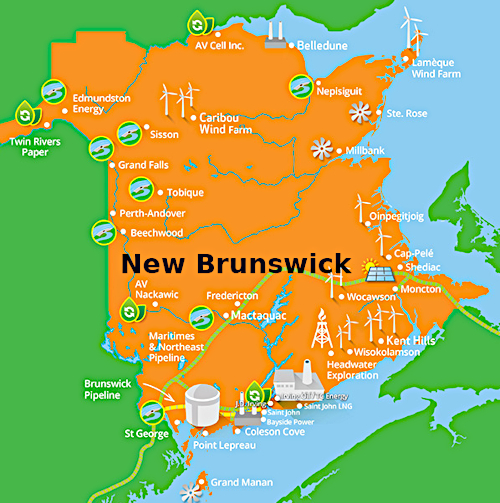
Making matters worse, NB Power has also moved to dampen the growth of renewable energy production by cutting incentives designed to expand solar generating capacity. New Brunswick has been slower than its Maritime neighbours to develop solar alternatives, but policies introduced a few years ago have triggered significant growth in generating capacity. Most of this is small-scale. NB Power has bought energy from small solar producers at the same rate at which it sells power to customers. This will soon no longer be the case. Instead, it will buy power at significantly less than the rate at which it sells it. Industry observers expect this to significantly dampen solar development in the province, and the policy is similar to one Nova Scotia abandoned. A solar energy alternative that could be built near the RIGS plant is currently awaiting its own approval but, for now, lacks customers for its energy. If built, it could by itself generate more than 30 percent of the energy RIGS could produce. The math gets complicated, but put together, the supposed need for the Centre Village plant becomes far less pressing.
No Environmental Review; No Indigenous Consultation
For its part, the Holt government does not seem to want to challenge NB Power’s policies despite an announced review of the utility. It has made no effort to insist on a comprehensive environmental review and has offered no guarantees that Indigenous concerns will be respected. This is odd. An elected government with responsibility for energy seems ready to cede its own control over public policy to a Crown corporation that the public, by definition, cannot hold directly accountable.
The Centre Village plant takes on greater importance when viewed in this light. By itself, it is a problem, but it is a problem made possible by the regulatory morass that facilitates its construction. New Brunswick’s energy policies do not closely resemble the extractive petro-capitalism that dominates national headlines and federal-provincial relations in Canada. They illustrate a different political economy of energy but one that seems to arrive at a similar endpoint and raises matters that should be of deep concern. It speaks in the name of reconciliation with Indigenous peoples while ignoring their concerns; labels potentially ecologically damaging energy development as green while eliding an exact accounting of its potential impact; promotes fossil fuel generation while cutting green power initiatives; and supports economic developments that absorb the very power it claims is in short supply.
In a recent piece in Canadian Dimension, John Clarke argued that environmental activists need to defy despair and resist a “bleak fatalism.” I agree, and I admire the activists trying to stop the Centre Village plant. The politics of this project highlight the roots of that despair. A good first step, however, is to promote a more democratic policy process that empowers local communities rather than seeing them merely as sites of energy generation. •
This article first published on the Canadian Dimension website.