
The 2026 World Cup: Inclusivity, Peace, Unity, and Other FIFA Myths
According to the International Association Football Federation (FIFA), the 2026 World Cup is all about inclusivity, peace, and unity. Like many things associated with FIFA, however, those promises become considerably less convincing upon closer inspection. Across Canada, the World Cup is costing taxpayers an estimated $1.1-billion, working out to approximately $82-million per game in government funding. In other words, fans of the game are invested in the event both literally and figuratively. So, what does the World Cup look like from where we, the ordinary fans, are standing?
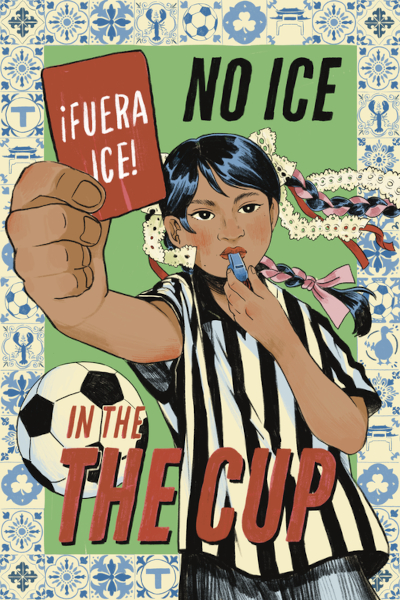
“No ICE in the Cup” is not exactly the kind of atmosphere-building slogan FIFA’s marketing department had in mind. Yet, the title of this anti-ICE call to action is arguably a more honest description of the 2026 World Cup than FIFA’s own slogan, “Football unites the world.”
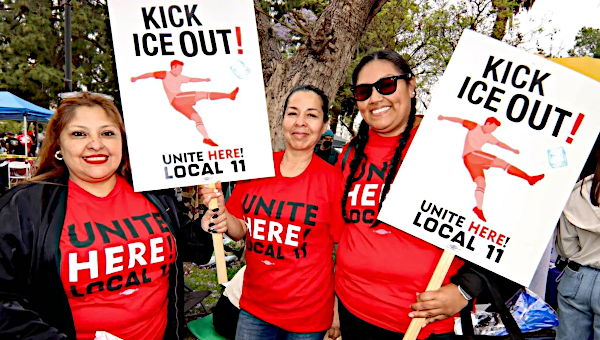
ICE in the Cup
Concerns regarding the US Immigration and Customs Enforcement (ICE) presence at FIFA World Cup matches, including in Canada, emerged after US immigration authorities made it clear that the event would not be exempt from the country’s increasingly aggressive immigration enforcement regime. Although authorities, including Todd Lyons (Mr Director of ICE himself), have attempted to frame ICE’s involvement in terms of security measures rather than enforcement operations, this is a distinction that may matter more in a press conference than it does in terms of the lived realities of immigrants and tourists. This raises an obvious question: how can the world’s biggest sporting event claim to welcome everyone when fans have legitimate fears about deportation or detention on the way to a fan festival or World Cup match?
To be fair, FIFA does have a long history of pretending difficult political questions are somebody else’s problem. Labour abuses? Employer issue. Human rights concerns? Local issue. Border enforcement and visa bans? Your personal issue. FIFA’s role is to simply arrive with a football, several hundred sponsors, a few billion dollars in revenue projections, a Peace Prize, and an expectation that everyone else will sort out the details.
The result is a bizarre spectacle. FIFA wants supporters to believe that football transcends borders at precisely the moment when borders have become one of the defining political issues surrounding the tournament. Their vision of a borderless footballing community is therefore devoid of an understanding of reality: not everyone experiences borders in the same way. For some, crossing physical borders means booking a flight and purchasing a match ticket. For most others, it means navigating visa uncertainty, invasive screening procedures and interviews, detention risks, or outright exclusion. The US currently imposes a full travel ban on Haiti and Iran, and partial restrictions on Cote d’Ivoire and Senegal, all four of which are participating World Cup teams. Excuse the football fans from these nations for not singing praises about FIFA’s inclusivity. The world’s game may be global, but access to it remains deeply and intentionally unequal. The organisation’s promise of the “most inclusive World Cup ever” begins to sound less like a commitment and more like a marketing slogan that really isn’t fooling anyone.
The (Wealthy) People’s Game
Football is widely known as the people’s game. The 2026 World Cup appears determined to test that proposition.
FIFA has embraced forms of dynamic or “adaptive” pricing, allowing ticket prices to fluctuate according to demand. Unsurprisingly, demand for the world’s largest sporting event is rather high. By the first round of ticket sales, the 2026 World Cup had already become the most expensive in World Cup history. But as if exorbitant ticket prices themselves were not enough, FIFA also found a way to reinvent the simple act of purchasing a ticket. Supporters hoping to attend matches found themselves navigating a ticketing system that is confusing at best. The process involved entering a lottery, and if selected, paying for the privilege of potentially being allowed to purchase a ticket at a later date, that is, a “Right to Buy.” Those not selected in the lottery round had to go through resale markets or later sales phases where prices had increased yet again.
It gets worse. Rather than selecting a seat and paying for it, most supporters were required to purchase tickets based on broad seating categories without knowing their exact location. Only after purchasing the ticket did they discover where they would actually be sitting. In practice, this meant that a supporter could pay hundreds of dollars more for a Category 2 ticket only to find themselves seated in the very back row of the section, while a Category 3 ticket holder sits directly behind them enjoying virtually the same view. The controversy has become so widespread that fans have launched crowd-sourced transparency projects to compare seat assignments, while consumer complaints and government investigations have emerged over FIFA’s ticketing practices. Some supporters have accused FIFA of effectively selling the possibility of a premium seat rather than the seat itself. Others discovered that many of the most desirable lower-bowl Category 1 locations appeared to have been reserved for FIFA’s lucrative hospitality programme, despite seating maps deceptively suggesting that ordinary supporters had a chance of being allocated those sections.
But the ultra-wealthy need not worry about all of this. FIFA’s hospitality packages promise premium seating, concierge services, exclusive lounges, gourmet food, expedited venue access, and various other luxuries designed to ensure that ultra-wealthy spectators are not forced to experience football in the same manner as the slightly-less-than-ultra-wealthy. Some packages cost thousands of dollars, and FIFA proudly boasts that its hospitality programme is breaking revenue records.
At this point, it is worth asking a simple question: who exactly is the World Cup for?
Apart from purchasing a match ticket, the average supporter is also paying for flights, accommodation, local transportation, food, and expensive stadium concessions. In a last-minute change, FIFA has also announced that fans will only be allowed to carry a single, sealed, non-reusable water bottle into the stadium, for “security” reasons. Quite a convenient security measure given that Dasani (a subsidiary water company owned by Coca Cola) is a sponsor of the event and has exclusive water-selling rights inside all the stadiums across the three host nations.
Perhaps none of this should be surprising. FIFA is a multi-billion-dollar entertainment corporation overseeing one of the most lucrative spectacles on the planet. Yet there remains something deeply ironic about a tournament built upon working-class football cultures becoming increasingly inaccessible to the very supporters who created those cultures in the first place. Apparently, accessibility and water are best enjoyed in moderation.
Peace Prize, Palestine, and Politics
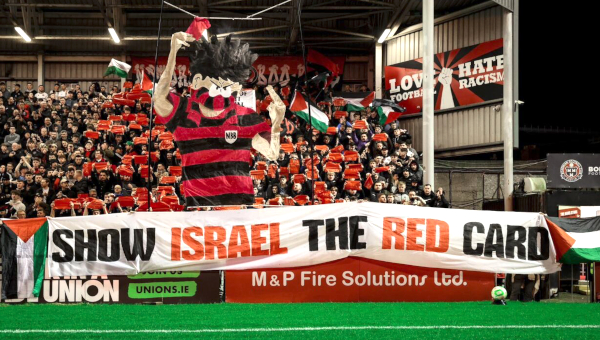
What is the role of politics in football? According to FIFA president Gianni Infantino – who has awarded Donald Trump the inaugural FIFA Peace Prize, rejected calls from the Palestinian Football Association regarding Israeli football clubs in occupied territory, lobbied governments on labour law exemptions, and is implicated in multiple corruption scandals – politics has no place in football.
For years, FIFA has invoked political neutrality to discourage players, supporters, activists, and football associations from bringing contentious political issues into the game. Palestine solidarity campaigns, human rights advocacy, anti-racist protests, and countless other forms of political expression have all been met with some variation of the same argument: football should unite rather than divide; it should be neutral and politics should not interfere.
But the concept of neutrality is one that FIFA defines in its own way. Take the Peace Prize: in 2025, Infantino presented the inaugural FIFA Peace Prize to Donald Trump, praising his role in promoting peace and international cooperation. This came six months after the Trump administration’s 12-day war in Iran, and just before their military operations in Venezuela, threats to invade Greenland, and the continuation of aggressive ICE raids and deportation campaigns across the United States. The same selective neutrality is evident in FIFA’s approach to Palestine. Russia was suspended from international football within days of its invasion of Ukraine. When it comes to Palestine, however, FIFA is suddenly enlightened by the virtues of neutrality and inclusivity. For years, the Palestinian Football Association has called on FIFA to take action against Israeli football clubs operating in settlements in the occupied West Bank. FIFA has repeatedly declined to act, citing the “complex” and “unresolved” legal status of the territory. The most recent moment in this ongoing performance of peace, love, and unity came earlier this year at the FIFA Congress in Vancouver. Amidst the ongoing genocide in Palestine, Infantino attempted to stage a symbolic moment of reconciliation by bringing Palestinian and Israeli representatives together on stage and attempting to make them shake hands. And I know what you’re thinking by now – Infantino seems like a strong candidate for next year’s FIFA Peace Prize.
The answer to the question of politics in football is that the sport has never actually been separate from politics. Even in the most basic sense, World Cups are awarded through political processes. Host governments invest public money. Teams compete under national flags. Heads of state appear in VIP boxes. FIFA executives meet with presidents, prime ministers, and monarchs. The notion that football exists in some pristine political vacuum has always been difficult to sustain.
Other Bad Calls
There remain many handfuls of other issues worth mentioning.
The federal government of Canada has granted labour-law exemptions for FIFA, including special work permits that extend working hours and override the existing mandates on days of rest. While this raises questions of exploitation, the government describes these exemptions as “appropriate,” and you can be sure that FIFA agrees. (See migrant labour exploitation at the Qatar 2022 World Cup.)
Then there is the case of Iran, a participating nation currently in military conflict with the tournament’s principal host nation. In the weeks leading up to the World Cup, visa uncertainty forced the Iranian team to relocate its training base from Arizona to Tijuana, Mexico, amid concerns over whether players, coaches, and staff would even be permitted entry into the United States. Although visas have now been granted to the Iranian players, it remains unclear whether key members of the team’s technical and administrative staff will be allowed to enter the country. But what meaning does visa-granting hold when the President of the United States advises the Iranian national team through his official communication channel (Truth Social) not to participate in the tournament “for their own life and safety”?
The final match itself will also feature something football somehow managed to survive without for more than ninety years: a Super Bowl-style halftime show. For generations, fans of the game have somehow coped with the unbearable burden of spending fifteen minutes discussing tactics, debating with friends about refereeing decisions, and watching halftime analyses by football pundits. Fortunately, FIFA has finally stepped in to solve this crisis. Why analyse the World Cup final when you could watch a corporate-branded concert that justifies an additional price tag on the final match tickets instead?
Finally, FIFA’s expanded 48-team tournament will feature 104 matches spread across sixteen cities in three countries, requiring millions of supporters to undertake some of the most carbon-intensive journeys ever associated with a sporting event. Critics have described the tournament as potentially the most polluting World Cup in history, with aviation accounting for the overwhelming majority of emissions.
No Peace, No Inclusivity, and No Unity
The 2026 World Cup cannot be about inclusivity when it is premised on exclusive access for the wealthy, for specific passport holders, and for those with the privilege of crossing borders with ease. Nor can it be about peace when its main hosting country is threatening, if not conducting, multiple military interventions abroad. And it certainly is not about unity, unless Infantino means that the event will unite football fans against FIFA.
The World Cup is built upon exceptional legal arrangements, biased political neutrality, aggressive capitalism, restrictive border regimes, and a willingness to subordinate almost everything to corporate interests. The ticket prices alone are enough to justify an outrage, let alone the political turmoil surrounding the event. This World Cup is just a way to capitalise on supporters’ passion for the game while repeatedly demonstrating how little regard FIFA has for the people who sustain it.
The 2026 World Cup will undoubtedly produce moments of brilliance on the pitch – but don’t mistake the commercial spectacle for FIFA’s love of the game. •