
Neoliberal Authoritarianism in Egypt
The whiplash of authoritarianism is being ruthlessly used in Egypt. On 6 January 2021, Egyptian authorities detained Ahmed Khalifa, a social-news editor at Egypt 360, following his coverage of labour unrest. His earlier reporting had examined strikes at the state-owned ElDelta Company for Fertilizers and Chemical Industry. Authorities subsequently accused him of belonging to a terrorist organization and disseminating false information, leaving him in detention while his case proceeded.
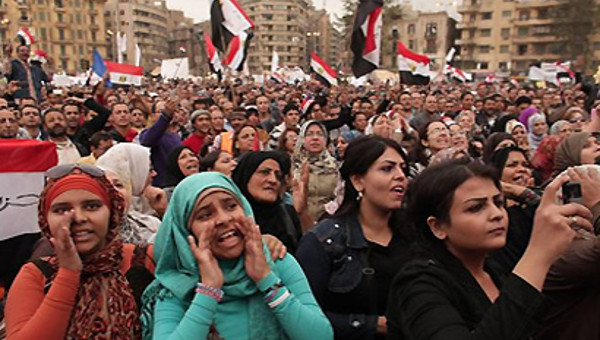
In 2011, bold protest chants flowed out from Tahrir Square: from “The people want the fall of the regime!” to “Down, down with military rule!” – everything seemed full of new possibilities. Today, all the dreams envisioned by those chants lie in tatters. Egyptians have gone through an unprecedented and dizzyingly fast-paced trajectory.
The Hosni Mubarak period (1981–2011) bore the stamp of neoliberal authoritarianism; the tumultuous 30-months long transition after his ouster (2011–13) was filled with hopes about a better future; the afterlife of a military coup (2013–present) has turned history full circle, back to an authoritarian age of austerity and pervasive violence.
Turn of Events
Egypt’s short-lived democratic experience lasted one year, starting in 2012 with the presidential election victory of the Muslim Brotherhood’s Mohamed Morsi. Morsi clashed with the military, leading to his ouster by the latter in 2013.
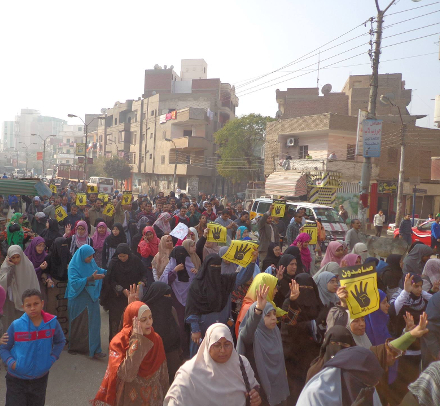
The two episodes differed fundamentally in their political dynamics. Mubarak’s removal followed an eighteen-day popular uprising that forced the incumbent regime to relinquish power. The confrontation with Morsi developed differently: mass demonstrations against his presidency unfolded alongside intervention by the armed forces and security establishment, culminating in his removal on 3 July 2013. The subsequent military intervention transformed a contested political crisis into a new phase of military rule.
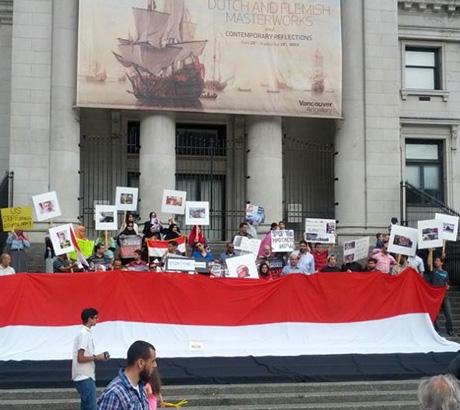
The military coup signaled the start of a grotesque wave of counterrevolution led by President Abdel Fattah Al-Sisi, where the opposition was legally crushed and the public sphere militarized. Since the 2013 coup, Egypt has experienced a consolidation of military authority alongside intensified political repression. Electoral institutions have retained a formal presence while offering limited avenues for meaningful political competition. At the economic level, the regime has become increasingly reliant on external financing and regional support, while successive IMF programmes have subjected the country to stringent fiscal and monetary pressures.
Economic Problems
Al-Sisi has left no doubt as to his economic stance, namely unadorned neoliberalism. His economic position crystallized in the organization of the 2015 Sharm El-Sheikh Investment Conference, advertised to foreign investors and international financial institutions as the launch of Egypt’s new Economic Policy Program. Al-Sisi’s administration passed neoliberal tax and deregulatory investment reforms on the first day of the conference.
The economic programme advanced under Sisi combined fiscal concessions for capital with measures designed to strengthen the position of private investors. A central reform reduced the applicable tax rate for higher-income groups from 30 percent to 22.5 percent, affecting both corporate earnings and personal income. The government also promoted exemptions within newly established special economic zones. At the same time, changes concerning state contracts weakened judicial scrutiny of agreements involving private firms, thereby giving investors greater protection from legal challenges within Egypt’s judicial system.
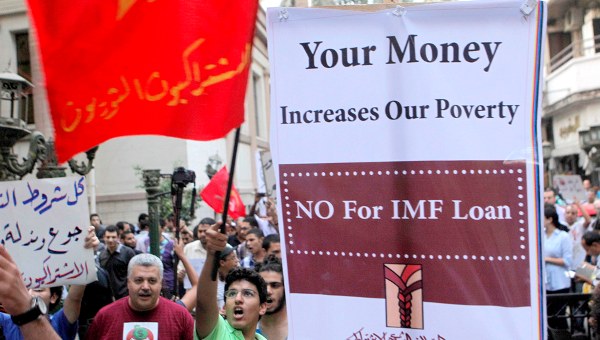
In November 2016, the military regime took a loan of $12-billion from the IMF. Since then, it has been implementing austerity measures, increasing the assault on workers’ rights, issuing redundancy notices to many employees, and eliminating subsidies even as it faces resistance.
As part of the loan package, IMF also recommended spending cuts and the introduction of a value-added tax; by June 2017, this resulted in the rise of core inflation by 32%. The prices of other items like food, fuel, and electricity rose much faster. Egyptians saw the cost of bread and cooking gas go up by nearly 60%. To put this into perspective, in the year leading up to the 2011 Arab Spring, food prices in Egypt were subject to an annual increase of around 15%.
Youth unemployment – a driver of the Egyptian rebellion – increased from 16% in 2010 to 42% by 2014. When Egyptians were asked about the major challenges facing the country in 2011, respondents – who were allowed to choose up to six challenges – felt that the economic situation was the most important. In 2011, 81.5% of respondents named the economic situation as the most important problem. By 2014, 90.3% of respondents felt the economic situation was of paramount importance.
Egypt’s post-2013 order has produced a widening gap between the promises associated with the 2011 uprising and the material conditions confronting ordinary people. A population approaching one hundred million has been subjected to repeated economic pressures while successive governments have preserved an economic model heavily shaped by external financial institutions. The cumulative effect has been a persistent deterioration in living conditions alongside growing political repression.
The social contract anticipated by many participants in the 2011 uprising has consequently remained unrealized. The eighteen-day occupation of Tahrir Square had opened a radically different horizon in which political transformation appeared possible. The subsequent restoration of military dominance therefore represented a profound reversal of those expectations, as demands for social justice gave way to austerity and intensified state control.
Authoritarianism
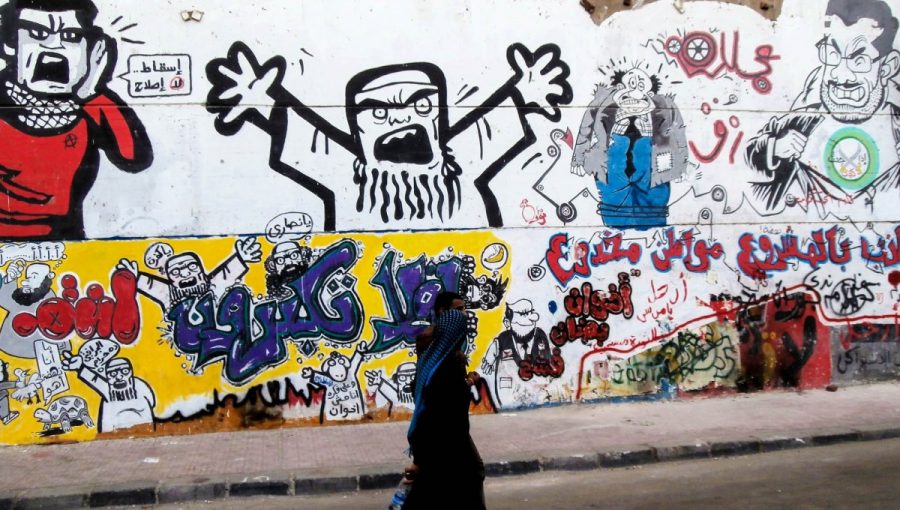
Living in a highly unjust order, Egyptians inevitably feel angry at their corrupt dictators. This anger comes out in the form of dissidence. The military regime has assembled an entire police state for the silencing of this opposition. Human Rights Watch describes police stations and prisons in Egypt as having “an assembly line” of torture.
Documentation produced by Egyptian rights organizations indicates that custodial abuse remained widespread during the years following Sisi’s consolidation of power. The al-Nadim Center recorded hundreds of deaths in detention during 2015 and documented hundreds of additional torture cases. Reports from the Egyptian Coordination for Rights and Freedoms likewise recorded deaths attributed to torture during 2016, alongside hundreds of complaints communicated through lawyers. These figures point toward a system in which coercive violence functioned as a recurrent instrument of political control.
Enforced disappearance became another significant component of Egypt’s post-2013 repression. Egyptian activists commonly referred to the practice through the expression “behind the sun,” reflecting the experience of detainees whose whereabouts were concealed from their families and lawyers. Amnesty International documented hundreds of disappearance cases during this period, while the al-Nadim Center recorded 464 instances in which individuals were forcibly disappeared by state authorities. Such practices extended repression beyond formal arrest by depriving detainees of basic legal protections and making their whereabouts difficult to establish.
The expansion of Egypt’s prison infrastructure accompanied a broader transformation of the state’s methods of political repression. The growth of the prison system cannot be understood simply through demographic pressures, since rights organizations connected the construction of new facilities with mass arrests, prolonged pre-trial detention and legislation restricting protest. The post-July 2013 legal framework consequently facilitated a much wider system of preventive detention and political incarceration.
Wikithawra has documented the arrest and imprisonment of nearly forty-one thousand people between July 3, 2013, and May 2014. An additional 26,000 more were arrested between 2015 and 2016. It is estimated that roughly 60,000 prisoners in Egypt are being held for political views and actions rather than criminal activity.
Fragile State
The current Egyptian state is extremely fragile. In February 2016, Al-Sisi warned detractors: “Please, don’t listen to anyone but me. I am dead serious. Be careful. No one should try my patience or exploit my good manners in attempts to tear down the state. I swear to God that anyone who comes near the state, I will remove from the face of the earth. I am telling you this as the whole of Egypt is listening. What do you think you are doing? Who are you?”
Al-Sisi has good reasons to be scared and worried. Available data indicate that the average daily incidence of collective labour actions and other protests under Sisi was approximately five times the level recorded during 2008–2010. The country is in dire straits. Sooner or later, there is bound to be another revolt for a more humane social order. •