
Donald Trump’s Exploited States of America
Tariffs, kidnappings, blockades, bombings, and constant threats of escalation mark US President Donald Trump’s second term. The reason for the aggression: the US must free itself from exploitation by other countries. According to Trump, the others are enriching themselves at the expense of the US market, NATO partners are leaving the US to shoulder the costs of security against rogue states, and these rogue states threaten US security. Aggression against everyone will end the exploitation of America and restore the country to its former greatness.
No successes have been reported so far. Employment, including in manufacturing, has declined slightly, while prices have risen. The economy depends on the consumption of the super-rich. Stock market participants are keeping prices well above pre-Trump levels but are growing increasingly nervous. Even within their own circles, there is growing suspicion that market valuations are disconnected from reality. Liberals and leftists see their warnings confirmed: Trump’s aggressive policies are undermining the economy and leading to great power rivalries. There is much to suggest that the United States, a superpower declared an “indispensable nation” by Secretary of State Madeleine Albright in the late 1990s, is attempting to mask its internal conflicts through external aggression.
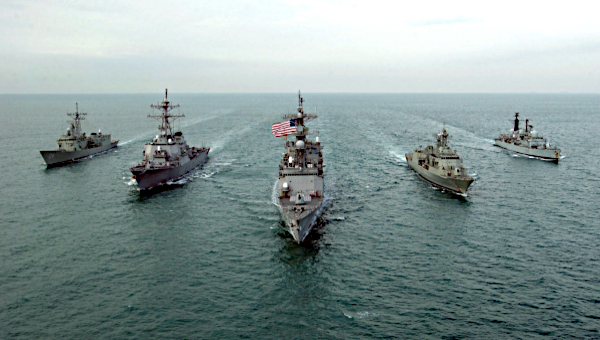
Fragmentation of the US-dominated World Order
A struggle between fantasies of omnipotence and claims to limitless wealth at the top, fears of downward mobility in the middle, and experiences of immiseration at the bottom. Make America Great Again was, and is, Trump’s attempt to mask the socio-economic divide at home with nationalism. External aggression is intended to create national unity. But, as liberals and the left rightly warn, it has the potential to plunge the world into chaos. In this chaos, the US may continue to assert itself as the world’s most powerful nation, but it will lose the ability to shape the world according to the vision of its ruling capitalist circles and to reap the imperialist profits long taken for granted from this shaping. The powers that many liberals and leftists portray as rivals of the US are far from containing Trump’s aggression. They certainly do not represent a multipolar alternative to US-dominated global imperialism. What appears to be multipolarity and great-power rivalry is, in fact, just the fragmentation of the world order created by US ruling classes of the past, a fragmentation driven by the US against the intentions of its ruling circles.
Despite real, feared, or, from another perspective, hoped-for decline, the USA remains the only power that can act without regard for others. Its rulers can get away with things others wouldn’t even dare to dream of. The situation is different in the EU. Even its largest member states are incapable of independent global politics. The fear of being punished by Trump is too great. EU elites have long cultivated the illusion of a struggle between liberal and authoritarian states. In this picture, reminiscent of the Cold War between a “free” capitalist and an “unfree” communist world, the weakness of individual countries disappeared behind the strength of the common bloc.
But since Trump made it clear that the Europeans are no longer it’s allies, not even junior partners but rather vassals, it has become clear that there is neither a transatlantic community nor an EU capable of joint action.
This also applies to the BRICS, which are seen alternately as an authoritarian challenge or a multipolar alternative to the US-dominated world order. Russia, richly endowed with nuclear weapons, and the major economies of China and India, protect their own interests but do not stand up for others. There is certainly no question of coordinated action. Since the US attack on Iran, BRICS countries have found themselves on both sides of the front line. On one side is Iran; on the other are the United Arab Emirates and Saudi Arabia, which are not only BRICS members or observers but also hosts to US military bases.
Great Power Rivalries and a Multipolar World?
Since Trump abandoned all regard for international organizations, many politicians, academics, and journalists see the world thrown back into a state of great power rivalry, where the only thing that matters is what each country considered to be a great power can contribute in terms of economic, and consequently military and political, resources to the struggle of all against all. Even by the standards of this ‘economic nationalism’, rivalry is hardly the case. Whether in terms of value creation, weapons, or trade and foreign exchange reserves in its own currency, the US is still so far ahead that others cannot realistically hope to assume the role of the indispensable nation. Not even China, despite its unprecedented economic and technological boom.
The question of whether the rulers in Beijing pursue the same imperial interests as those in Washington is not asked. These interests are assumed to be shared by all countries because this is the only way they can survive in the competition of all against all. Or else perish. The relationships between individual countries remain unaddressed in the conceptual frameworks of great power rivalry and multipolarity. This contrasts with Trump’s complaints about the exploitation of the US by other countries, even though he turns the exploitative power dynamics on their head. The US’s hegemony since the end of World War II was not based solely on its being the largest economy but at least equally on its ability to exploit poor countries and guarantee other rich countries a share of the imperial spoils. In return, the Asian and European junior partners participated in securing a collective imperialism under American leadership.
This historical form of imperialism succeeded the era of rival colonial empires, which began with the industrial rise of Germany, Japan, and America in the 1870s, along with their associated imperial ambitions, and culminated in two world wars. Collective imperialism under American leadership emerged in the struggle against communism. After the collapse of the Soviet Union and the acceptance by China and Vietnam of the rules of world trade largely written by the US, collective imperialism spread across the globe. But it was not exhausted by the rivalries of old and new colonial empires but rather by economic contradictions that, even before Trump, had already triggered a feeling among both rulers and the ruled in the US that they were no longer receiving their fair share of the plunder of poor countries. Trump twists this feeling into the claim that the rest of the world is exploiting his country a hysterical distortion of reality that reveals much about the state of mind of the US elites and their followers who rallied around Trump. But it does indeed connect to real changes.
Limits of American World Domination
American leadership was based on military and technological superiority, control over the global financial system, and influence over international organizations. This allowed them to enforce trade relations and investment conditions that yielded extra profits for the imperialist centers from the exploitation of the peripheries, exceeding the average profit rate. As the leading power, the US received a larger share of these imperialist extra profits than its junior partners. But the foundations of this power are being eroded. The more the US feels cheated out of its share of the imperialist plunder of the world, the more it doubts its leadership — a doubt often masked by bravado — the more it reduces its former junior partners to vassals.
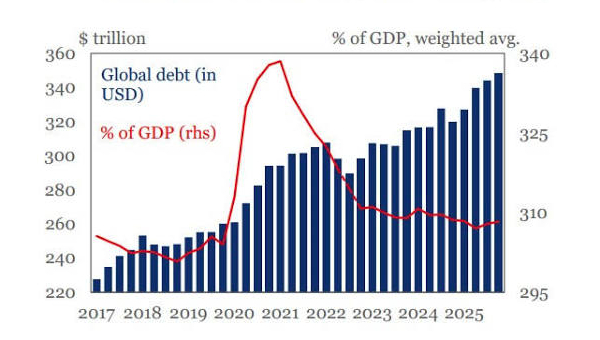
The wars against Afghanistan and Iraq have shown that the US can destroy regimes it has declared enemies, but despite years of military occupation and the associated costs, it cannot impose regimes favorable to it or create profitable investment conditions and markets. In the recent war against Iran, the US learned that superior firepower and military technology do not guarantee control of international sea lanes. The global financial crisis of 2008/9, triggered by the real estate and financial crisis in the US, demonstrated that dollar-based payment flows are by no means secure. While the crisis was contained relatively quickly thanks to international cooperation and the massive mobilization of government loans and central bank money, the resulting debt raises doubts as to whether similar rescue operations can be repeated in the future.
American technology companies like Nvidia, Meta, and Google are just as overvalued today as Cisco, Qualcomm, and WorldCom were during the dot-com boom of the 1990s. It doesn’t take much to burst such bubbles, with unforeseeable consequences for production and employment. It’s no coincidence that the surge in oil prices associated with the war against Iran also made stock and bond markets nervous. That investors didn’t immediately panic is fortunate for governments and central banks, which are facing greater problems today than during the financial and global economic crisis of 2008/9. First, they are burdened by the debt overhang from the last financial crisis. Second, there is a fear that expansionary measures to stabilize stock markets and the economy would revive the inflation that they had only just overcome. Third, the US has damaged international relations so badly that coordinated stabilization measures are hardly conceivable. Perhaps such measures, whether international or even just national, are not even desired by the leading circles of the American bourgeoisie.
A coalition of tech bros, oil barons, and financial manipulators has turned the inability to shape and exploit the world according to their own whims into a virtue. Confident that their unprecedented wealth will keep them at the top of the international income pyramid even in times of crisis, they engage in risky deals and support Trump’s aggressive policies despite their destructive effects on the world order once created by the US for its own benefit. •
Adapted from the German version for the May-issue of Sozialistische Zeitung. More articles here.