
Geometry of US Imperial Aggression on Venezuela
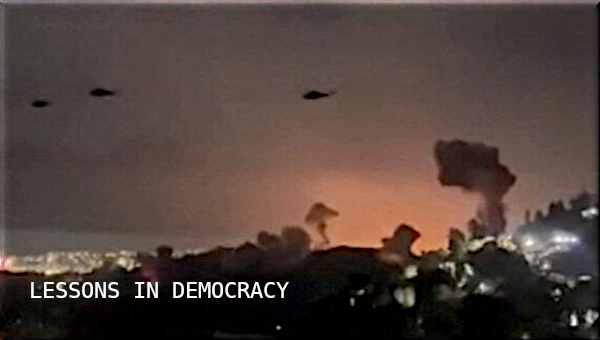
US President Donald Trump has made it increasingly explicit that his administration governs in the interests of the US industrial-financial-military complex rather than the well-being of ordinary Americans. His open assertions of US claims over territories and strategic assets signal a deliberate abandonment of diplomatic ambiguity in favour of overt imperial assertion. The recent US military assault on Venezuela represents the most concrete manifestation of this turn, constituting the most dramatic escalation of US intervention in the region since the 1989 invasion of Panama. Although Washington framed these actions as measures against drug trafficking and criminal migration, such justifications collapse under scrutiny. Venezuela is neither a major cocaine producer nor a primary narcotics transit route, nor is there credible evidence that the Venezuelan state orchestrates migration toward the United States. Rather, the assault reflects a deliberate exercise of coercive power aimed at enforcing hemispheric discipline and consolidating US geopolitical and economic dominance.
The invocation of narco-terrorism and criminality has long served as a moral alibi through which the United States recasts military force and regime change as acts of policing rather than war. In Venezuela, this rhetoric conceals a strategic project centred on controlling key resources, dismantling a defiant left-wing government, and reasserting US regional dominance. What is distinctive today is not the nature of intervention but its unprecedented openness. The Trump administration has explicitly declared the Western Hemisphere an exclusive US sphere of influence and openly linked military power to access to energy and mineral resources. Within this framework, Venezuela, already weakened by prolonged sanctions and economic stagnation, emerged as the principal testing ground for this renewed imperial strategy.
The resulting humanitarian catastrophe is routinely mobilized to legitimize intervention. Trump’s military action was even celebrated by Maria Corina Machado, the 2025 Nobel Peace Prize winner, who claimed she would share the prize with him for what he had done for Venezuela. Yet Venezuela’s economic collapse did not precede US strategy but was actively produced by it. Years of financial sanctions, asset seizures, and enforced isolation eroded productive capacity, fractured social reproduction, and severed the material link between state and society. Military intervention, therefore, did not occur despite this devastation but precisely because it had already laid the conditions that made intervention appear both thinkable and justifiable.
I. Controlling Energy
Given that fossil fuels (coal, oil, and natural gas) continue to account for about 80 percent of global energy, control over oil and natural gas remains central not only to corporate profitability but also to the reproduction of US monetary and geopolitical power. It is within this broader context that oil and natural gas occupy a pivotal place in Venezuela’s strategic significance within the US hegemonic matrix. Venezuela possesses the largest proven oil reserves in the world, estimated at over 300 billion barrels, and holds 195 trillion cubic feet of natural gas, making up 73 percent of South America’s total. In this international system, which is still structurally dependent on fossil energy, control over such reserves extends well beyond questions of supply, demand, and profits. It constitutes a critical source of geopolitical leverage.
For much of the twentieth century, Venezuela’s oil sector was deeply integrated into US corporate networks, with American firms exercising substantial control over extraction, refining, and export, and a significant share of oil revenues flowing outward. This arrangement began to fracture as successive Venezuelan governments asserted greater state control, a process that intensified under Hugo Chávez following his election in 1998. During this period, Petróleos de Venezuela, S.A. (PDVSA), a state-owned oil company created in 1976 but substantially restructured under Chávez, was reoriented toward financing national development objectives. Oil revenues were increasingly directed toward domestic social programs, including healthcare, education, housing, and food subsidies, while Venezuela also extended subsidized oil to several Caribbean and Central American countries through the Petrocaribe initiative. In parallel, the Chávez government pursued a broader socialist program of nationalization across key sectors and restructured the oil industry such that foreign firms were required to operate through joint ventures in which the Venezuelan state retained majority ownership. Several major US oil corporations, most notably ExxonMobil and ConocoPhillips, refused to accept these revised terms and exited the country, while Chevron continued operations within the joint-venture framework. ExxonMobil and ConocoPhillips subsequently pursued international arbitration claims seeking compensation for expropriated assets, with awards and claims totaling several billion dollars. It is notable in this context that when Donald Trump assumed office in 2017, his first Secretary of State, Rex Tillerson, had previously served as chief executive officer of ExxonMobil from 2006 to 2016, underscoring the close alignment between US foreign policy leadership and corporate energy interests.
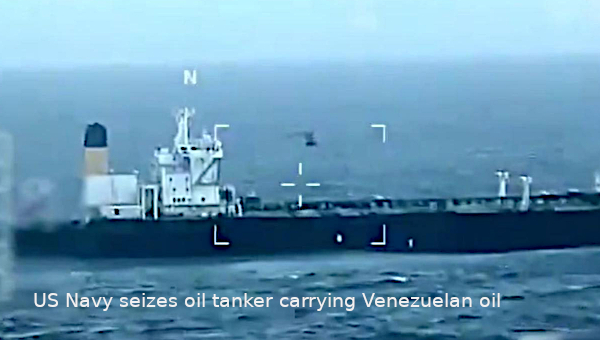
Sanctions became the primary instrument through which this oil-centered political economy was systematically dismantled. Measures targeting Venezuela’s energy sector intensified after 2015 and escalated sharply from 2017 onward, extending far beyond restrictions on oil purchases. They deliberately obstructed PDVSA’s access to international credit markets, blocked debt refinancing, restricted imports of essential spare parts and technology, and rendered oil shipments increasingly unviable by denying tanker insurance. The freezing of CITGO, PDVSA’s US-based subsidiary, alone deprived the Venezuelan state of billions of dollars in annual revenue, while Venezuelan gold reserves held abroad were seized or withheld. These measures precipitated a steep collapse in oil production, from over two million barrels per day in the early 2010s to a fraction of that level by the end of the decade. This collapse was subsequently invoked as evidence of socialist mismanagement, obscuring the extent to which the institutional and financial conditions necessary for extraction and export had been deliberately dismantled through economic warfare. Against this backdrop, US officials were unusually candid about what regime change would enable: within hours of the military assault, President Trump openly celebrated the prospect of US oil majors becoming “very strongly involved” in Venezuela’s energy sector. Chevron, which resumed significant oil production and export operations in Venezuela since November 2022, under the US Department of the Treasury, issued a license (General License 41), offering a preview of a post-intervention settlement in which access, ownership, and decision-making authority would once again shift toward US corporate capital.
Another dimension underlying US efforts to secure control over Venezuela’s oil, which has received little attention in existing debates, is the role of oil in sustaining the dollar’s position as world money. I argue that the US attempt to capture Venezuelan oil should not be understood merely as providing access to US-based oil corporations. The issue is not simply the extraction of oil; rather, it is about keeping oil resources under US control, which is crucial for sustaining the US dollar’s role as world money. With the collapse of the Bretton Woods gold dollar parity in 1971, mainstream economists presumed that the international monetary system had transitioned to a purely “fiat” monetary order. However, US statecraft recognised that the dollar’s continued function as world money required the establishment of a new material basis capable of sustaining persistent global demand. In this context, the centrality of oil, priced overwhelmingly in dollars, became crucial in maintaining that demand and thereby reinforcing the international role of the US dollar.
Following the Nixon Shock, the United States negotiated a series of agreements with Saudi Arabia in the mid-1970s that exchanged military protection, arms transfers, and privileged access to US Treasury securities for the exclusive dollar pricing of oil exports. As this practice became generalized across OPEC by the late 1970s, it inaugurated what is commonly described as the petrodollar regime. This arrangement transformed oil into a functional substitute for gold as the material anchor of world money, ensuring that global demand for dollars was continually reproduced through the necessities of energy consumption. This mechanism allowed the United States to sustain monetary primacy despite chronic trade deficits by compelling oil-importing states to hold dollars and recycle surpluses through US financial markets.
However, the expansion of financialized world money without a corresponding expansion of productive capacities generates systemic tensions. These tensions have become increasingly visible as China (the world’s largest oil importer) has sought to reduce its exposure to dollar dependence by promoting yuan-denominated energy trade, including the launch of oil futures contracts denominated in yuan in 2018. Intermittent discussions between China and major oil exporters, including Saudi Arabia, regarding non-dollar oil transactions further signal the potential erosion of the dollar–oil nexus. Such developments threaten the dollar’s capacity to function as world money by weakening its monopoly over the settlement of international energy transactions.
In this context, by reasserting control over one of the world’s largest proven oil reserves and reintegrating it into US-dominated circuits of extraction, trade, and financial settlement, the assault on Venezuela can be understood as an attempt to stabilize the material foundations of dollar dominance. Thus, rather than an isolated act of regime change, this intervention represents a broader effort to shore up the conditions under which the dollar continues to function as world money, channeling global production toward the US in a competitive environment, disciplining rivals, financial US budget deficit, and sustaining US hegemony within an increasingly unstable global capitalist order.
Taken together, the Venezuelan case demonstrates that oil remains a central axis through which US imperial power is organized, exercised, and reproduced. The systematic dismantling of Venezuela’s oil-centered political economy through sanctions, financial isolation, and asset seizures was not an unintended consequence of US foreign policy but a deliberate strategy aimed at severing the state’s control over its primary source of revenue and political legitimacy. Therefore, the assault on Venezuela cannot be understood as a humanitarian response to an economic and political crisis but as a classic imperial causal mechanism.
II. Hemispheric Dominance
Oil alone does not fully explain the timing or intensity of US action against Venezuela; the assault must also be situated within a broader strategy of reasserting hemispheric dominance under conditions of growing multipolarity. The Trump administration’s explicit revival of the Monroe Doctrine through its revised National Security Strategy (NSS) provides the geopolitical framework within which the attack becomes intelligible. Originating in President James Monroe’s 1823 address to Congress as a warning against renewed European colonial intervention in the Western Hemisphere, the doctrine gradually evolved into a justificatory framework for US imperial expansion and regional discipline. Trump’s reinterpretation, framed as a defense of the Americas against “communism, fascism, and foreign infringement,” marks a decisive shift from diplomatic principle to openly coercive strategy, explicitly linking US direct military intervention for territorial control/alignment, strategic assets, and resource command. This rejuvenated doctrine reflects an effort by the US state to safeguard the global position of American capital in the face of hegemonic erosion, by enforcing hemispheric discipline and restricting rival powers’ access to strategically vital regions.
Within this framework, Venezuela emerged as a critical site where great-power rivalry intersects with resource control and ideological containment. The Trump administration’s assault on Venezuela was aimed at containing China’s expanding economic presence in Latin America, which US policymakers increasingly regard as a direct challenge to American dominance in the Western Hemisphere. From the standpoint of US statecraft, Venezuela’s deepening ties with China, particularly in energy, finance, and trade, challenged traditional mechanisms of US dominance over the Western Hemisphere, and geopolitical realignment between China and Venezuela rendered Venezuela a focal point of coercive intervention.
China’s expanding economic and financial engagement in Latin America provides the broader regional context for this confrontation. According to Holsey (2025) Commander of the US Southern Command, China has systematically positioned itself across Latin America and the Caribbean in ways that enhance its access to and influence over the region’s vast natural resource base, which includes approximately 20 percent of global oil reserves, 25 percent of strategic metals, 30 percent of forest resources, 31 percent of global fishing areas, and 32 percent of the world’s renewable freshwater resources. Moreover, the region contains a significant concentration of lithium, with roughly half of global reserves located in the so-called “lithium triangle” of Argentina, Bolivia, and Chile. As Chinese state-owned enterprises have come to play a dominant role in the extraction, processing, and refining of critical minerals and rare earths, US policymakers increasingly view China’s growing control over regional supply chains as a direct threat to the strategic and commercial interests of US corporations and to the United States’ broader geopolitical position.
Since the early 2000s, China has emerged as a major source of trade, development finance, and infrastructure investment across the region. China is now the largest trading partner of South America as a whole, pushing the US to second place. Trade between China and Latin America grew from approximately $12-billion (US) in 2000 to over $450-billion (US) by 2022. China has also signed free-trade agreements with several countries in the region, including Chile, Peru, Costa Rica, Ecuador, and Nicaragua, further institutionalizing its economic presence. Chinese foreign direct investment in Latin America and the Caribbean reached approximately $8 – $10-billion (US) annually in the early 2020s, while Chinese policy banks extended more than $130-billion (US) in loans to the region between 2005 and 2020, often targeting energy, mining, and infrastructure sectors. These developments were perceived not merely as commercial competition but as a structural erosion of US leverage over regional trade patterns, financial dependence, and monetary alignment.
Venezuela occupies a particularly strategic position within this evolving landscape. China and Venezuela have maintained close diplomatic and economic relations for more than two decades, formalized through a strategic-partnership agreement in 2001 and upgraded to an all-weather strategic partnership in 2023. Over this period, China became Venezuela’s largest bilateral creditor, extending approximately $60-billion (US) in loans, largely repaid through long-term oil supply arrangements that bypassed Western financial institutions. Under conditions of intensifying US sanctions, China also emerged as a crucial destination for Venezuelan crude oil exports, with estimates suggesting that China accounted for a majority share of Venezuela’s oil shipments during peak sanctions years, often through indirect or rerouted trade mechanisms. At the same time, Russia provided military equipment, defense cooperation, and diplomatic backing during periods of heightened Western pressure, while Cuba offered intelligence and security assistance that contributed to regime stability. Together, these relationships embedded Venezuela within alternative circuits of finance, trade, and security that operated partially outside US-dominated institutional and monetary frameworks. This configuration increasingly positioned Venezuela in Washington as a strategic node whose continued alignment beyond US control was seen by the Trump administration as a threat to the economic foundations of US hegemony.
From the standpoint of the US military-industrial-financial complex, China’s expanding presence in Latin America has also increasingly been interpreted as a geopolitical threat. As Enrique Millán-Mejia observes, “As China deepens its ties with Latin American and Caribbean countries through trade, it challenges the United States’ historical dominance in the Western Hemisphere.” This perception has shaped US policy responses over the past decade. During Trump’s first term, the administration relied heavily on economic statecraft against governments that had strengthened ties with China, including Venezuela. In his second term, however, this strategy has shifted toward more overt and coercive measures aimed at reversing China’s regional foothold. A key example was the Trump administration’s successful pressure on Panama to withdraw from China’s Belt and Road Initiative. The military assault on Venezuela must be understood within this same escalation: as part of a broader campaign to disrupt China-linked economic networks, discipline states that have diversified away from the US-led world capitalism order, and reassert exclusive US influence over the Western Hemisphere. Thus, far from an isolated case, Venezuela represents a warning shot directed at smaller and economically vulnerable states that have expanded ties with China in recent decades.
In this sense, the attack on Venezuela must be understood as part of a broader struggle over who sets the rules of the international order and in the Western Hemisphere. However, geopolitical rivalry alone cannot fully account for the intensity of intervention; it has also been shaped by a persistent hostility toward alternative ideological and developmental projects that challenge the US-led world capitalist order.
III. Regime Change
Another aspect that informs the US assault on Venezuela is ideological. The US statecraft has been involved in a project of regime change directed against political formations whose ideological and developmental trajectories diverge from the requirements of US-led global capitalism. The emergence of the Bolivarian project under Hugo Chávez, despite all its contradictions, symbolized resistance to the neoliberal project. Venezuela has articulated an alternative model premised on state control over strategic resources, redistribution of oil revenue toward social reproduction, and explicit resistance to neoliberal orthodoxy. Alongside Cuba, Bolivia, and Nicaragua, Venezuela formed part of Latin America’s Pink Tide, asserting state control over strategic resources and expanding social provision in ways that challenged neoliberal market fundamentalism. This configuration has rendered Venezuela structurally incompatible with the dominant circuits of private capital accumulation and governance that underpin US hegemony.
At its core, the Bolivarian project challenged the neoliberal consensus that had governed many countries in Latin America since the debt crisis of the 1980s. By reasserting state sovereignty over oil, expanding public provision, and limiting the autonomy of foreign capital, the Venezuelan state disrupted the mechanisms through which global capitalism disciplines/integrates peripheral economies. In this context, oil revenues were not merely a source of fiscal income for Venezuela. They became instruments for reshaping class relations and sustaining regional solidarity through initiatives such as Petrocaribe. As Panitch and Gindin argue, such deviations from market discipline are not tolerated lightly within the architecture of the American empire, which relies on the alignment of domestic state structures with the imperatives of global capital accumulation. Venezuela’s insistence on subordinating capital to political and social objectives thus constituted a direct affront to the ideological foundations of the US-led world capitalist order.

Historically, the US has repeatedly intervened to dismantle government/regime changes that threaten or put a barrier in the reproduction of capitalist social relations on terms favourable to the American empire. O’Rourke, based on archival research of the US government documents, reveals that during the Cold War era (1945-1989), the US pursued a remarkable number of regime changes, of which 64 were covert regime changes. She further argued that covert regime change was not only a Cold War phenomenon. On the contrary, the American administration continued this practice even after the Cold War. According to Levin, the US performed at least 81 covert and overt interventions in foreign regime change from 1946 to 2000. For instance, from Chile in 1973 to Nicaragua in the 1980s, and from Iraq to Libya in the twenty-first century, and more recently, in Syria, regime change has functioned as a means of restoring conditions conducive to private capital accumulation. Venezuela fits squarely within this pattern. Over the last two decades or so, the recognition of parallel governments, diplomatic isolation, and overt calls for leadership replacement were not ad hoc reactions to governance failures but components of a sustained strategy aimed at delegitimizing and ultimately dismantling the Bolivarian state.
Economic sanctions have played a central role in what may be described as a strategy of regime change from within. In the Venezuelan case, this process began following the electoral victory of Hugo Chávez and intensified after his death, before escalating sharply during the first term of Donald Trump. The coercive logic underpinning this strategy was made explicit in a confidential document authored by former US Southern Command chief Admiral Kurt Tidd, which outlined a deliberate program of economic warfare against Venezuela. The document called for “encouraging popular dissatisfaction by increasing the scarcity and rising prices of foodstuffs, medicines, and other essential goods,” alongside measures aimed at “intensifying the undercapitalization of the country, the leakage of foreign currency, and the deterioration of its monetary base,” thereby inducing inflationary pressures and economic instability. It further advocated obstructing imports, discouraging foreign investment, and mobilizing domestic and external actors to generate protests, insecurity, and social unrest in order to push the country into crisis.
Far from being narrowly targeted, sanctions were thus explicitly designed to undermine the material foundations of social reproduction and erode popular support for the Venezuelan state. One clear effect was to deprive the economy of the foreign exchange necessary to pay for essential imports, including lifesaving medicines and food, exacerbating shortages that predated the sanctions but were deepened by them. As Weisbrot and Sachs argue, following the imposition of the 2017 sanctions, Venezuela experienced a sharp deterioration in public health outcomes, with the overall mortality rate rising by 31 percent between 2017 and 2018. They estimate that more than 300,000 people were placed at risk due to the lack of access to essential medicines and medical treatment. Sanctions also contributed to a dramatic decline in food imports, which fell from approximately $11.2-billion in 2013 to about $3-billion in 2024. This contraction significantly aggravated food insecurity, with more than 40 percent of the population experiencing moderate to severe food insecurity. In this context, sanctions created the political conditions through which regime change could be framed as a humanitarian necessity rather than a consequence of coercive economic warfare.
This strategy reflects not only an effort to disrupt production but a broader logic of destabilization achieved through the deliberate generation of a crisis of social reproduction. By targeting the Venezuelan state’s capacity to sustain essential domains such as food provision, healthcare, income stability, and public services, sanctions eroded the everyday conditions of life that underpin political legitimacy. Mass migration, amounting to nearly eight million people since 2014 and often cited as evidence of intrinsic state failure, should be understood instead as an outcome of this systematic erosion rather than its cause. Thus, the crisis of social reproduction in Venezuela was not an unintended or collateral effect of sanctions but a central mechanism through which regime change was actively pursued.
Ideological incompatibility also played its role in provoking the US to rejuvenate its strategy in the Western Hemisphere. Venezuela was not an isolated experiment but a leading node in Latin America’s Pink Tide. Through regional initiatives and diplomatic leadership, Venezuela symbolized the possibility of alternatives to IMF-driven adjustment and US-centric governance. From the perspective of US statecraft, this posed the risk of ideological contagion: the demonstration that resource nationalism and redistributive policies could sustain political legitimacy and economic autonomy elsewhere in the region. Historically, US statecraft responded to such threats not only through economic coercion but through political and ideological containment aimed at preventing the diffusion of alternative models.
As US global hegemony has come under mounting pressure, its tolerance for ideological deviation has correspondingly narrowed. Historically, periods of hegemonic expansion have allowed for limited experimentation at the periphery, as such deviations posed little threat to the dominant order. By contrast, moments of hegemonic erosion tend to produce a more coercive response, as alternative political and economic projects are increasingly perceived as systemic challenges. In this context, the persistence of left-leaning governments in Latin America is perceived by the US statecraft not only as a policy disagreement but also as a structural threat to the US-led world order. The intensification of regime-change efforts against Venezuela reflects precisely such a conjuncture, in which coercive and repressive means have been deployed to restore ideological and institutional coherence in the Western Hemisphere in ways conducive to the reproduction of globalized capital.
Seen in this light, the assault on Venezuela represents not merely an effort to replace a particular government, but a broader attempt to reassert ideological discipline over the terms of development in the Western Hemisphere. By demonstrating the costs of non-alignment, US statecraft sends a clear signal to the region that sovereignty is conditional and that left-wing governance will be tolerated only within narrow limits compatible with US strategic and corporate interests. Threats and pressure directed at countries such as Cuba, Mexico, and Colombia in the aftermath of the attack reinforce this logic. The intervention thus reflects a refusal to accommodate political projects that subordinate markets to social needs, restrict capital mobility, or align with rival centers of power. Military attack on Venezuela, in this sense, functions as a mechanism for restoring the ideological preconditions of accumulation and ensuring that states remain embedded within US-dominated circuits of capital, trade, and finance.
Overall, the implications of this analysis extend beyond Venezuela. As the global energy transition unfolds and geopolitical competition intensifies, other resource-rich states worldwide will confront similar dilemmas. Efforts to pursue alternative development paths will continue to encounter resistance from the US and its allies, which seek to preserve their control over global energy sources. Venezuela thus stands not as an anomaly but as a harbinger of the conflicts likely to shape the international political economy of the twenty-first century. •
The extended version of this article is published in Critical Sociology.