
Why “Bubble Zones” Are a Toxic Threat to Democracy: Hasbara cedes to Hashtakah; a Backgrounder
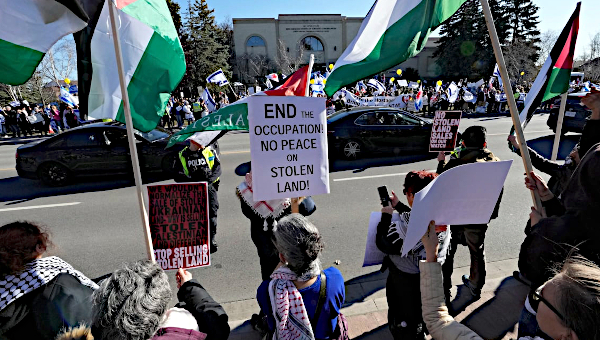
Over the past several years, a new method of bulldozing civil rights in Canada has emerged from the playbooks of die-hard Israel-supporting organizations. It is called “bubble zones.” A bubble zone is a police, judicial, or legislative action forbidding protests within a designated perimeter surrounding certain buildings or locations.
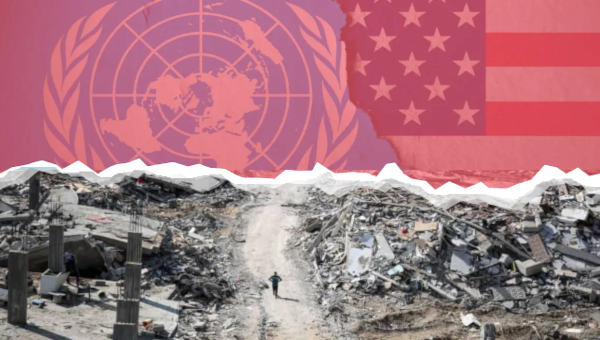
It used to be that Israel and its champions employed a strategy of “hasbara” (Hebrew for explanation or propaganda) to spin bad news about Israel or persuade people to support or keep quiet about Israel’s misdeeds. For example, the fables: “Israel is a land without people for a people without a land,” or “Israel lives in a rough neighbourhood and has the right to defend itself,” or “God promised this land to the Jews.” But Hasbara is facing insurmountable challenges right now. It is almost impossible to explain away with dodgy slogans the massacre of at least 70,000 Gazans and 1,000 West Bank residents including tens of thousands of children. The world is shocked.
So, a new strategy is required. And that strategy is outright “Hashtakah” (Hebrew for the act of silencing). Got a problem? Don’t argue. Silence it. Hashtakah. Got a critic? Don’t debate her. Shut her down before she speaks. Hashtakah. Those promoting hashtakah might appropriately be designated as “mashtikim” (the Hebrew word for “silencers”).
Junkets and Bubble Zones
Zionist organizations have been hosting members of parliament, police chiefs, top university administrators and the like with expenses-paid junkets to Israel for years. Do most of these come back as raving fans of Israel toeing the official line? No. Most of them come back – silent. Israel and its friends haven’t been able to buy outright support for some time. But they can buy or promote – silence, hashtakah, and compliance, and “look the other way.” When conscience calls upon you to speak out about Israeli transgression, self-hashtakah.
In fact, bubble zones are one aspect of a panoply of lawfare techniques openly admitted by lawyer mashtikim to shut down all opposition to Israel’s actions.
Bubble zones are just a new and highly potent modality of hashtakah. The innovation here is not the attempt to silence expression once it is uttered but rather to silence it before the fact. Not only are words themselves subject to censure and censor, the mere uttering of any words of protest within a geographic space by anyone in that space for a period of time is forbidden.
Let’s compare this to the famous Keegstra case. In 1984, Alberta teacher James Keegstra was charged with a hate crime for attempting for years to indoctrinate his captive audience of high school students with holocaust denial and conspiracy theories about Jews. At trial, he claimed violation of his right to free expression. When the case reached the Supreme Court of Canada, a majority ruled that in light of the content of his expression, the violation of his freedom of expression was permissible. But let’s remember that the Keegstra case involved one man, who made clearly poisonous and odious utterances to a completely captive audiences of young people, over several years.
Bubble zones, on the other hand, strive to bypass hate laws by requiring no such proof, no such rigour.
Pro-Israel influencers have been calling for the outright shutting-down of protests against Israel’s genocide in Gaza since those protests began. Mashtikim were having some success before the Bondi Beach Australia attack of December 14, 2025, but we can now expect to see a full-on over-the-top campaign given killings of Jews by two suicidal followers of ISIS. Around the world, we are being told implausibly, only full muzzling of criticism of Israel can prevent a repeat of the Australian tragedy, freedom of expression be damned. As if peaceful protest contributes to mass shootings. The idea, however, is to ramp up a climate of panic that makes all restraints on expression when it comes to Israel look reasonable.
The Canadian Charter of Rights and Freedoms is supposed to protect freedom of assembly and freedom of expression, and those freedoms are considered fundamentals of democracy. But now there is a clash between those wishing to use spaces without impediment and those wishing to engage in effective protest at those spaces against some events in those spaces. This is sometimes characterized as a clash between “free expression” (at the space) and “public safety and enjoyment” (of the space.)
But enjoyment is currently demolishing free expression.
The issue has arisen in earnest amid the ongoing Israeli genocide in Gaza. Departing from religious worship and community activities, Jewish institutions like synagogues and community centres began hosting gatherings explicitly to support the Israeli side. And demonstrators assembled to oppose those gatherings.
Up to 7 October, 2023, Canadians critical of Israel by and large gave Jewish communal institutions, especially synagogues, a wide berth out of respect for their religious function. For many years, Jewish communities exploited this good will by using synagogues for political meetings and hateful sermons, without experiencing much pushback. Pass by any Canadian synagogue in Canada and you will likely see several signs displayed to the public that profess “[Name of congregation] stands with Israel” or “…connecting your family to Israel.”
But this changed after the 2023 Israeli onslaught in Gaza as protest in general ramped up.
Large, vociferous rallies and marches protesting the slaughter erupted in across cities around the world and in Canada. Occupations, including by Jewish critics of Israel, have taken over public places or relevant private spaces. Student tent cities emerged on campuses across the country, as across the world. Public opinion has flipped from a majority supporting Israel to the opposite. Hasbara is losing.
The Turn from Hasbara to Hashtakah
Accordingly, Jewish legacy organizations turned to an option easier and much more attractive and potent than debate: what is sometimes called “cancel culture.” How comparatively effortless to change the channel and denounce all protest as antisemitic and to attempt to shut down and shut out venues, vehicles, and spokespersons of dissent! These Jewish organizations also have promoted the highly controversial IHRA definition of antisemitism, which conveniently includes even accurate criticism of Israel (which other definitions do not). They successfully persuaded the Canadian government and several other legislatures and city councils to adopt the definition. That definition gives moral fuel to cancel culture. If the IHRA definition says antisemitism includes robust criticism of the State of Israel, then a public rally condemning Israeli killings in Gaza must be a form of hate speech. And that expression must be quashed before it begins.
And how much better if you can hide your pro-Israel event in a “place of worship.” Even if the contested event has nothing to do with religious worship, just keep repeating “It’s a place of worship!” and you can obscure the hateful messages being broadcast within.
Even more draconian, these mashtikim have called for the banning of protest actions ab initio, i.e., before they even occur, or rendering them illegal from their inception. B’nai Brith Canada touts its “Seven-Point Plan” to outlaw pro-Palestine organizations, curtail or ban rallies, limit free speech at universities and schools, broaden the legal definition of hate speech, and increase penalties for violations. They are imitating their British and other international colleagues who insist that protest marches are ipso facto (by their very nature) “disrupting the peace and the basic rights of Jews.” In the wake of the Bondi shootings, the Australian so-called antisemitism envoy’s 20-point plan includes such dangerous measures as “screening” immigrants for antisemitic views or affiliations, visa refusals or cancellations for perceived antisemitic rhetoric, withdrawing government support for organizations deemed by the envoy as antisemitic, a report card for how universities are combating antisemitism, and monitoring and policing media for perceived antisemitic bias. Of course, the definition of antisemitism is crucial here and the definition is very broad and includes rebukes of Israel.
Soon after the Canadian protests began following October 7, 2023, a chorus of politicians weighed in. Ontario’s Doug Ford called such assemblies “reprehensible and disgusting.” Québec’s François Legault decried them as “shameful.” Then Prime Minister Justin Trudeau condemned the rallies for “glorifying violence.” Federal Conservative Party leader Pierre Poilievre denounced them as “disgusting celebrations.” Vancouver’s Mayor Ken Sim said, “I condemn any glorifying of the indiscriminate violence…”
One method of nipping critics of Israel in the bud is the creation of bubble zones. There are three types of bubble zone: police-initiated, judicial, and legislative.
Police Bubble Zones
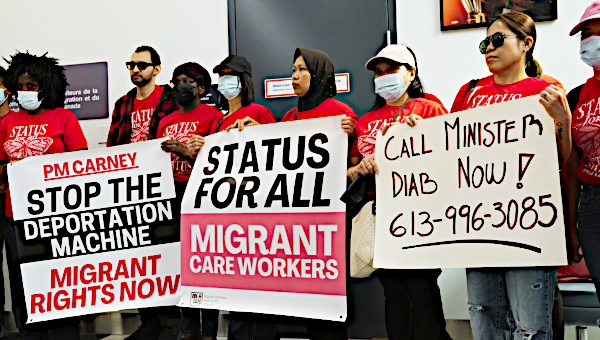
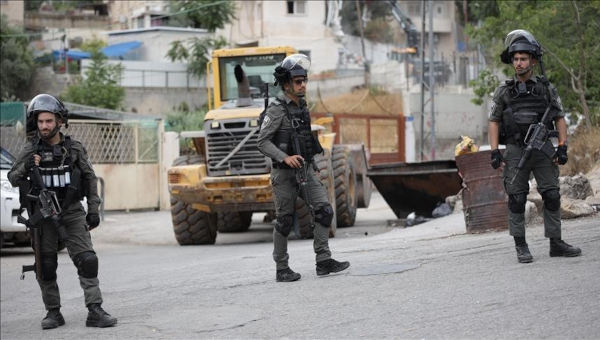
Police have broad powers to impose public order as they define it. When pro-Palestine demonstrators dropped banners about Gaza from a Toronto bridge over Highway 401 in January 2024, pro-Israel lobbyists persuaded that city’s police chief to prohibit this activity, arguing that the bridge was close to an area they claimed had a high Jewish population who might be offended. In another case, Toronto police prohibited marches down “hospital row” on University Avenue after a complaint that an acrobatic protester nicknamed “Spiderman” had, in February 2024, climbed on a scaffold at Mount Sinai Hospital, which has historic Jewish roots (he climbed on many other structures on the street as well). At the University of Calgary, wielding shields, batons, and flash-bang explosives, police removed a protest encampment from the campus in May 2024. None of these instances presented a real threat to public order, but police, responding to pressure from Israel-supporters, overreacted as police often do.
So police can establish small, temporary bubble zones. But police are pragmatic when it comes to protests. If there is a small number of participants, police may try to impede or contain the event. If there is a big crowd, police often attempt merely to reduce disruptions. Sometimes police demur from outright intervention. Their response is unreliable and, in any case, short-lived and this does not please the mashtikim, who want to prevent protests. Larger and more permanent bans were to come.
Judicial Bubble Zones
A key case in point occurred in Montreal’s Côte-des-Neiges–Notre-Dame-de-Grâce borough. One evening in March 2024, the Federation CJA building (housing several Jewish organizations) held a meeting featuring Israeli soldiers celebrating the IDF’s activity in Gaza. A few evenings later, a local synagogue hosted a “real estate fair” where agents offered properties on land seized in Palestine deemed illegal by international law for sale to prospective purchasers. Both of these events, which had nothing to do with religious or cultural practice, provoked rallies of opponents claiming that the Jewish institutions had forfeited their immunity by engaging in political advocacy linked to Israeli apartheid against the Palestinians.
The response of the pro-Israel forces to these protests can be described, without much exaggeration, as civil shock and awe: a series of judicial forays intended to ban future protests, intimidate and punish the protesters, and force them to engage in lengthy, costly, and intrusive court battles. Despite the existence of Charter protections, civil rights laws and the purported access to judicial review, under this kind of legal warfare, the advantage is massively with financially-prosperous organizations and individuals and against those without such resources. For those on the pro-Palestine side, there is no contest.
Arguing that the largely peaceful protests in Montreal were clear and present threats to the safety of Jewish community members in their own buildings, a group of lawyers and Jewish organizations convinced a Quebec Superior Court judge to issue an ex-parte injunction, banning protests within 50 metres of a cluster of Jewish institutions. This evolved into a more permanent injunction. Overlapping geographical restrictions would effectively render much of relevant neighbourhoods closed to rallies entirely.
Preposterously in this day and age, ex-parte (in the absence of the parties at whom they are directed) provisional injunctions are (still) granted! In this case, no legal opportunity was afforded the protesters to argue against the purpose and conditions of the injunction until later in the game.
But worse was yet to come. When distribution of the injunction did not immediately clear the protesters away, the lawyers commenced contempt of court proceedings. Alleged failure to abide by a court-ordered injunction (which you initially had no chance to argue against) renders you subject to criminal fines and possible jail time. Montreal members of the Jewish organization Independent Jewish Voices Canada and that association itself faced up to a $100,000 penalty if convicted. Failure to pay the fine could mean jail time.
Even if the defendants could beat back these attacks in the higher reaches of courts, their legal and other costs would be exorbitant. Moreover, it could be years before these judicial bubble zone cases are finally resolved in the courts.
However, if judicial route is onerous on the protesters, it is also on their pro-Israel legal proponents. If protesters subject to judicial bubble zoning dig in and fight, they can drag out proceedings and rob those proponents of the quick victories they seek. Again, the mashtikim are often disappointed.
So that brings us to an even more ruthless initiative: legislative bubble zones.
Legislative Bubble Zones
In the same March 2024 as the Israeli real estate sale in Montreal, synagogues in the City of Vaughan, Ontario, north of Toronto, hosted similar events. As in Montreal, dissidents appeared outside, with signs like “Palestine is not for sale.” One protester told the CBC, “We weren’t there because it’s a synagogue, we were there because we were protesting against a real estate show…[These events] shouldn’t be allowed to happen when they’re explicitly advertising land on occupied territory.”
Jon Allen, former Canadian ambassador to Israel, told the Toronto Star he is “sharply critical of the synagogues for hosting these events… The settlements are illegal under international law and Canada considers them illegal.”
Nevertheless, politicians of several political parties, including Vaughan Mayor Steven Del Duca and some councillors, castigated the protesters for attacking places of worship, conveniently omitting what those places of worship were really doing or that police had charged a man for allegedly shooting a nail gun at the pro-Palestine protesters.
Three months later, Vaughan council passed the Protecting Vulnerable Social Infrastructure By-law, forbidding “nuisance demonstrations” within 100 metres of childcare centres, hospitals, schools, and places of worship. The definition of nuisance demonstrations includes one or more persons “protesting against something or expressing views on any issue, in any manner, whether it is intended or not, that is likely, on an objective standard, to cause a reasonable person to be intimidated, meaning that they are either concerned for their safety or security, or they are unable to access” the location. The threshold for what would cause a reasonable person to be intimidated is not specified, though such intimidation need not include hate speech or incitements of violence and is highly subjective. The penalty for flouting the bylaw is up to $100,000 per occasion.
The Vaughan bylaw also allows a city official to close “any highway, including roadway, boulevard, sidewalk, trail or pathway, the closure of any public place, including facility, park, or parking lot… where necessary to ensure the health, safety, and well-being of any Person.”
Bubble zone laws are not entirely new. Some were introduced to protect abortion clinics. A spate of them emerged during the COVID epidemic to deal with anti-vax, anti-mask protesters attempting to block access to hospitals and to prevent other gatherings (see a court decision on that below).
Calgary was the first city to pass a bubble zone bylaw, ostensibly to protect school children, in 2023. But it was the Palestine issue where bubble zones began to proliferate and free expression came seriously under attack.
Brampton, Oakville, and Toronto have emulated the Vaughan bylaw with more cities to come. The recent election in Montreal of conservative Mayor Soraya Martinez Ferrada, presages bubble zones there. And British Columbia premier David Eby has promised provincial legislation to that effect. Other legislatures and municipalities are contemplating similar moves.
And Canada’s Combatting Hate Act (Bill C-9) proposes new Criminal Code offences for intimidating or obstructing access to a variety of community spaces, breathing federal oxygen into the provincial and municipal bubble zoning initiative.
Toronto’s Bubble Zone Bylaw
Toronto passed its bylaw that went into effect on July 2, 2025. It permits owners of places of worship, schools, and child care centres to apply to the City to enforce a 50-metre bubble zone for one-year, affecting at least 3,000 institutions, with fines of up to $5,000. The bylaw prohibits people from doing the following:
- perform or attempt to perform an act of discouragement concerning a person’s attendance at, use of, or attempts to attend or use Social Infrastructure;
- persistently request that a person refrain from accessing Social Infrastructure;
- obstruct, hinder or interfere or attempt to obstruct, hinder or interfere with another person’s access of or attempt to access Social Infrastructure; or 4 City of Toronto By-law 488-2025 (4) B.
- express an objection or disapproval toward any person based on race, ancestry, place of origin, colour, ethnic origin, citizenship, religion/creed, sex, sexual orientation, gender identity, gender expression, age, marital status, family status, disability, or the receipt of public assistance by any means, including graphic, verbal, or written means.
On the other hand, the bylaw allows for “peaceful protest” and exempts picket lines that are part of a labour dispute. Exactly what “peaceful protest” might mean in light of the four prohibitions above is anybody’s guess.
Just how confining the bubble zones could be in a city like Toronto was illustrated in a map developed by the publication Toronto Today to illustrate the impact of 100-metre areas of restriction. But even the 50-metre limitation eventually enacted would look similar.
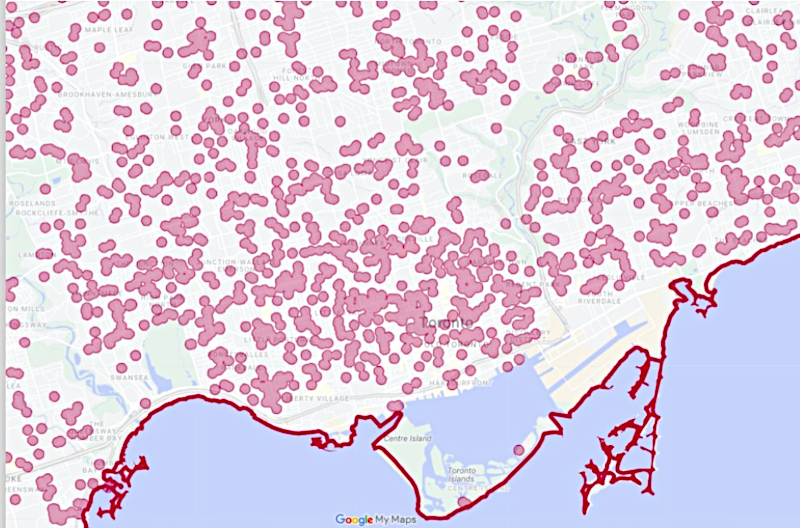
Toronto city council’s public consultation on the bylaw drew comments from 42,747 people (with 63% opposed) and 184 groups. In the two virtual sessions, 86% of the first session’s participants and 90% of the participants in the second session said they oppose a bylaw. The Toronto Social Planning Council vigorously opposed the bylaw and warned:
“… the proposed bylaw amendment won’t protect Torontonians from hate. It won’t target those who engage in hateful expression. Instead, it will end up targeting marginalized communities that need their rights and freedoms protected.”
Toronto city lawyers warned Council that their bubble zone would likely offend the Charter rights of free expression and constitute overreach. The lawyers suggested an amendment that would weaken the bylaw but still offend expression rights. Toronto councillors disregarded the legal advice.
Indeed, the bylaw that Toronto Council eventually passed was worse than the one suggested by staff: the no-go area rose from 20 metres to 50; the time limit rose from 6 months to 1 year; and applicants no longer needed to show that their building had been subject to protests.
Even some Toronto police officers spoke against the severity of the bylaw, insisting that it could seriously offend Charter rights and that police already have less intrusive powers to ensure public safety. Toronto police Staff Supt. Frank Barredo told a city council meeting:
“In all honesty, a bylaw would be somewhat low on the range of things that we would be looking at. Public safety is our paramount concern, but of course Charter rights weigh very heavily as we wrestle with the limitations on Charter expression with reasonable enjoyment of the city by other people not involved in demonstrations.”
Not to mention that Section 176 of the Canadian Criminal Code forbids the disruption of religious worship.
As with the judicial, the legislated bubble zones also massively favour financial and political power. As legal scholar Irina Ceric writes
“…the bylaw’s request-based process privileges powerful voices, providing institutions and communities who already have the resources and know-how to summon the repressive power of the state with another avenue for doing so. Allowing the establishment of access zones on the basis of potential expressive activity amplifies the power of property owners and, in effect, privatizes public order policing.”
While bylaws like Toronto’s may seem like a dream come true for the pro-Israel lobby, they horrify civil libertarians.
Civil Libertarians Oppose
The new spate of bubble zones has elicited the opposition of the Canadian Civil Liberties Association (CCLA) which launched a Charter challenge to the City of Vaughan’s bubble zone bylaw on June 24, 2025. It is worth exploring the CCLA’s rationale. The CCLA makes the following key points:
- The health, safety, and wellbeing of community members in using spaces must not unduly interfere with peaceful protests.
- The punitive nature of the bylaws is greatly disproportional to any harmful potential of protests. They are examples of legislative overreach.
- Police already have broad powers to prevent physical violence at protests in these spaces and thus bubble zones are not necessary.
- “This bylaw is about prohibiting peaceful protests because some people find them disruptive. It is about chilling and suppressing speech because some people find it offensive…These limits strike at the heart of what it means to live in a free and democratic society.”
- “If left unchecked, anti-protest bylaws like Vaughan’s will mark the beginning of a slippery slope that will erode people’s constitutionally protected right to use civic space to voice their thoughts, opinions, and beliefs.”
A crucial concept here is that the “health, safety, and wellbeing” of people using the protected spaces is not supposed to mean their complete absence of discomfort. In other words, if I want to attend a meeting at a Jewish institution and that event arguably celebrates apartheid and genocide, then in a “free and democratic society” I must be prepared to experience some unease, discomfort, inconvenience, and challenge when confronted by those who disagree with the meeting. If I am a student who supports Israel and I encounter a table supporting Palestine in my student union building and that makes me uncomfortable, I should be prepared to either debate the partisans or ignore them. Also, if the mere presence of the protest makes me feel uncomfortable, or even squirm inside, it does not mean that I am unsafe, as many proponents of cancel culture insist. As we are reminded consistently but often forget, freedom of expression applies not only to expression I agree with, but also to expression I disagree with, or even find revolting.
Even Toronto City Manager’s office foresaw the impact of the bylaw on freedom of expression, especially that of marginalized groups:
“…The City recognizes that demonstrations are an important means for groups and individuals who historically have not had access to traditional political processes and power to express their opinions, perspectives, and experiences, and to advocate for change. This includes Indigenous, Black, and equity-deserving communities. While the proposed bylaw amendment does not prohibit peaceful gatherings, protests, or demonstrations, including any such activities that occur as part of a labour union strike, information pickets and/or activities related to labour disputes, the City recognizes that the existence of bylaw provisions of this nature may result in community members feeling unable to peacefully demonstrate in Toronto. This could potentially contribute to further marginalization of groups, as well as potentially impact the City’s community relations, and current and future engagement with Indigenous, Black, and equity-deserving communities.”
The proponents of bubble zones would seem to have us believe that only a complete or effective removal of discomfiture will satisfy their rights. But that is contrary to the spirit and likely the letter of Canadian civil liberties law.
Minimally Invasive
How have the Canadian courts treated the clash of rights between those engaging in protest and those discomfited by that action? Section 1 of the Charter of Rights and Freedoms says that the rights and freedoms are subject to: “such reasonable limits prescribed by law as can be demonstrably justified in a free and democratic society.” In other words, governments can, under certain limited circumstances, limit Charter rights for the good of society at large.
The test for any limitation on Canadian fundamental rights and freedoms is sometimes called the “Oakes test” after a Supreme Court case of that name. If a fundamental right is to be limited by a government, the limitation should meet the following criteria. Using bubble zones as an evident limitation on the freedom of expression here, the champions of limitation must prove:
- The legislative goal of the bubble zone must be pressing and substantial (not trivial);
- There must be proportionality between the objective (achieving public safety and enjoyment) and the means used to achieve it (the bubble zone);
- The limit (bubble zone) must be rationally connected to the objective (achieving public safety and enjoyment);
- There must be a causal link between the impugned measure (bubble zones) and the pressing and substantial objective (safety and enjoyment);
- “Minimal Impairment”: the limit must impair the right or freedom no more than is reasonably necessary to accomplish the objective. The government imposing the limitation (bubble zones) will be required to show that there are no less rights-impairing means of achieving the objective (safety and enjoyment) “in a real and substantial manner”;
- “Final Balancing”: there must be proportionality between the deleterious and salutary effects of the bubble zone.
When the constitutionality of bubble zones is finally decided in the higher courts, the above are the questions that must be answered. Completely barring protesters from the sight and earshot of those attending the spaces in question would certainly remove any discomfiture by attendees. But such measures are arguably overkill of freedom of expression. So, what measures minimally impair that freedom? Often forgotten is that people have been protesting at spaces and events for many decades, if not centuries, and somehow the objects of their protest survive. One “minimally impairing” response to protests is to simply allow them to happen even if they make some people feel bruised emotionally.
Labour and “Expressive Action”
A helpful analogy comes from a long line of Canadian legal history involving the labour movement, strikes, and picket lines. Disputes involving strikes by trade unions can be very discomfiting for those targeted by them. As non-strikers cross picket lines or even try to work during a strike, they are subject to no small degree of insult, abuse, disruption, and intimidation. Before 1872 merely combining into unions was illegal, deemed a “restraint of trade” harmful to business. Then, when unions were decriminalized, strikes remained illegal. When strikes were finally decriminalized in 1944, employers still regularly obtained ex-parte injunctions from judges to remove or impair picket lines. But these overreaches are now history. While employers and governments still employ stratagems to limit the power of trade unions, from 2015, the right to strike and to picket have been Charter-protected (with some conditions). Indeed, the right to picket even locations secondary to the main employer as well as primary locations, has been ruled as Charter-protected.
In fact, the present group of bubble zone bylaws took pains specifically to exempt labour picket lines. That is ironic.
Why is it that employers now have great difficulty obtaining bubble zones against striking workers, yet governments feel they can ban protests that are arguably far less disruptive than union picket lines? Are protests that involve lost business and personal invective less disruptive than hurt feelings?
As the Supreme Court has pronounced on picketing (emphasis added):
“Picketing, however defined, always involves expressive action. As such, it engages one of the highest constitutional values: freedom of expression, enshrined in section 2(b) of the Charter. This Court’s jurisprudence establishes that both primary and secondary picketing are forms of expression, even when associated with tortious acts … The Court, moreover, has repeatedly reaffirmed the importance of freedom of expression. It is the foundation of a democratic society … The core values which free expression promotes include self-fulfilment, participation in social and political decision-making, and the communal exchange of ideas. Free speech protects human dignity and the right to think and reflect freely on one’s circumstances and condition. It allows a person to speak not only for the sake of expression itself, but also to advocate change, attempting to persuade others in the hope of improving one’s life and perhaps the wide social, political, and economic environment.”
Other than the first sentence of the above paragraph, which refers specifically to picketing during trade union strikes, the words of the Supreme Court certainly apply to the free expression rights of any group of people involved in “expressive action,” including, of course, those expressing disagreement with the Israeli treatment of Palestinians.
COVID Restrictions Ruled Overly Restrictive
In April 2025, the Ontario Court of Appeal made a very important ruling that the province had overstepped the limits in restricting gatherings during the COVID-19 pandemic. The court decreed that a blanket prohibition on gatherings violated freedom of assembly and that the ban was not “demonstrably justified in a free and democratic society” even though it was ostensibly for the purpose of public safety. Not only safety, but as we now know about the COVID pandemic, a question of life and death. As one commentary put it:
“The court found that deleterious effects of these measures included complete elimination of the fundamental right to freedom of assembly for two months, and that outdoor protests are especially effective at amplifying minority voices and expressing political dissent, and that people who wished to take part in this activity were denied the opportunity to influence public policy by this “time-honoured” method.”
So, what is the difference between gatherings to protest COVID lockdown and the flurry of protests regarding Palestine that have occasioned the quest for such restrictive bubble zones? A key difference is the accusation that the protests and the individual protesters are motivated by antisemitic hatred. Even where no explicitly antisemitic expressions are made, it is argued by the Mashtikim, antisemitism is embedded in any action that criticizes Israel. Proponents argue that our collective horror of the Nazi Holocaust and the possible rise of anti-Jewish feeling should make us agree that only by eliminating expression of criticism of Israel can Jews feel safe. True, if a protester shouts a demonstrably racist remark, we have hate speech laws for that. But if the definition of “unsafe” is a criticism of Israel that disturbs some Jews, we have a circular argument to nowhere.
The driving force behind bubble zones is a combination of identity politics and power. Historian David S. Koffman, current editor-in-chief of Canadian Jewish Studies, has written about the evolution of Canadian Jews from a group with little power and experiencing great discrimination to one whose influence in Canadian society has grown enormously amid a drastic lessening of discrimination.
“Canadian Jewish communal resources increasingly moved away from what was once called ‘community relations’ (and is now called ‘allyship’). Instead, we invested in vertical alliances: forging strong ties with police chiefs, university presidents, Members of Parliament and Members of Provincial Parliaments, and other officials. This made sense at the time: Jews were entering the highest echelons of power and elite institutions and had more access to these officials. But the focus on vertical alliances came at the expense of horizontal ones – with labour unions, teachers’ federations, municipal councils, churches, temples, mosques, and grassroots organizations. And so, we arrive at today’s condition: Canadian Jews are politically enfranchised but socially estranged; powerful in official circles, but uncertain of our neighbors.”
One symptom of this evolution is that Canadian Jews increasingly abandoned the outward-facing, horizontal, and universalist human rights advocacy among other vulnerable groups that sustained them in the first three quarters of the 20th century and concentrated their advocacy efforts for the past fifty years inward solely on antisemitism and Israel. We have now reached the point that a group that once championed freedom of expression is now leading the charge against it.
It could also be that the pro-Israel lobby, apparently struggling to get its message across, is turning to more and more desperate measures.
Why would the same politicians who extoll Canada’s human rights regime and our multicultural mosaic rush to give in to a single group that wants to claw back those rights? Why would they support legislation that has a good chance of being declared unconstitutional in the higher courts? The answers are complex and sometimes contradictory.
- At the core of all attempts to prohibit manifestations critical of Israel is the suggestion that that criticism and the people making it are antisemitic, indeed that even those who oppose prohibitions are antisemitic. While this accusation is wearing exceedingly thin, it still packs a punch in a country whose grandfathers and grandmothers refused to lift a finger to protect the victims of Nazi Germany before and during World War II. While the bubble zones may eventually be judicially overturned, that process could take up the better part of a decade. Many of those politicians imposing the bubble zones will be out of office by then. As with many controversial legislative ventures, a decade of existence can change the political calculus irreversibly.
- The Toronto bylaw is full of contradictions and poorly-drafted. For instance, what does it mean that “peaceful protest” is permitted while a wide range of persuasion tactics that protesters might use is prohibited? That is definite proof of the fact that bubble zones are an attempt to appease a persistent powerful group, not prevent harm.
- If someone engaging in a protest makes antisemitic expressions, they can be charged with a hate crime under the Criminal Code. Even if Israel supporters feel that merely protesting against Israeli actions is in itself antisemitic, those offended can take their chances in court. So why don’t they do that? If a single individual is convicted of hate speech, then it is a single individual, not the whole group of protesters. If a bunch of folks are charged simply because they protest, this is unlikely to be upheld in a court of law. How much better to have a bubble zone declared where protesters cannot protest at all?
- An important question is: ‘What is effective expression?’ If my protest is so far away from the event I am protesting or the people attending that event that they cannot see or hear me, do I really have the right of expression? If I am disallowed from attempting to speak to those attending that event and communicating my views with them, what has happened to my freedom of expression?
- Most of the discussion on this issue has focused on the protesters and the discomfiture of those trying to attend the event protested. But too easily ignored is that protesters are expressing themselves to a much wider audience, e.g., passers-by, neighbours, the media, society in general. Sometimes protests occur simply for the record to show that opposition exists. The freedom to show opposition is arguably crucial in a democratic society.
- While civil liberties organizations are challenging bubble zones, each bylaw is different. A court ruling overturning one may not apply to others, and each may have to be adjudicated separately.
- Even if these muzzling adventures are reversed down the road, they may establish a “new normal” for protest. Even though bubble zones chill and cripple free expression, dissidents may avoid bubble zones and find other ways to express their displeasure with the Israeli regime. And that will be some kind of victory for the “safe spaces” bullies.
- If Canadians have the right to express themselves, do other Canadians have the right to be protected from having to listen to that expression? Professor Richard Moon, a specialist in expression freedom, ponders this question in a provocative essay for the Centre for Free Expression, suggesting that the fate of bubble zones may be more complicated than we suppose. In the battle over bubble zones, the very right to protest is at stake.
- The bubble zone bylaws are cleverly worded to include not only Jewish places of worship, schools, etc. but those of other ethno-religious groups. As social and anti-racist activist Desmond Cole says, “Bubble zones allow politicians to claim they’re standing up for the rights and safety of minority groups. But in practice, these laws diminish the value of public space, and temporarily pacify some communities while permanently eroding the freedoms and expressions of others.” In Toronto to date, of the fifty-odd bubble zone applications granted, almost all are from Jewish institutions. As in the famous saying by Anatole France, “The law, in its majestic equality, forbids rich and poor alike to sleep under bridges, to beg in the streets, and to steal bread.” The anti-bridge-sleeping laws are clearly meant for the poor. And the bubble zones are clearly to protect Jews alone.
- The campaign for bubble zones is not only directed at protesters who are attempting to send a message about the genocide in Gaza. More importantly, it is directed at Jews who frequent the institutions within the bubble, who the Jewish legacy organizations want to keep in an echo chamber. Insofar as the protesters threaten to disrupt that echo chamber, pro-Israel supporters are doubling down on their pursuit of hashtakah.
- Compared to other, more recently-arrived groups, the Canadian Jewish community is older, more settled, more cohesive (though Israel’s current onslaughts are playing havoc with that), and more powerful. That community has formidable lobbying power, both for itself and for Israel. Politicians confronted by powerful lobbies regularly practise appeasement, especially in jurisdictions where an ethno-religious group is numerous, knowing that appearances are often more important than actuality. Even if the hate speech provisions, bubble zones, and other palliatives are in time deemed to constitute overreach, the powerful can say, “Well look, we tried. What more could we do?”
- As I have written, the conservative white power elites in the settler-colonialist Canadian society have a soft spot for settler colonialism in other places. And Israel is such a place, a bastion of white Western power that our politicians instinctively favour over Israel’s brown neighbours and subjugants. The powerful have a residual stake in hashtakah.
Whatever the eventual outcome of the bubble zones, human rights principles like freedom of expression are irreparably harmed when they are abandoned for political expediency for any length of time; they need constant nourishment and defending as the temptation to obliterate them when some feel offended is too tempting.
One might suppose that two years of slaughter by Israel would damage the hasbara. And it has. But now the pro-Israel forces have poured their energy not in “explaining” but in hashtakah, or silencing, not only protests outside Jewish institutions, not only through legal terror, but through civil terror everywhere in civil society, from service organizations like the YMCA and the Girl Guides, to professors and doctors and students. Canada’s human rights regime weighs in the balance. •