
Iran: Regime Change or Leader Change
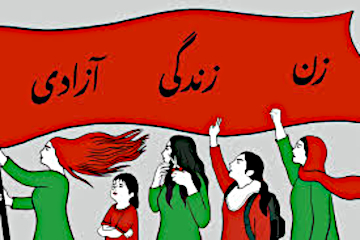
Iran is once again in turmoil. Street uprisings have shaken the very foundations of the clerical regime, and its apparatus of repression is brutally killing unarmed demonstrators. The current movement shares both similarities and differences with the previous mass movement of 2022, Woman / Life / Freedom. That earlier movement was primarily social and cultural in nature: Iranian women, supported by youth, rose against the compulsory hijab policy. Despite paying a heavy price, they succeeded in pushing the regime back. Today, among predominantly Muslim countries in the Middle East, Iran has the highest number of unveiled women visible in public spaces.
That movement, despite its magnitude and the global attention it attracted, failed – contrary to the expectations of many and the claims of parts of the Iranian “opposition” – to overthrow the regime.
The current movement, while a direct continuation of the previous uprising and earlier ones, is primarily economic in character. It began in the bazaar and coincided with the rapid collapse of the national currency, the loss of nearly 90 percent of most people’s savings, runaway inflation officially reported at over 48 percent (and in reality, reaching up to 70 percent for some basic goods), and other economic pressures that ignited the present explosion. Shortages of water, electricity, and gasoline – stemming not only from sanctions but also from regime incompetence – have alienated ever-larger segments of the population and seriously undermined the regime’s legitimacy.
Another major difference is the Islamic Republic’s severely weakened regional and international position. Not only have all its proxy forces in the region been badly damaged, but Israeli attacks killing numerous IRGC commanders and nuclear scientists, the destruction of Iran’s missile defences, and the subsequent US strike on nuclear infrastructure have gravely eroded the regime’s authority. Once again, expectations of regime collapse are running high. But is the Islamic Republic truly on the verge of falling?
To answer this question, we must examine the four actors in the current movement: the ruling regime, the people, the opposition, and external forces.
The Regime
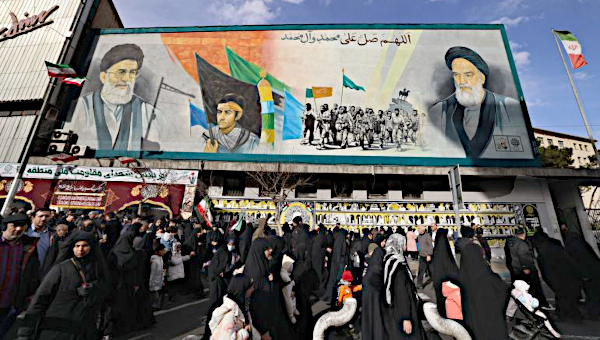
The Islamic Republic is a clerical–military–economic oligarchy with a multilayered system of governance: the Supreme Leader’s apparatus, the government, the Revolutionary Guards (IRGC), and religious foundations. It also maintains a loyal opposition under the banner of “reformists,” whose primary demand is a greater share of economic benefits.
Although the Supreme Leader wields absolute power and his death or removal could open the door to significant change, it would not in itself bring down the regime. The regime’s complex military–security structure makes any coup extremely unlikely. There is no doubt that parts of the power bloc and oligarchy are concerned about their economic interests and favor moderating anti-Western policies, but right-wing and hardline religious factions still dominate.
The oligarchs themselves were once part of the religious hardliners but soon discovered their promised paradise in luxury homes in northern Tehran and control over monopolies. Religious foundations and IRGC-linked economic institutions, which control over 40 percent of GDP, are exempt from taxation and oversight. While the state pursues neoliberal policies and cuts subsidies, it has significantly increased funding for the useless Islamic propaganda organizations and seminaries.
Overall, due to widespread corruption and incompetence, the regime has lost its legitimacy in the eyes of the majority of the population. Its ideological and propaganda apparatuses have become completely ineffective. Economically, the regime is bankrupt; its redistributive capacities are severely constrained. What keeps it in power for now are its multilayered repressive apparatuses.
The People
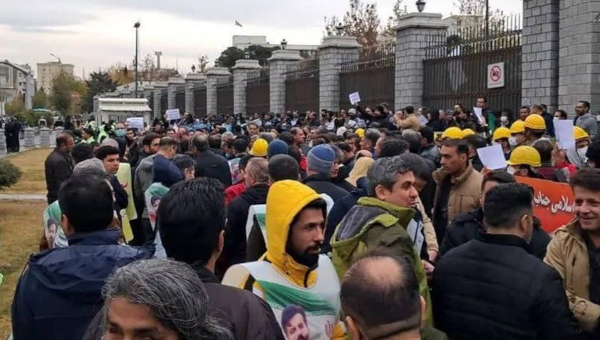
Although the majority of Iranians desire a change of the Islamic regime, a significant segment still supports it. In addition to millions employed in the military, security, judicial systems, and the militia Basij, millions receive stipends from religious foundations such as the Imam Foundation, Martyrs Foundation, and Foundation of the Oppressed. The regime also commands a sizable lumpen element in urban neighbourhoods, which it mobilizes as a rent-a-crowd when needed – as it did by organizing a large pro-regime march in Tehran after more than two weeks of street clashes and the killing of protesters.
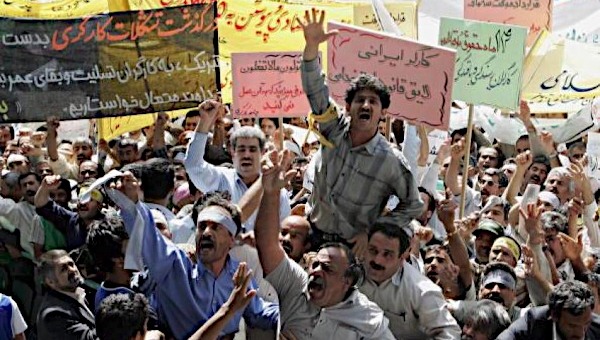
However, most of the country’s youth (who constitute more than 30 percent of the population), most women, most retirees, national and religious minorities, large segments of the new middle class and workers, and now significant portions of the traditional middle class oppose the Islamic Republic. These groups have driven successive protest movements with diverse demands. Yet, due to the lack of organization – something the regime systematically prevents – despite achieving partial successes and forcing tactical retreats, they have been unable to overthrow the system on their own.
The Opposition
One of the Islamic Republic’s greatest strengths is the weakness and fragmentation of the opposition. Since no opposition party or organization can operate legally inside Iran, the so-called Iranian opposition exists mainly abroad and consists largely of remnants of socialist, liberal, nationalist, and secular religious currents from the 1979 revolution. Numerous attempts to form republican movements have failed due to fragmentation and lack of financial and media resources, leaving them disconnected from the movement inside Iran.
Meanwhile, monarchists – backed by significant financial resources and Israeli support – have gained prominence and promoted Reza Pahlavi, son of the former Shah, as the leader of the opposition. One slogan in the 2022 women’s movement praised Reza Shah (Pahlavi I), implicitly referencing his confrontation with clerics and the unveiling of women. Monarchists claimed this indicated popular support for restoring the monarchy.
Until the Woman / Life / Freedom uprising, Reza Pahlavi had largely avoided politics and lived privately in the United States. Yet, due to his family name, he was the most recognizable opposition figure abroad. He had the potential to play a symbolic leadership role within a democratic opposition coalition; some even imagined a post-Franco Spain–style scenario in which he might serve as a symbolic monarch in a constitutional democracy.
However, once he hesitantly entered politics, it quickly became clear that he lacked independent agency and was guided by absolutist monarchists rather than constitutionalists. Although he presented himself as a democrat – even a republican – he failed to respond to divisive actions and attacks by his supporters, including his wife, against other opposition currents. Media outlets funded by foreign support promoted him heavily and glorified a supposedly “golden” pre-1979 era, presenting him as the movement’s leader.
Undoubtedly, given the misery under the current regime, a growing number of Iranians favour monarchy by comparison, but they remain a minority, hoping to gain power through direct Israeli and US support. In addition to monarchists, the Mujahedin-e Khalq (MKI) – an authoritarian religious-military cult left over from the revolutionary and Iran–Iraq war era, with strong finances and close ties to US neoconservatives – also claims leadership of the movement.
Opposed to these forces is the absence of a progressive bloc composed of democratic socialists, progressive liberals, and secular religious figures, capable of gaining international progressive support. Such a bloc could independently support the internal movement and prevent it from being hijacked by reactionary forces.
Foreign Powers
Due to its reckless policies, the Islamic Republic has no true allies in the Middle East or globally. China and Russia have opportunistically supported and exploited the regime, but in a real confrontation with the United States, both would abandon it. Israel – especially its right-wing and religious factions – has benefited from the regime’s existence but remains one of its fiercest enemies. However, Israel alone cannot achieve regime change in Iran, hence its efforts, through Netanyahu’s alignment with Trump, to draw the US into the conflict.
Despite its aggressive rhetoric, the Trump administration – mindful of failed regime-change experiences in Afghanistan, Iraq, and Libya – has little appetite for regime change in a country as large as Iran. Some, inspired by the attempt to abduct Maduro in Venezuela, fantasize about “leader change” in Iran – an illusion given Iran’s power structure.
Trump’s threats to attack the regime if protests were suppressed, combined with Israel’s open support for the movement, along with Reza Pahlavi’s call for staying in the streets, handed the Islamic Republic the perfect pretext to massacre protesters as alleged Israeli and American agents. With the internet and communications completely cut, the killings proceeded. Exact figures are unknown, but reports suggest hundreds killed and hundreds more wounded.1
Foreign intervention to overthrow the Islamic Republic would not bring Iran closer to democracy; it would lead to fragmentation and chaos – instability that would engulf the Middle East and disrupt the global economy.
Desirable Change from Within Iran
Overthrowing the Islamic Republic and replacing it with a democratic, secular, and progressive republic has long been a central demand of large segments of Iranian society. Contrary to those who believe mass movements can succeed without organization or strategy, I believe more than ever in the necessity of both. Movements can achieve important gains, but without expanding organization at each stage, they either repeat themselves or gradually dissipate. The stronger and more violent the ruling system, the harder the organization becomes – especially since the movement must continuously draw in broader social strata.
Different social components – classes, women and gender groups, nationalities, religious minorities, and youth – have diverse and sometimes conflicting demands. At various moments, one component may become dominant and win partial victories, but none can confront the entire system alone. Overemphasis on one element minimizes others. Without a guiding structure, a movement cannot optimize these aligned demands.
Structural change without optimization of diverse demands is impossible. Yet two clarifications are necessary. First, a guiding structure does not mean traditional centralized leadership but rather a coordinated, participatory framework. Second, prioritizing the whole does not mean postponing or suppressing the legitimate demands of any group. It would be wrong – based on past mistakes – to insist, for example, that women delay feminist demands until after resolving the “national question” or that minorities silence their claims. Still, it is equally mistaken to assume that any group can achieve its ultimate goals immediately. Learning from history, activists must continuously align their demands with the broader movement.
Elsewhere, I have argued that advancing the movement requires coordinated unity across four arenas: streets (cities and neighbourhoods), workplaces (factories, mines, ministries), educational institutions (schools and universities), and places of business (bazaars and shops). Building sustained, organized links among these arenas nationwide is extremely difficult, but without them, even the most massive street protests dissipate. In recent movements, some coordination occurred – especially between the street, universities, and bazaar – but in the crucial arena of workplaces, it was minimal. What ultimately broke the Pahlavi regime was workplace strikes, councils (Showras), and their integration with the other arenas.
Here, the role of the opposition becomes critical. At this stage, due to repression, there is no formal opposition organization inside Iran, and the diaspora opposition remains fragmented and disconnected. If we map the Iranian opposition as a multidimensional matrix – left/right, secular/religious, moderate/extreme – only a subset composed of democratic leftists, secular liberals, nationalists, and secular religious forces seeking a democratic secular republic can realistically cooperate. A broad progressive front abroad, with proper organization, could mobilize significant human, financial, and technical resources in support of the internal movement.
Our history shows that, aside from imperialism, three interrelated obstacles – personalized power, centralization, and lack of secularism – have blocked democratic outcomes. Iranian history is largely one of authoritarianism, capital-centred decision-making, and the fusion of religion and state. Any organizational and strategic effort must consciously address and prevent the repetition of these patterns. •
Endnotes
- At the time of writing, because of the complete internet and communications blackout, the full magnitude of the massacre of protesters was unknown, and I referred to “hundreds” killed by the Islamic Guards. Now, many sources report that several thousand have been killed and thousands incarcerated. This has been the bloodiest massacre of protestors by the Islamic regime in Iran.