
Free Speech and Its Enemies
“We are just so shocked,” a German friend residing in Switzerland wrote the other day. “These cases affect us very much, as they will have consequences for us all.”
What cases would these be, you may wonder. What cases and what consequences? You may especially wonder about cases and consequences if you are an American reliant on corporate media: Europe is convulsing as the “centrist” authoritarians who purport to lead it impose what looks to me like an historically unprecedented regime of censorship and the suppression of speech, but none of the mainstream dailies or broadcasters in America have had a word to say about it – a point to which I will shortly return.
It was the case of Jacques Baud that prompted my German friend’s distress – or radically escalated it, better put, for she had had an other-than-sanguine view of Europe’s drift toward tyranny long before news of Baud’s fate broke. And so, to some particulars.

Who Is Jacques Baud?
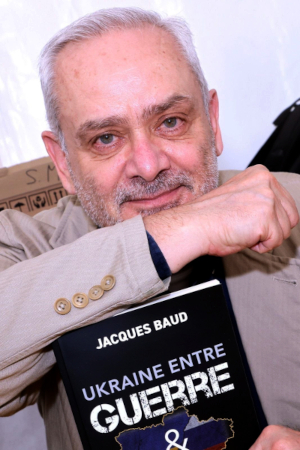
Jacques Baud is a Swiss citizen now residing in Brussels. He was formerly a colonel in the Swiss army and served for many years as an analyst in Swiss Intelligence and in the Swiss Foreign Ministry. He has held senior positions at the United Nations and was more recently an adviser to NATO covering Ukrainian affairs.
Baud is now 70 and has for some years applied his exceptional expertise to analysis and commentary on war, peace, geopolitics, and affairs of state, work that has earned him a reputation for insight and integrity. His most recent books are The Russian Art of War: How the West Led Ukraine to Defeat and Operation Al–Aqsa Flood: The Defeat of the Vanquisher, which explains the events of 7 October 2023 by way of Israel’s incessant breaches of international law over 75 years. Max Milo Editions, a small French house, brought out both books last year.
On 15 December, the European Union imposed sanctions on this distinguished man. He is now on the EU Sanctions Tracker, which lists the names and offenses of those the EU has summarily blacklisted. Here is Baud’s entry on this truly diabolic website:
“Jacques Baud, a former Swiss army colonel and strategic analyst, is a regular guest on pro–Russian television and radio programmes. He acts as a mouthpiece for pro–Russian propaganda and makes conspiracy theories, for example, accusing Ukraine of orchestrating its own invasion in order to join NATO.”
We are now in the land wherein those who propagate disinformation assert that they are countering “disinformation,” and let us observe our quotation marks, for “disinformation,” in Baud’s case as in many others, means accurate information. If you can follow.
Thoughtful Analysis
To net this out, Jacques Baud has written thoughtfully and extensively on the war in Ukraine and its bearing on relations between Russia and the West. This includes a sound analysis of NATO’s advances to the Russian Federation’s borders, the US-orchestrated coup in Kiev in 2014, the West’s subsequent betrayal of the Minsk Protocols, and the Biden regime’s purposeful provocation of the military intervention Russia began not quite four years ago.
Whether or not one agrees with Baud’s take on this or that question, his is well-supported work. And the EU has just comprehensively sanctioned him for it. Any European now risks the same if, to bring this home with an especially egregious example, he or she states perfectly discernible truths as to what prompted Moscow’s “special military operation” in February 2022. If invited to make this case on a Russian television station, the offender is yet further beyond the pale.
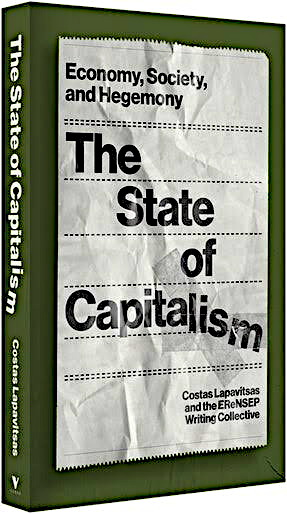
There are other aspects of the Baud case that have attentive Europeans in an uproar. Baud has not been charged with any criminal offense. There has been no investigation into his work, no evidence has been presented, there will be no judicial process, and he will have no opportunity to respond to the “case” – quotation marks again – the EU makes against him. The sanctions he now faces were imposed in an exercise of extrajudicial – as in unlawful – power. As Costas Lapavitsas, a professor at the School of Oriental and African Studies (SOAS), put it in a piece Brave New Europe published Christmas Eve, “An individual was punished by executive designation alone,” [see below].
We have all read endlessly about sanctions and how much or little they matter, but in Baud’s case – and there are others facing this designation – they are grave. Baud’s assets are now frozen in the EU and he cannot travel. He cannot access his bank accounts and various sources of income are blocked. As of now, it is a criminal offense to transact with him – to sell him a house or groceries, to take in his shirts, to repair his car. “Although the regulation allows minimal subsistence payments,” Lapavitsas writes, “the effect is to paralyse a person economically and professionally.”
The Baud case is horrific all by itself, and so I give it generous column inches, but it is horrific times ten when we consider its larger implications – its “consequences for us all,” as my German friend put it. Censorship and attacks on free speech are nothing new on either side of the Atlantic, to state the obvious. It is two years this coming spring since Germany refused entry to Yanis Varoufakis, the honorable Greek economist and activist, who was to attend a congress on Palestine in Berlin. The Biden regime was notable for its connivances with Silicon Valley and its assaults on free speech. These have worsened dramatically during the first year of Trump II.
It comes time to understand our moment for what it is – the circumstance now upon us. •
This article first published on the The Floutist website.
Jacques Baud and the Demise of the EU as a Liberal Project
In late 2025, the European Union imposed sanctions on Jacques Baud, a retired Swiss colonel and former senior strategic analyst for NATO. The justification was openly ideological. Baud was accused of acting as a “mouthpiece” for pro-Russian propaganda and of disseminating “conspiracy theories” about the war in Ukraine. No criminal offence was alleged, and no judicial process was initiated. An individual was punished by executive designation alone.
The sanctions are not symbolic. They impose an asset freeze across the European Union, and a travel ban throughout the Schengen area [29 European countries]. Because Baud lives in Brussels and publishes mainly through a French house, the measures immediately cut off access to bank accounts, interrupt income, and criminalise routine economic relations with EU residents. Although the regulation allows minimal subsistence payments, the effect is to paralyse a person economically and professionally. This is punishment in all but name and a severe restriction of Baud’s freedom.
None of this followed indictment, trial, or adjudication. There was no evidence tested before an independent court and nor was some standard of proof publicly applied. Put plainly, the EU has dispensed with the idea that coercive power requires judicial mediation and operates based on administrative designation alone.
Executive Coercion Without Law
This is not the familiar “democratic deficit” of a distant transnational order that lacks the legitimacy of a genuine demos. It is something more basic and more serious: the exercise of executive coercion without law. Administration has displaced adjudication, and naked authority has displaced justification.
That the Baud case represents a break can be seen by recalling another that once defined the EU’s legal self-understanding. In the early 2000s, Yassin Kadi, a Saudi businessman, was placed on a UN terrorism sanctions list. His assets were frozen, his economic life extinguished, and no evidence was shown to him. When the case reached the EU courts, they ruled that this was unacceptable. Even sanctions adopted by the UN Security Council could not be enforced in Europe unless the targeted individual had access to the evidence and a real opportunity to defend himself before an independent court. Measures amounting to civil death could not rest on assertion alone. That was the EU’s standard, but it has been quietly discarded.
The legal basis for the measures against Baud is Council Implementing Regulation 2025/2568, adopted under the broader framework of Regulation 2024/2643. Since 2022, EU courts have accepted that restrictive measures may be imposed without prior due process on the grounds that advance notice would reduce their effectiveness. While some sanctions have been annulled for lack of a personal link, courts have shown extreme deference on the central issue of evidence.
It is probable that Baud’s designation rests on some confidential file put together by European intelligence services. But that does not affect the substance of the case in the slightest. The real point is that coercive measures of this gravity are now imposed in the EU on the basis of material that is undisclosed, insulated from adversarial testing, and effectively immune from public challenge. EU citizens are asked to accept that the evidence is sound because the executive says so. This is not the rule of law. It is rule by assertion, reinforced by closed procedures and expedited review that shield executive claims from exposure.
The chronology is revealing. This mode of EU operation was already on display during the eurozone crisis, most starkly in Greece. During the Greek crisis, democratic choice was openly subordinated to administrative necessity. Elected governments were overridden in practice, binding policy programmes imposed, and a national referendum neutralised. Decisions of immense social consequence were taken by institutions lacking democratic mandate, justified in the language of financial stability and systemic risk. It became clear that there is an underlying method in EU executive action: when legal or democratic constraints obstruct it, they can be suspended without breaking the institutional shell.
What was first applied to a state is now applied directly to an individual.
Permanent Emergency
The broader context is the EU’s drift into permanent emergency. Crisis is no longer episodic but structural. Within this configuration, executive authority has concentrated at the European level, operating with increasing autonomy under Ursula von der Leyen, while democratic and judicial checks have withered in practice. The European Parliament has long been marginal. The Council of Ministers acquiesces, allowing national governments to hide behind “European obligations” while avoiding responsibility at home.
The Baud case matters because it exposes the logic in its pure form. An individual analyst is sanctioned for his views, irrespective of their quality or political merit. The EU’s coercive apparatus, developed for macroeconomic discipline and foreign-policy alignment, is also turned inward against dissent. The boundary between administrative power and personal liberty has been breached.
For decades, the European Union has presented itself as a liberal project grounded in the rule of law, human rights, and a “rules-based international order.” The Baud sanctions expose the hollowness of that claim. A political order that retains the institutional forms of democracy, such as parliaments, courts, and treaties, while permitting the executive to punish individuals without law no longer meets even minimal liberal standards.
We are no longer confronted with merely the failure of European integration. What has steadily become apparent is the demise of the EU as a credible legal and political project. When an individual can be deprived of livelihood, mobility, and legal standing by executive designation alone, the law no longer protects the citizen. Indeed, the law is not even used as cover when the executive wants to hunt a citizen. The transition from a rule-governed polity to an arbitrary one is complete. That threshold, once crossed, is not easily uncrossed. •
This article first published on the Brave New Europe website.